
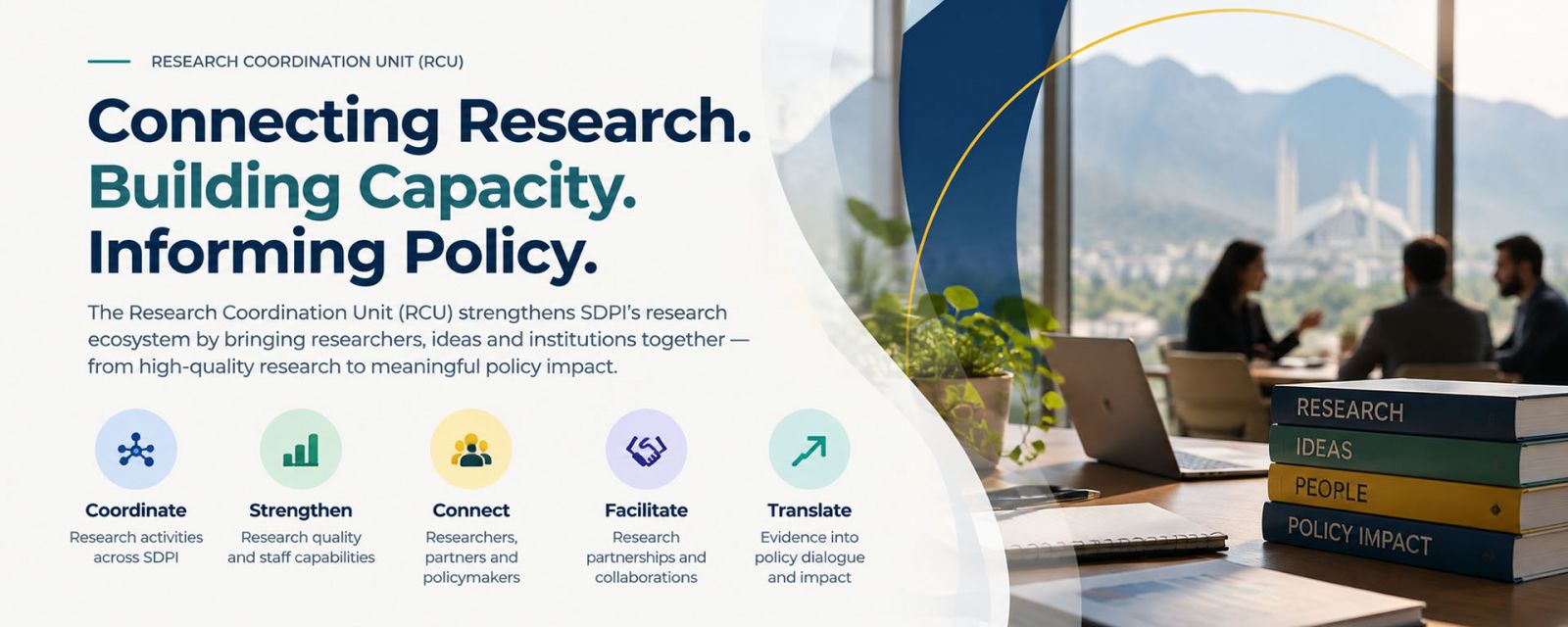
Research Coordination Unit (RCU)
Great research thrives on collaboration, critical thinking and the ability to turn evidence into action.
At SDPI, the Research Coordination Unit (RCU) brings these elements together. It connects researchers, strengthens research quality, supports professional development and facilitates partnerships that bring fresh perspectives to pressing policy challenges.
Working across SDPI’s research programmes and departments, the RCU helps create an environment where ideas are exchanged, research capabilities grow, institutional partnerships flourish and evidence finds its way into policy conversations.
What Drives Us
Our vision is to strengthen an interconnected, forward-looking research environment that encourages collaboration, nurtures talent and enhances the quality, visibility and policy relevance of SDPI’s work.
Ideas Grow When Researchers Connect
Good research benefits from dialogue, constructive criticism and diverse perspectives. The RCU creates opportunities for researchers to exchange ideas, challenge assumptions and explore new directions.
- Brown Bag Research Meetings
An interactive space for SDPI researchers to share ongoing and completed research, test emerging ideas, receive peer feedback and learn from colleagues working across different disciplines.
- Policy Research Advocacy Meetings
The Policy Research Advocacy Meeting (PRAM) brings research programmes and policy engagement priorities into conversation. It provides a platform to review projects, identify emerging research needs and explore how research findings can better inform policy advocacy.
- Research Retreats
Research Retreats bring SDPI researchers together to reflect on progress, exchange knowledge, identify future research priorities and explore opportunities for cross-programme collaboration.
- Research Support
The RCU works with SDPI departments to facilitate research planning, implementation, coordination and dissemination. By connecting teams with relevant expertise and supporting research-related processes, it helps strengthen cooperation across the institution.
Better Research Begins with Better Questions
Research quality is not simply about the final publication. It begins with asking the right questions, choosing appropriate methods and being open to critical review.
- Working Paper Reviews
The RCU facilitates constructive reviews of working papers to strengthen analytical quality, methodological rigour, clarity and policy relevance before dissemination.
- Policy Research Clinics
Policy Research Clinics offer researchers a space to critically examine research concepts, questions, methodologies, preliminary findings and policy implications. Through peer discussion, researchers can identify gaps and refine their work at an early stage.
- Investing in the Researchers of Tomorrow
A strong research institution invests not only in research outputs but also in the people behind them.
- Young Researchers Engagement
The RCU facilitates interaction between young researchers and SDPI’s senior management, creating opportunities for mentorship, professional guidance and knowledge exchange.
A structured series of meetings with SDPI’s Executive Director also provides young researchers with a direct platform to share their interests, discuss challenges, engage with institutional priorities and receive guidance on their professional development.
- Skills that Make Research Matter
Research is changing. New technologies, evolving policy challenges and increasingly complex data demand new capabilities. The RCU supports targeted learning opportunities to help SDPI researchers strengthen their analytical, technical, digital and communication skills.
Partnerships That Go Beyond Signing Ceremonies
Strong institutional relationships create opportunities for research, learning and policy engagement that individual organisations may not achieve alone.
The RCU facilitates national and international collaborations with universities, research institutions, government bodies, development partners and other knowledge organisations.
From identifying common interests and connecting relevant teams to coordinating Memoranda of Understanding (MoUs), supporting implementation and following up on agreed activities, the RCU helps departments navigate the partnership process.
The goal is simple: move beyond agreements towards meaningful outcomes — joint research, knowledge exchange, capacity building, policy dialogue and collaborative activities.
Learning Beyond the Classroom
Study Tours and Exposure Visits: The RCU facilitates study tours and exposure visits for civil servants, academics, researchers, students and other stakeholders.
These engagements offer participants opportunities to interact with SDPI experts, explore contemporary development challenges, understand the relationship between research and policymaking, and exchange practical insights. They also help build professional networks and open pathways for future institutional collaboration.
Connecting Knowledge Across SDPI: Valuable research should not remain confined to individual projects, departments or reports.
The RCU supports stronger institutional knowledge management by helping map ongoing research, consolidate information, maintain shared repositories, document partnerships and track research activities.
Through improved information sharing and cross-programme coordination, the Unit aims to strengthen institutional memory, identify opportunities for collaboration and support evidence-informed research planning.
What's Next? New Ideas Taking Shape
Alongside its established activities, the RCU is developing initiatives to deepen connections between academia, research institutions and policymaking, while strengthening researchers' professional capabilities.
Bridging Policy Gaps with Academia | Where Academic Knowledge Meets Policy Challenges
This emerging dialogue series aims to bring academics, researchers, civil servants, policymakers and SDPI experts together to examine pressing policy challenges and identify gaps in available evidence.
By connecting academic insights with real-world policy needs, the initiative seeks to encourage informed debate, stimulate collaborative research and strengthen the relationship between universities and the policy community.
Research Staff Capacity-Building Programme | Equipping Researchers for a Changing World
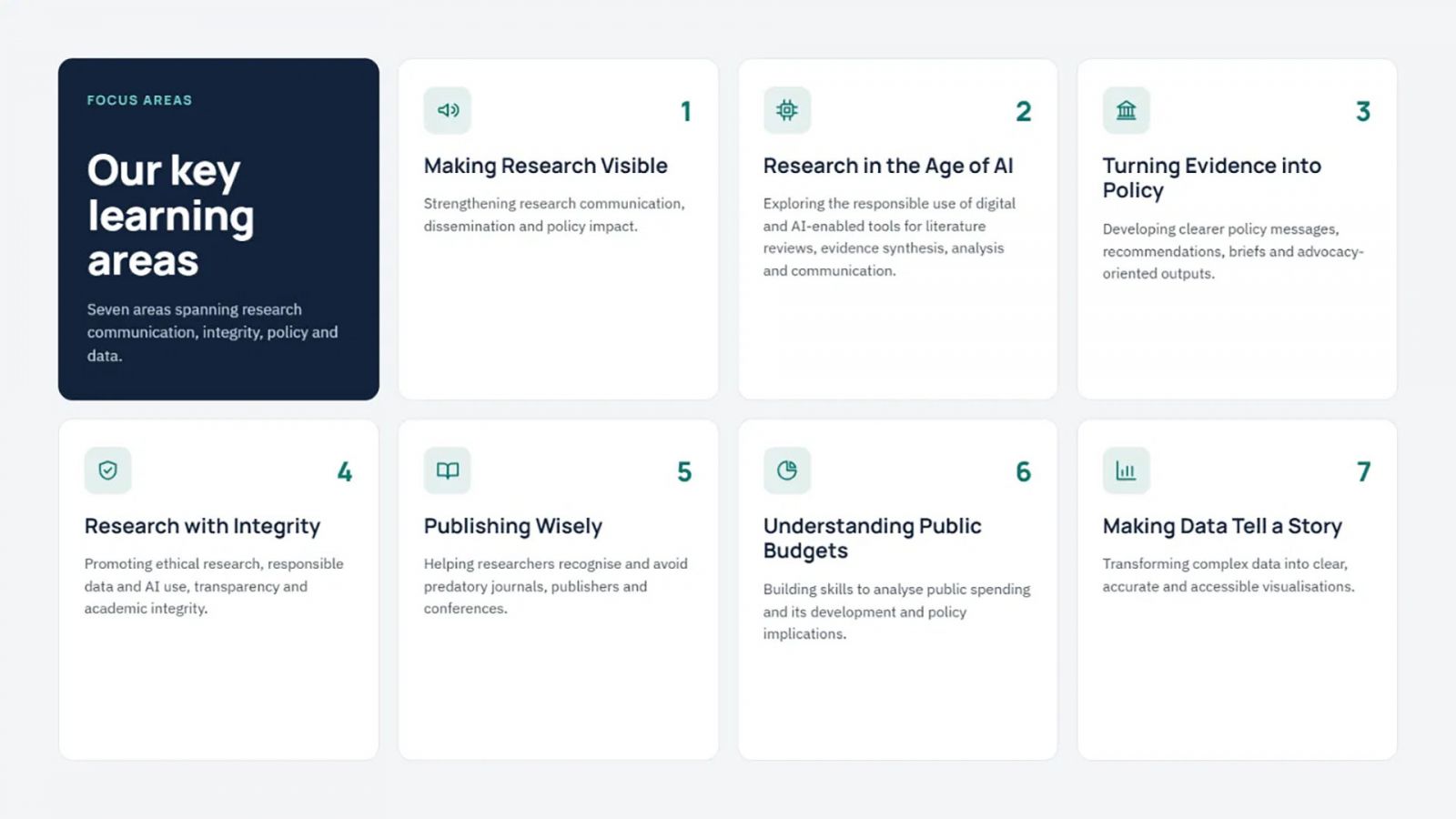
The RCU is developing a structured professional development programme covering emerging research skills, responsible AI use, research communication, ethical practices, publishing standards, budget analysis and data visualisation.
The programme aims to build a more digitally capable, analytically skilled, ethically grounded and policy-oriented research workforce.
Faculty Exchange Programme | Connecting Academic Insight with Policy Research
The proposed Faculty Exchange Programme aims to create sustained opportunities for university faculty and SDPI researchers to learn from one another and collaborate.
Envisaged activities include joint research and publications, guest lectures, seminars, workshops, knowledge exchange and exposure to contemporary policy research practices.
The programme seeks to bring academic scholarship and applied policy research closer together through stronger institutional relationships.
Meet the Team
Dr Sajid Amin
Deputy Executive Director (Research) & Lead, Research Coordination Unit
Romila Qamar
Associate, Research Programme and Collaborations
Interested in learning more?
Email:rcu@sdpi.org