AI Readiness in Pakistan’s Higher Education Sector, Day 2, A-3, 03 Nov
Technology should complement rather than replace critical thinking: Moeed Yousaf
AI cannot replace human wisdom: Dr Nasir
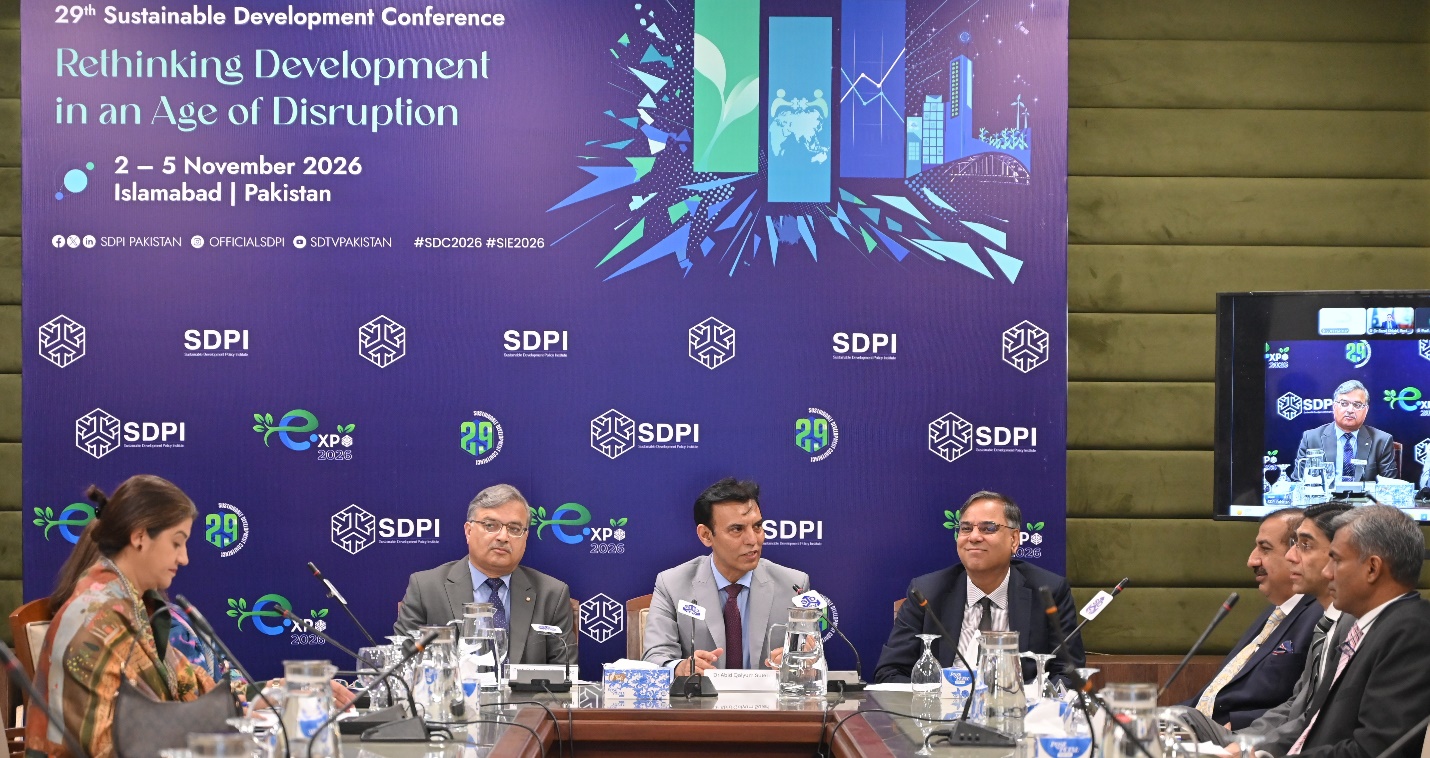
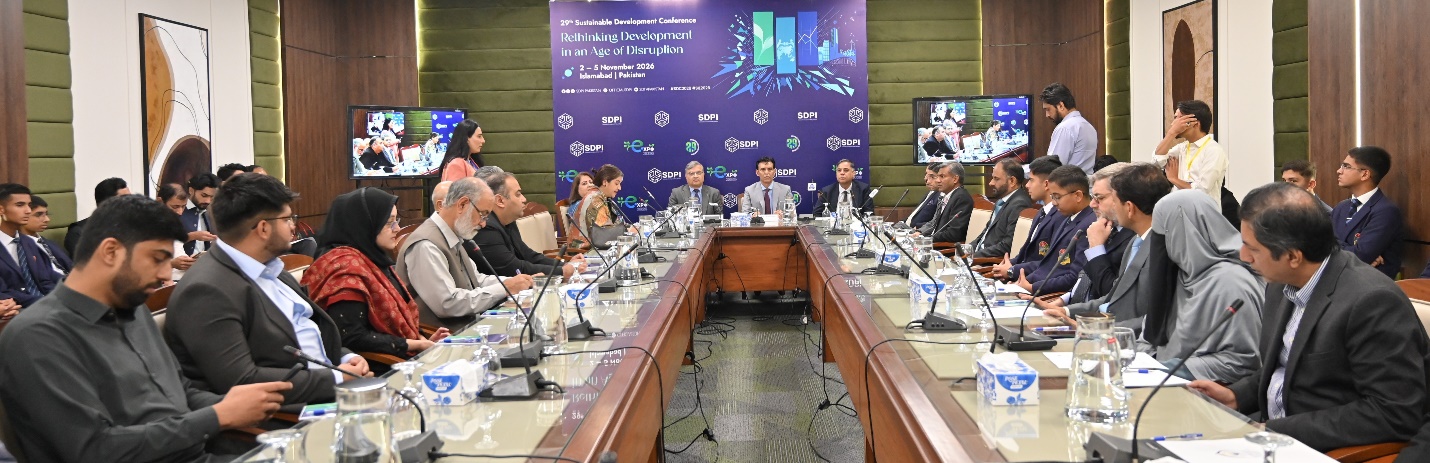
ISLAMABAD (03 November 2026): A Vice-Chancellors’ roundtable on AI readiness in Pakistan’s higher education sector evaluated the readiness of higher education system to adopt and responsibly manage generative artificial intelligence and frontier technologies.
The roundtable was organized as part of the Sustainable Development Policy Institute’s 29th Sustainable Development Conference here on Tuesday.
In his opening remarks, Abid Qaiyum Suleri, the Executive Director, SDPI, emphasized the need to prepare Pakistan's higher education system for the responsible use of AI, particularly generative AI tools and emerging agentic technologies. He said resisting technological change was unrealistic, comparing it to the earlier reluctance to allow calculators in classrooms, and stressed that the real challenge was ensuring AI did not undermine students' cognitive abilities, analytical skills and critical thinking.
Sharing an example from a summer internship programme, he said that applicants had been asked to disclose their use of AI tools and submit the prompts they used. Rather than focusing solely on their written responses, the selection team was encouraged to examine their questions to assess their critical thinking, ability to challenge AI-generated information and capacity to provide effective instructions.
Dr Moeed Yusuf, the Vice Chancellor of Beaconhouse National University, Lahore, cautioned universities against becoming overly obsessed with AI, arguing that technology should complement rather than replace human critical thinking and problem-solving abilities. He said AI was here to stay, making it more important to understand its implications than attempt to resist its adoption.
He highlighted a growing generational challenge, observing that individuals with strong critical thinking skills could use AI effectively as a tool, whereas students lacking those abilities risked becoming dependent on technology for answers without questioning or evaluating them.
He said higher education institutions were responsible for preparing the country's future leaders across various sectors, including agriculture, banking and other fields. Without strong critical thinking and decision-making abilities, graduates could develop false confidence based on information generated by AI rather than genuine understanding.
Dr Aneel Salman, the chairman of the Government of Pakistan’s National AI Policy, stressed that artificial intelligence should be treated as an ecosystem for improving productivity, economic growth and institutional efficiency rather than a passing trend or standalone project.
Drawing on his experience in formulating Pakistan's National AI Policy, he identified major challenges facing universities, including the absence of standardized AI curricula, inadequate faculty training and irresponsible use of technology. He questioned the effectiveness of making introductory AI courses compulsory across disciplines, arguing that social sciences students should be taught by relevant subject specialists rather than computer science faculty. He also highlighted disparities in teaching standards between well-resourced urban universities and institutions in rural areas.
Dr Nasir Mehmood, Vice-Chancellor, AIOU, said wider access to education could help build learning capabilities, but AI could not replace human wisdom. He identified teaching, developing learning materials and student assessment as three core university functions that AI could support.
Dr Fateh Muhammad Marri, Vice Chancellor of University of Sindh, Jamshoro, highlighted the potential of AI to prepare course content and short instructional videos, particularly for standard undergraduate programmes. However, he stressed that effective use of AI required users to understand their objectives and critically evaluate its outputs, warning against excessive dependence on intelligent technologies.
Recalling the disruption caused by COVID-19 in 2019, he said many universities lacked learning management systems and online teaching facilities when forced to shift to remote education. He stressed that talented students could be found across Pakistan, citing an HEC IT skills assessment involving over 34,000 students from 188 universities. He said AI could improve students' writing, communication and productivity, but universities needed to strengthen their digital foundations and ensure equitable access to technology.
Dr Mustansar Ali Ghazanfar, Associate Professor at the University of East London, called for comprehensive reforms in higher education to prepare students for an AI-driven job market, stressing the need to modernize curricula, assessment methods and faculty training.
Citing World Economic Forum projections, he said 170 million new jobs would be created globally while 92 million would be displaced by 2030, making it essential for universities to equip graduates with relevant skills. He said AI education should go beyond teaching students to use tools such as ChatGPT and focus on developing critical thinking, creativity, leadership and problem-solving abilities.
Dr Iqrar Ahmed Khan, Chairperson of Punjab Higher Education Commission, called for Pakistan to develop indigenous AI models, including large language and vision models, rather than relying solely on foreign technologies. He said universities had made progress in integrating AI-related subjects into academic programmes, but needed to go beyond introducing individual courses and reform their curricula to reflect the interconnected nature of emerging technologies.
Dr Fazal Ahmad Khalid, Rector of Ghulam Ishaq Khan Institute of Engineering Sciences of Technology, Topi, stressed that artificial intelligence should complement rather than undermine human cognitive abilities, saying technological progress represented an evolution rather than the complete replacement of existing skills. He emphasized the need for effective assessment methods to ensure that learning outcomes were not compromised.
Dr Khalid called for a comprehensive overhaul of the higher education ecosystem, arguing that introducing AI courses alone would not address the challenges posed by technological transformation.