Annual State of Renewable Energy 2026, Day 4, 4.3, 05 Nov
Pakistan’s energy mix shifts from fossil fuels to renewables rapidly: Experts
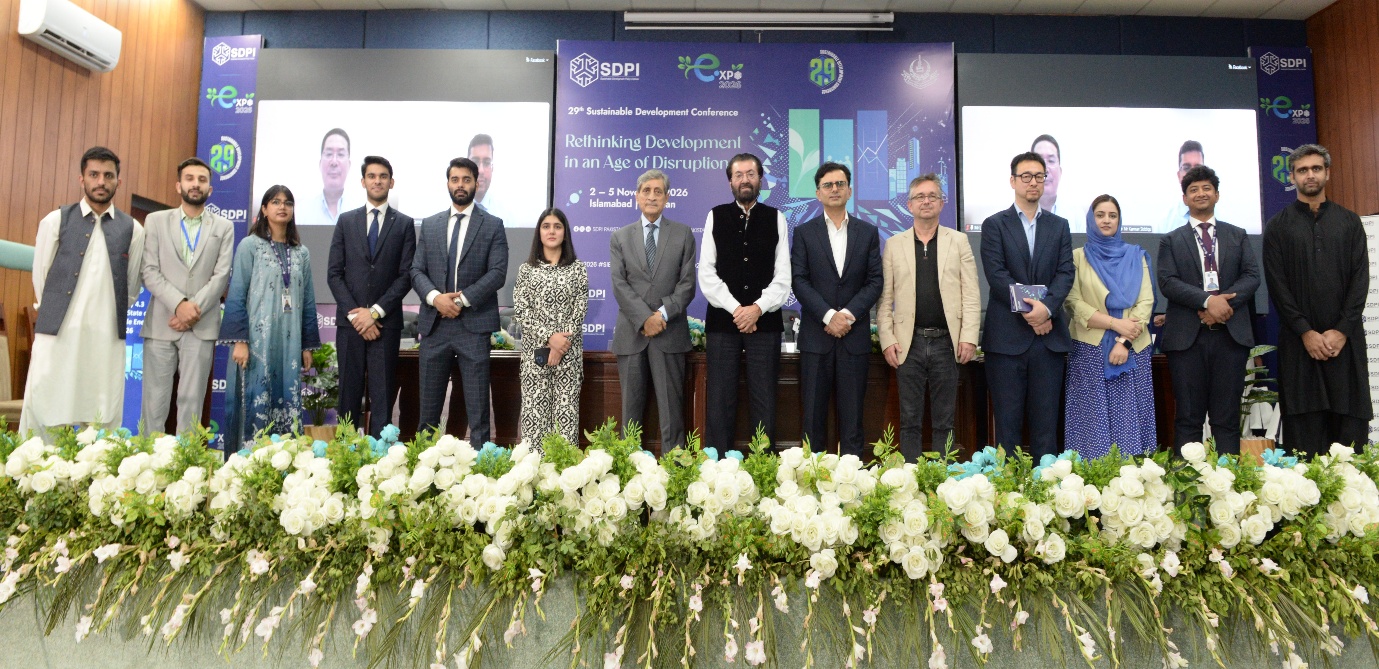
ISLAMABAD (05 November 2026): Energy experts, policymakers and industry representatives called for an integrated strategy, stronger transmission and distribution networks, stable policies and investment in storage to manage Pakistan’s renewable energy sector, saying the solar revolution had created both opportunities and challenges for the country’s power system.
They were speaking at a plenary, titled: “Annual State of Renewable Energy 2026”, organized on the last leg of the 29th Sustainable Development Conference, by the Sustainable Development Policy Institute (SDPI) in collaboration with Network for Clean Energy Transition (NCET) here on Thursday.
In his opening remarks, Adil Khattak, Chief Executive Officer of Attock Refinery Limited said geopolitical tensions and climate pressures had made affordable energy a key priority. Solar accounted for nearly three-quarters of global renewable capacity additions in 2025, he added.
He said Pakistan’s renewable potential extended to hydropower, wind, biomass, biogas and biomethane. “Agricultural and municipal waste could also generate energy and reduce reliance on imported fuels. Citing Denmark, he said biogas accounted for just under 40 percent of its gas system in 2025.”
Mr Khattak said net billing could encourage self-generation and battery storage. Attock Refinery was adding 1.5 megawatts to its existing two-megawatt solar capacity and planned to invest around $600 million in an upgrade.
Presenting SDPI’s annual assessment, Head of the Energy Unit and Senior Research Associate Engr. Ubaid ur Rehman Zia said Pakistan’s installed power generation capacity stood at around 49 gigawatts. Utility-scale renewable additions remained slow, with wind capacity at about 1,850 megawatts and utility-scale solar at 680 megawatts, while net-metered solar had reached 7.3 gigawatts.
More than 7,000 megawatts of 12,209 megawatts of new capacity came from net-metered solar PV. Pakistan had imported 55 gigawatts of solar equipment, with almost 38 gigawatts installed and around 7.3 million homes using solar.
Households accounted for the largest share of distributed solar use, followed by industry and agriculture. Battery storage was also expanding, with lithium-ion imports rising from 1.4 gigawatt-hours in 2024 to 4.6 gigawatt-hours in 2025.
SDPI representative Sarim Zia said solar power and batteries were reducing demand from the national grid, particularly in agriculture, where grid demand had fallen by 42 percent. Lower demand had reduced thermal power plant utilisation, while capacity payments continued to burden the economy.
He said the solar boom had helped Pakistan avoid approximately $12 billion in liquefied natural gas imports amid regional energy supply disruptions. Recent policy changes included the shift from net metering to net billing, introduction of the Competitive Trading Bilateral Contract Market (CTBCM), renegotiation of independent power producer agreements and the announcement of green panda bonds.
Dr Liu Zongyi, Senior Research Fellow at the Center for South Asian Studies, Shanghai Institutes for International Studies, said the clean energy transition should not be viewed as a development triggered solely by energy crises, as energy security had long been a key driver of renewable energy adoption.
He said the Strait of Hormuz crisis had exposed risks to fuel supplies, shipping and electricity prices, prompting countries to balance affordability, emissions reduction, resilience and industrial autonomy.
Kamran Siddiqui, Programme Officer for Energy and Cross Sectors at the International Renewable Energy Agency (IRENA), said the global shift towards renewable energy had gained momentum before recent geopolitical tensions, while the latest energy crisis had accelerated the transition. He cited Thailand’s rooftop solar incentives and faster solar permitting in the Philippines.
He urged Pakistan to promote renewables, electric transport, energy conservation and stronger grids.
Faisal Nadeem, Head of Technical at Nestlé Pakistan, said industries were increasingly investing in solar energy, batteries and alternative power sources because of concerns over electricity reliability, affordability and environmental sustainability. Manufacturers were being forced to manage multiple energy sources outside their core business, he added.
He called for upgrading transmission and distribution networks, saying voltage fluctuations and interruptions caused costly industrial disruptions. Renewable and hydropower projects required an efficient grid to transmit electricity to consumers and support wheeling, he added.
Vice-Chairman of Pakistan Solar Association, Engr. Chaudhry Uzair, said consumers had led the country’s solar expansion and helped save foreign exchange by reducing fuel imports. However, growing solar adoption was creating grid-stability challenges, including the ‘duck curve’, in which high daytime solar generation is followed by a sharp rise in evening demand.
He urged the government to introduce Battery Energy Storage Systems (BESS) to store surplus daytime solar electricity and stabilise the grid. He proposed a lower daytime tariff to encourage battery storage and called for quality standards, effective regulation and consultation with the association.
Dr Shen Wei of the International Institute of Green Finance, United Kingdom, described Pakistan’s transition as a rapid expansion of distributed solar confronting an older, centralised energy system. He called for integrated planning and better monitoring of distributed generation.
Tobias Klaus, Senior Researcher at Deggendorf Institute of Technology, Germany, said batteries were useful for short- and medium-term storage, but Pakistan should also examine pumped-hydropower storage by upgrading existing facilities. He said combining renewables, storage and stronger grids could improve reliability, while mini-grids could serve underserved communities.
The Chairman of Institute of Urbanism, Dr Tariq Banuri, said energy should be viewed not as a separate economic sector but as a foundation of the entire economy. He said climate change and pollution made the transition unavoidable.
He urged Pakistan to prepare for a future with reduced dependence on fossil fuels and adopt a long-term approach. The transition should become part of an export-led development strategy, enabling the country to manufacture renewable energy equipment for domestic use and overseas markets rather than relying solely on import substitution.