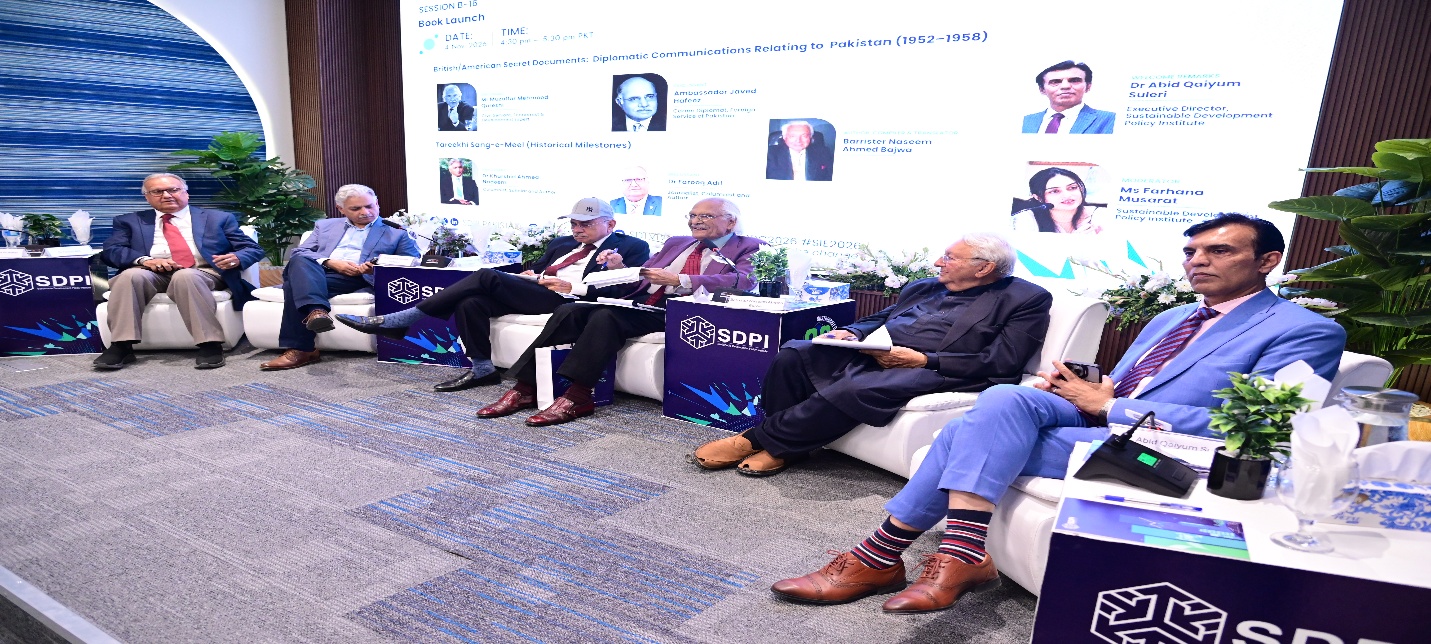
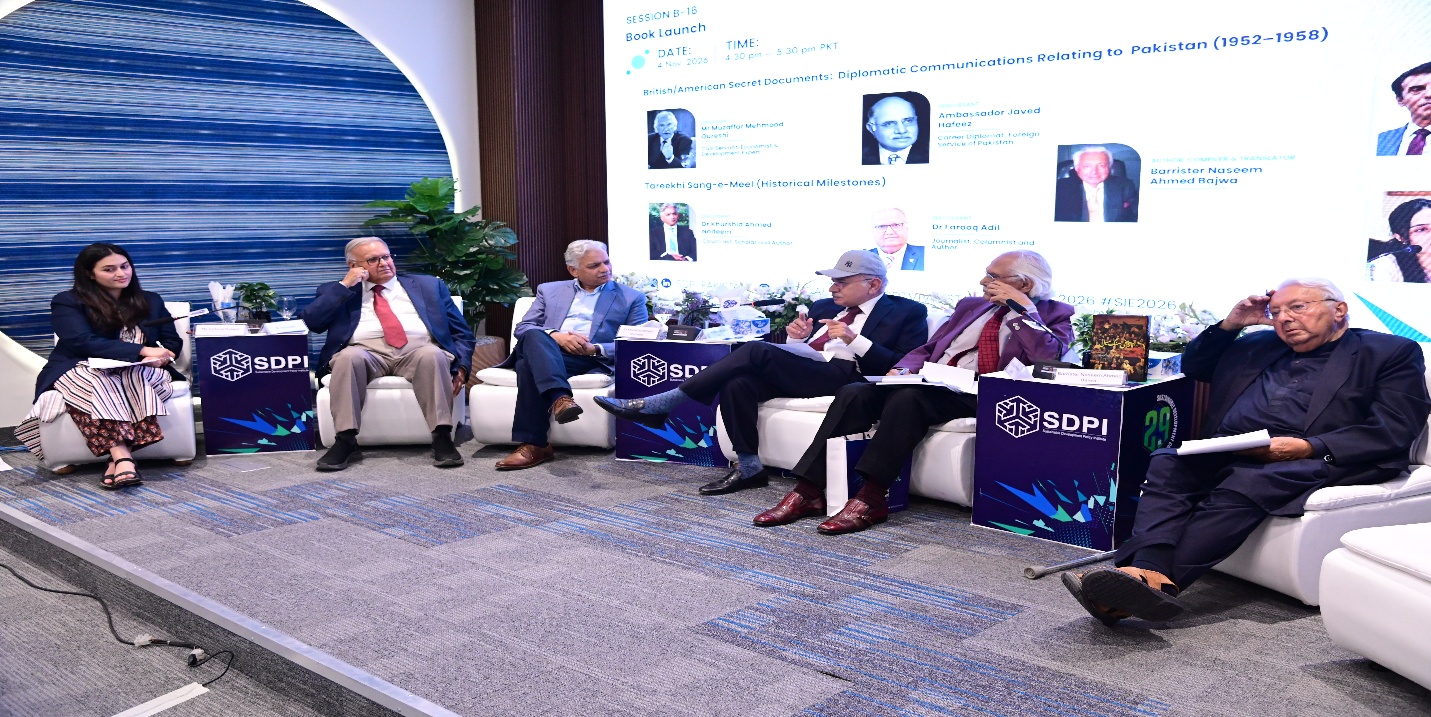
British American Secret Documents Diplomatic Communications Relating to Pakistan 1952-1958, Day 3, B16, 04 Nov
Barrister Bajwa hopes to see Pakistan on the path of development again
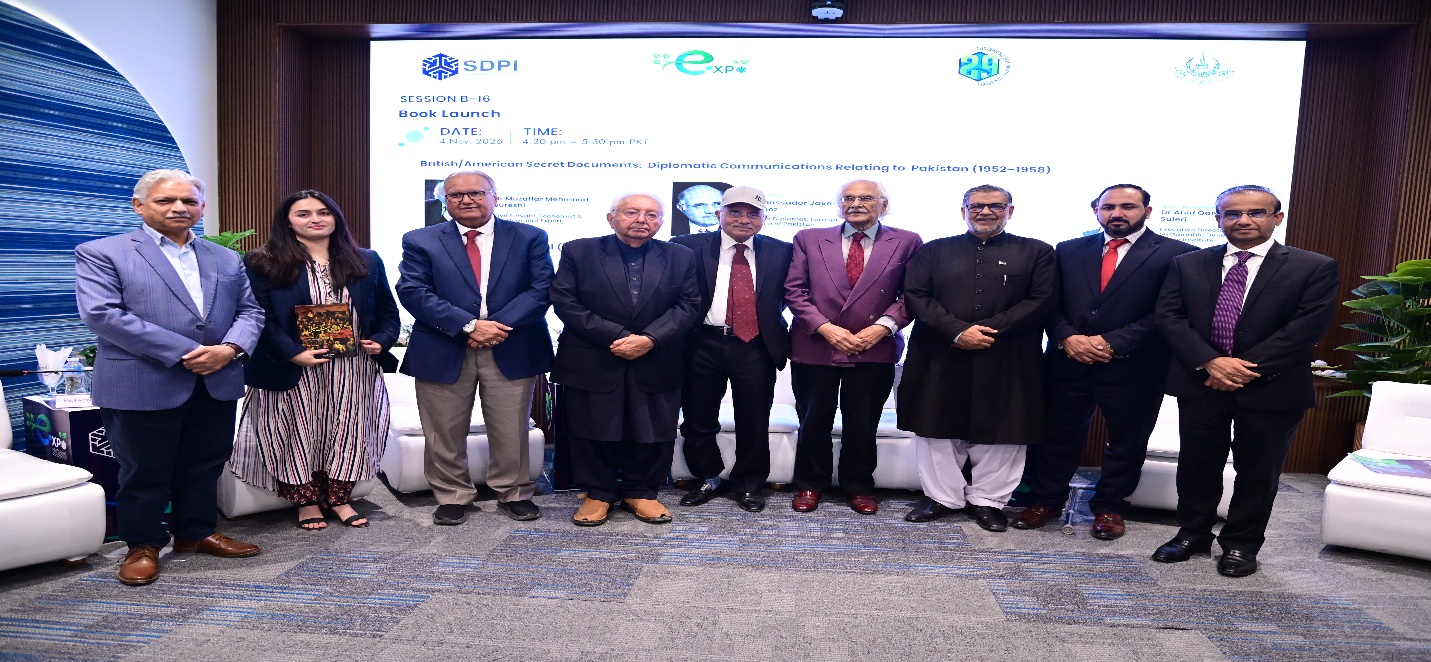
ISLAMABAD (04 November 2026): A book, titled: British/American Secret Documents: Diplomatic Communications Relating to Pakistan (1952–1958)", edited and compiled by Barrister Naseem Ahmed Bajwa, a UK-based lawyer and author, were launched here on Wednesday at the Sustainable Development Policy Institute (SDPI) as part of its 29th Sustainable Development Conference. The conference was held under the theme: "Rethinking Development in an Age of Disruption".
Another Urdu book under title: "Tareekhi Sang-e-Meel (Historical Milestones)", which he authored, compiled and translated, was also launched on the occasion.
Moderating the session, Farhana Musarat from SDPI introduced the author saying Barrister Bajwa is a lawyer, writer and political commentator. “He is the President of British-Pakistani Lawyers Forum and Director of Pakistan Academy of International Law and Politics, she said.
SDPI’s Executive Director, Dr Abid Qaiyum Suleri, thanked Barrister Bajwa for coming to Islamabad to attend the SDPI’s conference from the United Kingdom each year. He said the author works through historical archives and brings out a new book after every two years.
Dr Suleri said there are three versions of history: one taught in Pakistan, one taught in neighbouring countries, and a third lies in archives and is rarely discussed. He said the new volume draws on declassified British and American diplomatic correspondence from that third category. In his view, the records show that decision-making in the 1950s rested largely with bilateral partners, whereas today, it rests with multilateral institutions.
Mr Muzaffar Mehmood Qureshi, a civil servant, economist and development expert, said the book is arranged year by year from 1952 to 1958. It covers diplomacy, defence, economic assistance, internal management and electoral process, he said, adding that the cables record the thinking behind decisions that left a lasting legacy. He noted that Ayub Khan appears throughout the volumes, first as commander-in-chief and later as president.
Mr Qureshi said the documents include a recorded statement attributed to Governor-General Ghulam Muhammad, who said he would travel to Delhi to speak to Prime Minister Nehru about concerns over defence assistance. He also referred to American intelligence assessments written after the 1958 martial law, which described Pakistan's economy, society and political situation. One of them, he said, forecast that the army would play a decisive role and named leading generals of the time. He added that the observation proved relevant when events unfolded in 1969.
Javed Hafeez, a former ambassador and career diplomat of the Foreign Service of Pakistan, said the book shows that an invitation to Prime Minister Liaquat Ali Khan from Moscow preceded the one from Washington. He said the cables name Sir Zafrullah Khan, Ghulam Muhammad and Foreign Secretary Ikramullah as having opposed the Moscow visit, and he added Iskander Mirza as a fourth figure often described as pro-West.
Mr Hafeez also discussed the documents' references to water disputes, Pakistan's membership of SEATO and CENTO, and a 1958 cable assessing Ayub Khan. He said the main weakness of Pakistan's foreign policy then and now was economic.
Dr Farooq Adil, a journalist, columnist and author, said Barrister Bajwa, though a resident of Britain, continued to write about Pakistan and its region. Referring to the preface of "Tareekhi Sang-e-Meel", which includes points on Afghanistan and Iran, he said the work reads like an encyclopedia compiled by a team of scholars, and that it was notable for having been produced by one person.
Dr Khurshid Ahmed Nadeem, a columnist, scholar and author, said the translation of the Oxford Encyclopaedia into Urdu was a service to the language, noting that it requires command of the source language, the target language and the subject. He said the author works with a defined concept of history and links events in sequence rather than treating them in isolation.
Dr Nadeem also pointed out some inconsistencies in dates and in the numbers of sons and daughters in the early pages of the book. He said such errors matter in historical works and should be corrected in future editions.
Barrister Bajwa said he began writing and compiling books around five years ago, at the age of 85, and now publishes an Urdu book in Lahore and an English book in London each year. He said he took part in the Pakistan Movement and has seen the country develop and decline. He expressed the hope that he would see Pakistan on the path of development again.