Climate Risk to Resilience: The Private Sector’s Role on the Road to COP31, Day 2, A6, 03 Nov
Private sector urged to play greater role in climate resilience
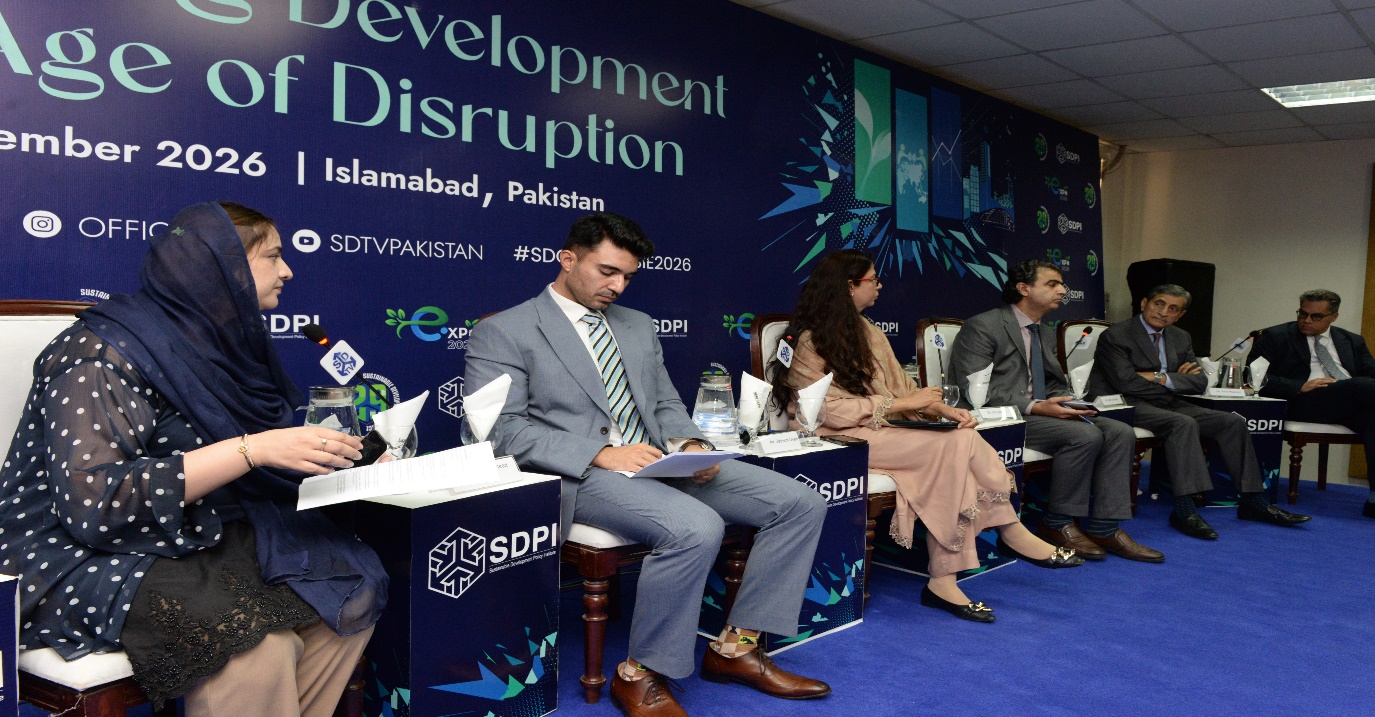
ISLAMABAD (03 November 2026): Speakers at a session stressed the need for stronger public-private partnerships, affordable long-term financing and investment in clean energy to help Pakistan address climate change and build economic resilience.
The session, titled: Climate Risk to Resilience: The Private Sector’s Role on the Road to COP31, was organized on the second day of 29th Sustainable Development Conference by Sustainable Development Policy Institute here on Tuesday.
The speakers said climate risks had become a major business and economic concern, requiring coordinated efforts by the government, private sector and development partners to translate climate commitments into practical and bankable projects.
Dr Samuel Rizk from United Nations Development Programme, said climate action was no longer merely an environmental concern but had become an economic and business necessity. Referring to Pakistan's climate-related losses, he said the country had suffered more than $33 billion in losses and damages, while projections indicated that economic losses could reach nine per cent by 2050 if adequate measures were not taken.
He said climate risks directly affected businesses, agriculture, trade and energy security. Clean domestic energy, he added, was not only a climate imperative but also essential for protecting the economy from external energy shocks.
SDPI Executive Director Dr Abid Qaiyum Suleri said governments alone could not address multifaceted development challenges and that private-sector participation was indispensable. He urged multinational companies to serve as role models for local businesses by promoting environmental, social and governance practices across supply chains.
He also called for rethinking Pakistan's post-2030 development agenda, stressing the need to bridge the gap between macroeconomic reforms and the economic realities of ordinary people.
Dr Khalid Waleed of SDPI highlighted Pakistan's interconnected challenges of economy, energy and environment. He said the 2022 floods caused around $20 billion in losses and damages, wiping out savings equivalent to an entire year's national savings.
He warned that recurring climate disasters could deepen intergenerational inequality and stressed the need to convert climate commitments into bankable projects through public-private-people partnerships.
Attock Refinery CEO Adil Khattak said recent disruptions in international energy supplies had exposed Pakistan’s vulnerability to external shocks. He stressed the need to upgrade local refineries to meet Euro-5 standards, reduce furnace oil production and establish strategic petroleum reserves to strengthen energy security.
He said the government had engaged an international consultancy to examine proposals for developing petroleum reserves, adding that domestic energy resources should also be utilised to reduce dependence on imports.
Dr Hiz Jamali, a representative of Asian Development Bank, said renewable energy, battery storage and sustainable transport offered commercially viable investment opportunities that could attract private capital through guarantees. However, concessional financing was essential for climate adaptation and resilience projects, particularly those protecting vulnerable communities from floods.
Securities and Exchange Commission of Pakistan Executive Director Musarrat Jabeen highlighted reforms introduced since 2022, including ESG disclosure guidelines, sustainability reporting requirements and a centralised online portal. She said the commission was also working on green financial products, ESG-based mutual funds and a sustainability index for the Pakistan Stock Exchange.
In his welcome remarks, Mr Umarr Ahsan Khan said predictable policies, competitive costs and an enabling business environment were essential to attract investment in climate resilience projects. He emphasized the need for affordable long-term financing, saying commercial lending alone could not support projects of such scale.
He said guarantees, blended finance and support for project preparation could help reduce investment risks and turn promising ideas into bankable proposals. He also called for greater attention to small and medium enterprises (SMEs), which form an integral part of the country's supply chains.
Mr Khan said businesses needed reliable and affordable electricity alongside a system capable of accommodating cleaner energy sources. He added that Pakistan's international climate support case should be strengthened through well-prepared projects, clear implementation responsibilities and transparent reporting.
M Abdul Aleem of the Overseas Investors Chamber of Commerce and Industry (OICCI) said the organisation represented around 200 multinational companies from 30 countries operating in 13 key sectors of Pakistan's economy.
He said these companies brought international expertise, investment, technology and experience in implementing global best practices. The private sector, he added, had a critical role in addressing climate challenges through sustainable initiatives, resource efficiency, cleaner technologies and climate-resilient supply chains.
Mr Aleem said OICCI could help connect businesses with government institutions, facilitate partnerships and ensure that corporate initiatives contributed to national climate priorities. He described the Pakistan Climate Conference as an important platform for policymakers, businesses, researchers and development partners to exchange experiences and explore solutions.
Other speakers stressed that companies must incorporate long-term climate risks into financial planning, with chief financial officers working alongside sustainability teams to assess potential losses and investment opportunities.