Connecting Ideas, Investment and Impact for Resilient Development
Private sector a key partner in addressing climate change & sustainable development challenges: Dr Suleri
Expo 2026 Highlights Environment, Economy and Equity as Pillars of Resilient Growth
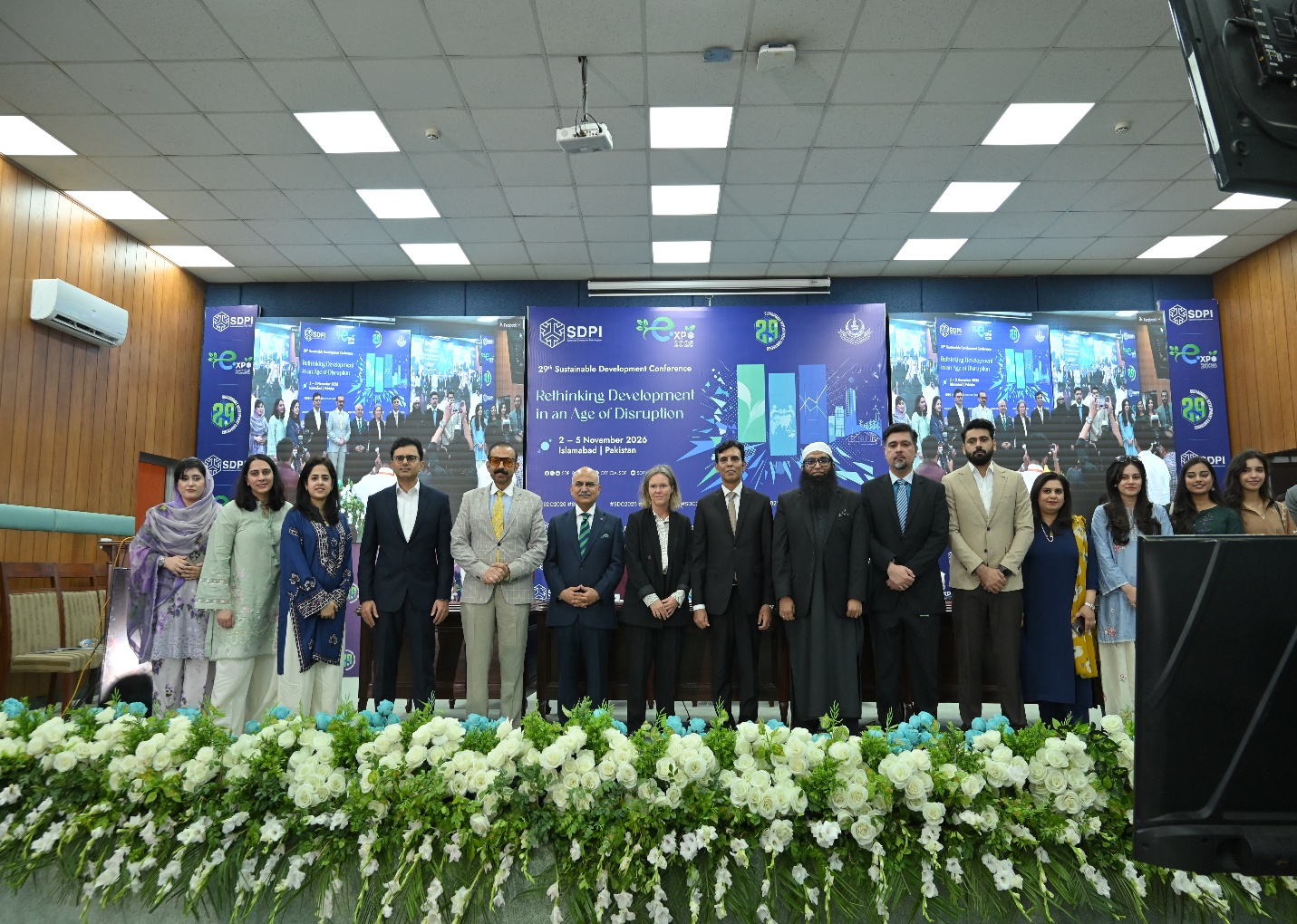
ISLAMABAD (02 November 2026): Pakistan must integrate environmental sustainability, economic competitiveness and social equity into its development agenda to address escalating climate risks, unlock green investment and ensure inclusive growth.
This was stated by the speakers at the Sustainable Development Expo 2026 organized by the Sustainable Development Policy Institute (SDPI) at Allama Iqbal Open University here on Monday.
Held under the theme “Connecting Ideas, Investment and Impact for Resilient Development,” the expo brought together policymakers, diplomats, business leaders, researchers and development practitioners to explore practical solutions for climate resilience, sustainable industrialization and equitable economic opportunities.
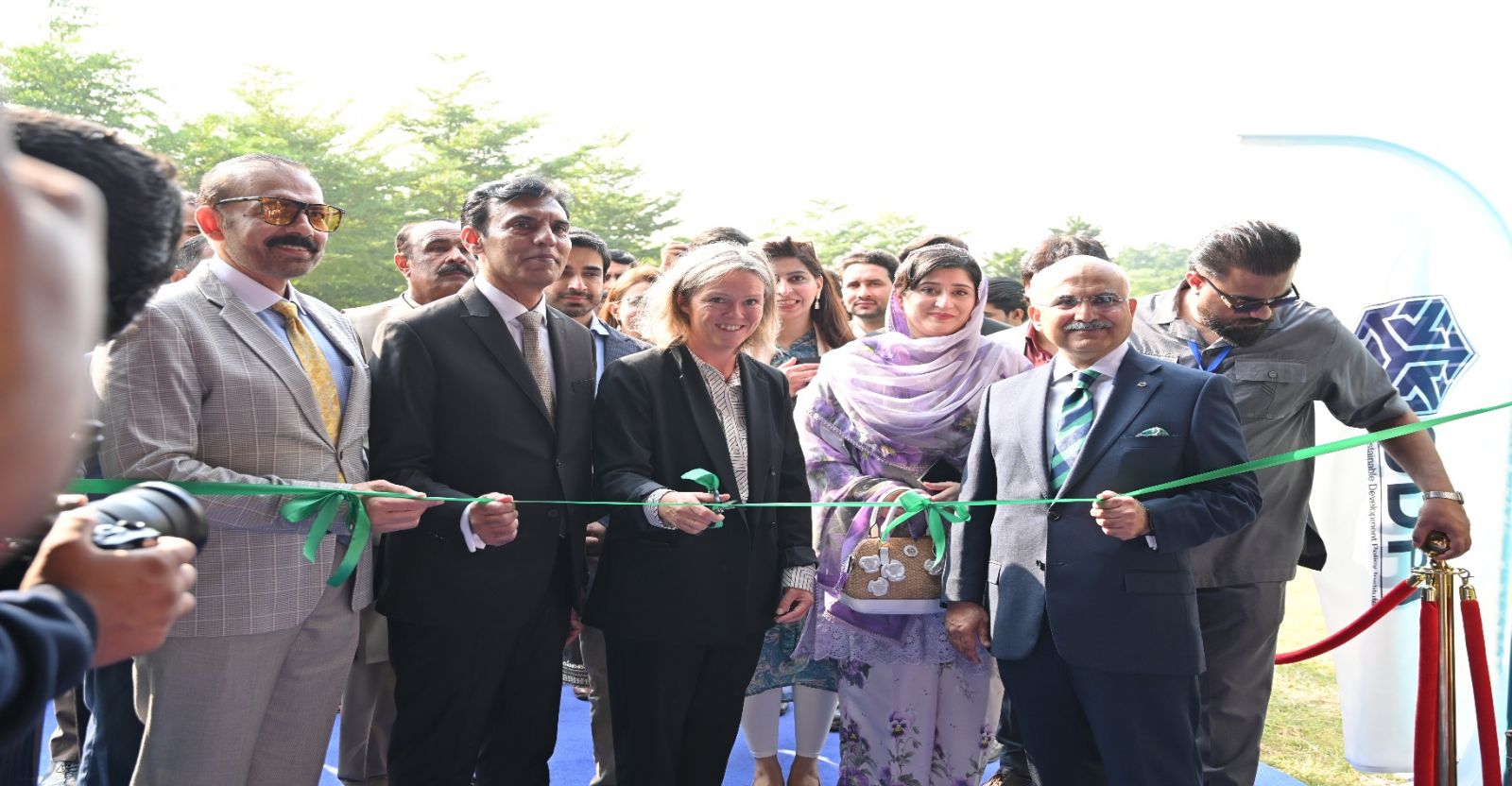
Federal Minister for Information Technology and Telecommunication Shaza Fatima Khawaja and Prime Minister's Coordinator on Climate Change Romina Khurshid Alam attended the ribbon-cutting ceremony marking the inauguration of the exhibition
The occasion also marked the launch of SDPI's anthology, “Sustainable Development in the Emerging World Disorder,” incorporating key policy recommendations from its 28th Sustainable Development Conference, alongside Volume 10 of the Journal of Development Policy Research and Practice.
Speaking on the occasion, SDPI Executive Director Dr Abid Qaiyum Suleri stressed that the private sector must be recognized as a key partner in addressing climate change and advancing sustainable development. He said governments alone could not mobilize the financial resources, innovation and technical expertise required to confront mounting environmental and economic challenges.
Dr Suleri noted that the perception of environmental sustainability as a constraint on profitability was changing, with greener businesses increasingly demonstrating greater competitiveness and economic efficiency. He warned that Pakistani industries must prepare for evolving international trade requirements, including the European Union's Carbon Border Adjustment Mechanism (CBAM), as global markets increasingly demand cleaner production processes and transparent carbon-emission reporting.
Highlighting the importance of international partnerships, he appreciated Denmark's continued technical and institutional support for Pakistan's transition towards a greener economy.
Danish Ambassador to Pakistan Maja Derrous Mortensen said climate change, water scarcity and resource constraints posed growing threats to economic stability worldwide, requiring urgent cooperation between governments, businesses and research institutions.
Sharing Denmark's experience, she said economic growth and environmental protection were not mutually exclusive, noting that her country had expanded its economy while reducing carbon emissions. She described energy efficiency as the cheapest available energy resource and expressed Denmark's commitment to strengthening commercial cooperation with Pakistan in green energy, energy-efficient technologies and sustainable industrial solutions.
The ambassador emphasized that the expo could connect Pakistani innovators and businesses with international expertise, financing and potential partners, helping transform sustainable development ideas into commercially viable initiatives.
Representing the Overseas Investors Chamber of Commerce and Industry (OICCI), Umar Ahsan described climate change as an existential challenge for Pakistan, warning that repeated climate disasters were undermining economic stability, livelihoods and development prospects.
He said the devastating floods of 2022 had caused more than $30 billion in damage and economic losses, diverting resources that could otherwise have supported education, healthcare and productive investment.
Citing OICCI's climate report, “Climate Acceleration: From Commitment to Competitive Edge in a Decisive Decade,” he said Pakistan required more than $550 billion in climate-related investment through 2035, equivalent to approximately $50 billion annually, against combined federal and provincial development budgets of around $15 billion.
He stressed that public financing alone could not bridge this gap and called for stronger private investment, bankable climate projects, predictable policies and improved access to concessional financing.
Mr Ahsan also underlined the importance of social equity in climate action, saying women, small farmers, vulnerable communities and small businesses must have access to resources enabling them to adapt to water scarcity, flooding, extreme heat and agricultural disruptions.
He urged businesses to adopt credible environmental reporting and avoid greenwashing, while calling on policymakers and financial institutions to facilitate investment in climate-resilient infrastructure and sustainable production.
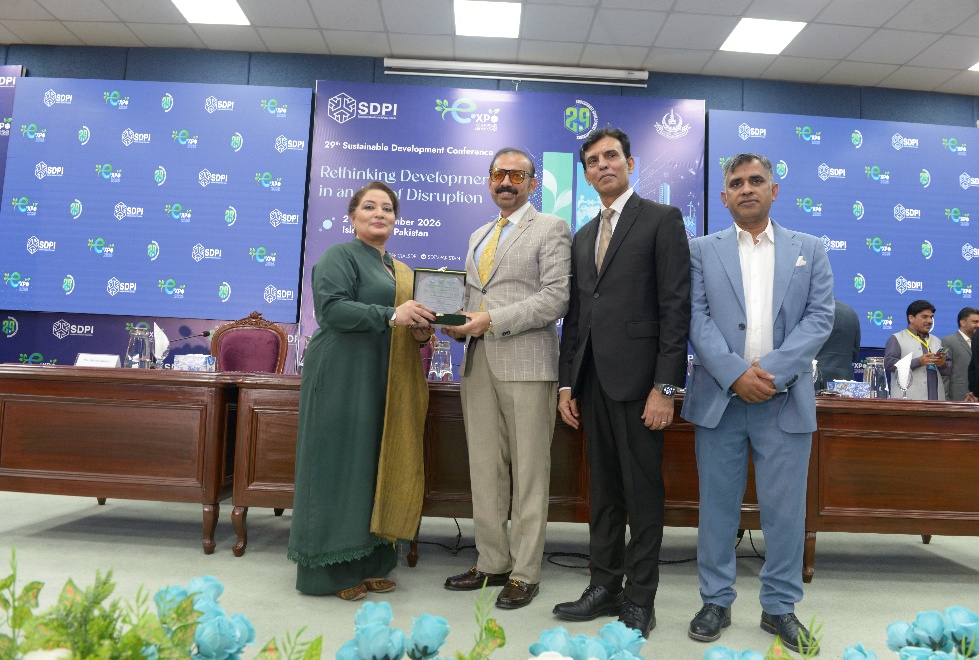
The event also featured the Sustainability Awards, recognizing practical initiatives across climate adaptation, circular economy, clean energy, sustainable agriculture, digital innovation and inclusive development.
Packages Group received recognition for climate adaptation and resilience, while Ismail Rezan Private Limited and Nestlé Pakistan were honoured in the circular economy and resource efficiency category, including Nestlé's Clean Gilgit-Baltistan initiative.
Mari Energy Limited received an award for its solar programme in North Waziristan and Ghorki, while PepsiCo Pakistan was recognised for regenerative agriculture practices supporting soil health, water conservation and biodiversity.
Coca-Cola received recognition for Pakistan's first plastic road initiative, while the University of Lahore was honoured for research promoting sustainable urban water management and climate awareness.
Fruit of Sustainability received the digital innovation and responsible AI award, while Laurel Pakistan was recognised for investing in women's skills and livelihoods to promote inclusive growth.