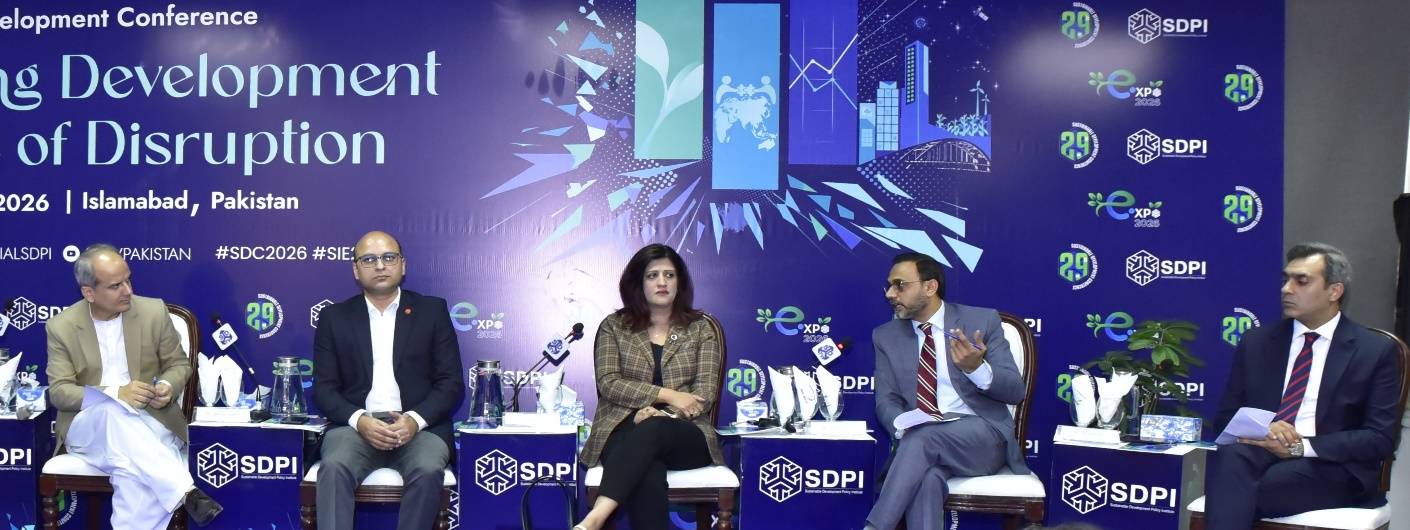
Digital Lending in Priority Sector Financing: Expanding Access, Strengthening Inclusion and Unlocking Productive Growth in Pakistan, Day 3, B11, 04 Nov
Digital lending gains ground as Pakistan seeks to bridge SME financing gap
ISLAMABAD (04 November 2026): Pakistan's digital lending landscape is expanding, with regulators, banks and financial institutions calling for stronger data governance, automated credit assessment and innovative financing models to extend credit to underserved segments, particularly small businesses, farmers and overseas job seekers.
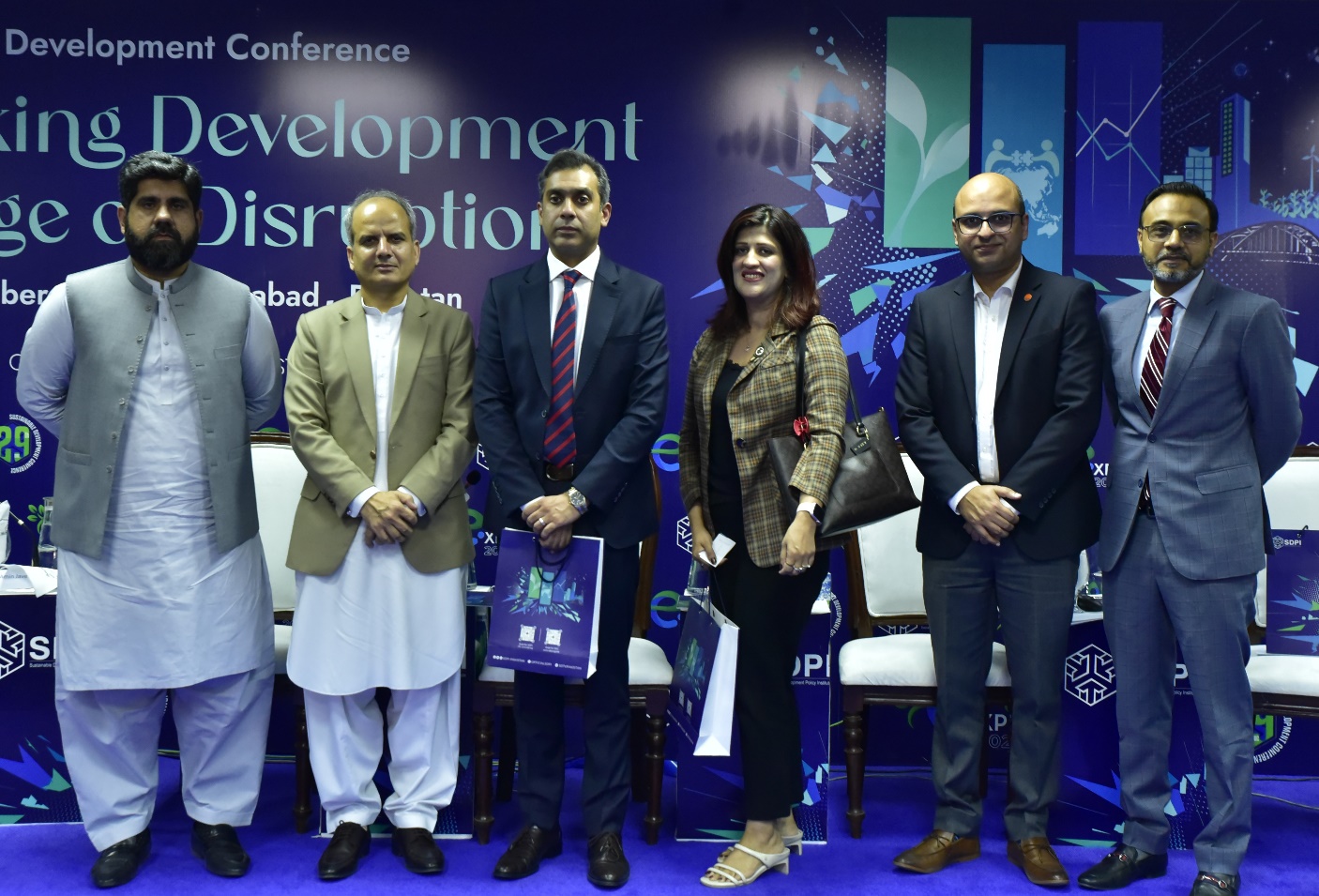
This was the crux of a policy dialogue, titled: ‘Digital Lending in Priority Sector Financing: Expanding Access, Strengthening Inclusion and Unlocking Productive Growth in Pakistan’, organized on the third day of the 29th Sustainable Development Conference by Sustainable Development Policy Institute in collaboration with Bank of Punjab here on Wednesday.
Sajjad Ali, Head of Lending & PF Department, Specialized Companies Division, Securities and Exchange Commission of Pakistan, said Non-Bank Financial Companies (NBFCs) disbursed 2.56 million loans worth Rs253 billion to small and medium enterprises (SMEs) during the July-June 2026 period, reflecting their growing role in extending credit to underserved borrowers.
He said the regulatory approach was increasingly focused on facilitating innovation while ensuring consumer protection, with regulators seeking to streamline oversight rather than micromanage lending practices.
NBFCs were helping bridge the financing gap by reaching borrowers with limited credit histories through alternative credit-scoring mechanisms, he said.
Emerging digital lending models, including nano-lending, Buy Now Pay Later (BNPL) and Earned Wage Access (EWA), were also gaining regulatory attention. The SECP was adopting a circular-based approach to test new models, with successful practices eventually incorporated into formal regulations.
A key priority was the proposed whitelisting of digital lending applications subject to compliance with the prescribed regulatory framework. NBFCs would also be required to integrate Anti-Money Laundering (AML) systems and ensure their applications could capture essential customer information, including identification photographs and bank statements, for verification and compliance.
Ammar Habib of National Credit Guarantee Company Limited (NCGCL) said the absence of a unified data governance and middleware layer was hindering credit scoring and risk assessment, particularly for small businesses.
He noted that despite phenomenal growth in digital payments through Raast, the lack of distinction between personal and merchant accounts remained a major challenge. Many small businesses continued to conduct commercial transactions through personal accounts, making it difficult for financial institutions to identify merchants and assess their creditworthiness.
He called for consent-based data-sharing infrastructure to integrate information from mobile phone usage, consumption patterns, electricity records and credit histories, enabling more informed lending decisions.
Azka Munir, Head of Programme Design, Punjab Skills Development Fund (PSDF), and Programme Lead, CM Punjab Parwaaz Card, said the Punjab government's Parwaaz Card initiative aimed to facilitate overseas employment through interest-free loans for job seekers unable to meet the upfront costs of securing jobs abroad.
She said aspiring migrant workers faced substantial expenses, including medical examinations, protection fees, visa processing, biometric verification, air tickets and Overseas Employment Promoter (OEP) charges. With many applicants lacking formal credit histories, traditional banks were reluctant to extend financing, forcing some to sell essential assets such as jewellery and livestock.
The loans covered medical, protection, biometric and OEP expenses, as well as skills training and GCC skills verification costs. The Bank of Punjab disbursed the loans, which borrowers were generally required to repay within ten months.
Nofel Daud, Chief Digital Officer, Bank of Punjab, said the bank had expanded its digital financing strategy since 2020 to target agriculture, SMEs, low-cost housing and women's inclusion, backed by investments in technology, human resources and risk management.
He cited Asaan Karobar Finance, designed to address small entrepreneurs' financing needs, alongside experiments with psychometric testing for alternative credit assessment and the use of NADRA's Pak ID for single sign-on services.
He stressed that digital transformation required not only technological investment but also institutional commitment and a shift in boardroom thinking.
Dr Waqas Javed, Head of Data Analytics & AI, Bank of Punjab, called for end-to-end digital lending to expand financial inclusion, noting that only 2.5 per cent of the population had access to formal commercial bank lending, while 85 per cent of adults relied on informal sources of credit.
He said traditional lending practices based on physical documentation, collateral and manual assessments restricted access to finance, adding that fully automated processes were essential to achieve scale.
Citing the Kisan Card, Dr Javed said farmers with limited internet access could apply by sending their CNIC numbers through SMS from registered mobile numbers. The bank's backend system used application programming interfaces (APIs) to access NADRA identity records, credit bureau information and satellite imagery linked to the Patwari registry to verify applicants and agricultural land.
For SMEs without conventional collateral, BOP had also introduced a gamified, Urdu-language psychometric assessment tool developed with an international partner to evaluate borrowers' creditworthiness.
Taimoor Ali, Group Head, Digital Financial Services (DFS), Karandaaz Pakistan, identified the lack of a reliable merchant registry and inconsistencies in financial data as major obstacles to expanding digital lending through bank-FinTech partnerships.
He said successful partnerships between lending institutions and technology platforms required an effective policy and regulatory framework supported by functional digital infrastructure.
A merchant registry capable of uniquely identifying businesses and their digital transaction footprints was essential for more accurate credit assessment, he added.
Mr Ali also pointed to discrepancies between supply-side data reported by the State Bank of Pakistan and demand-side estimates drawn from World Bank surveys, making it difficult to establish the actual number of active businesses and market participants.