Environmental Diplomacy for shared Air on environmental diplomacy for Shared Air and Cryosphere Risks in South Asia, Day 3, B7, 04 Nov
Pakistan asked to shift from climate policy to data-driven, bankable climate projects
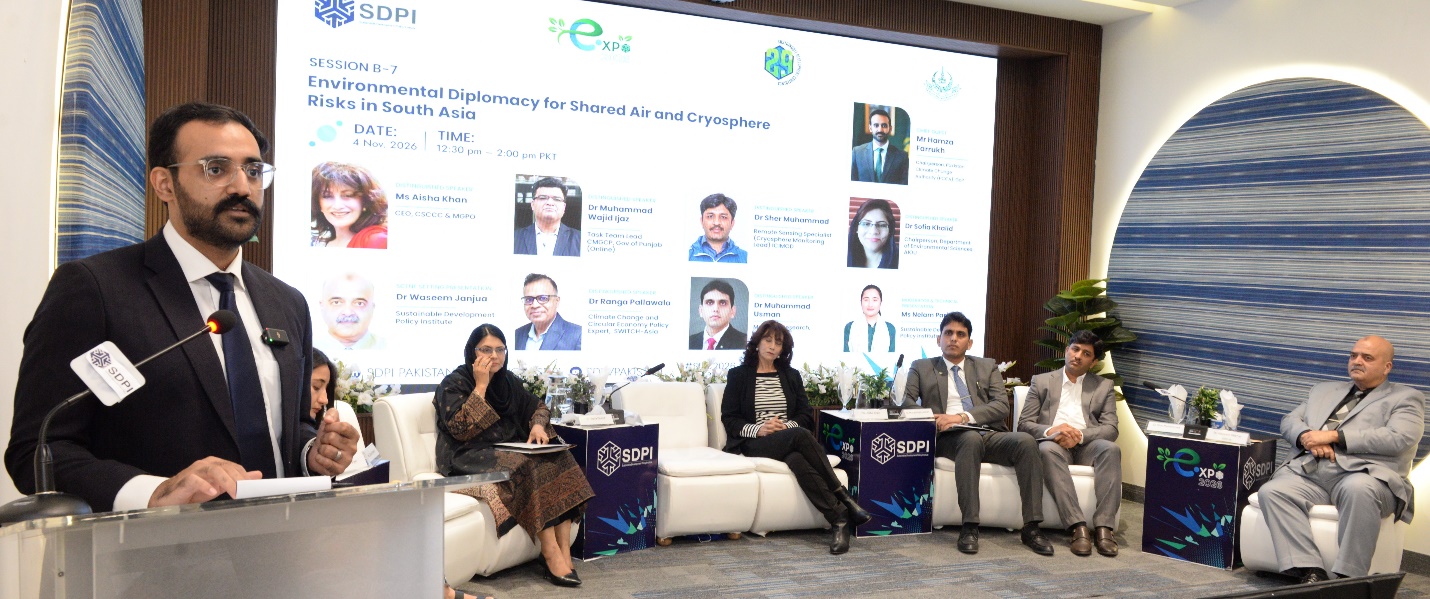
ISLAMABAD (04 November 2026): The Chairperson of Pakistan Climate Change Authority (PCCA) Hamza Farrukh has said the country must move beyond highlighting its vulnerability to climate change and focus on developing data-driven, financially viable projects that enable it to shape its own climate future.
He was speaking at a session, titled: ‘Environmental Diplomacy for shared Air on environmental diplomacy for Shared Air and Cryosphere Risks in South Asia’ organized at 29th Sustainable Development Conference by Sustainable Development Policy Institute here on Wednesday.
He said Pakistan’s engagement at global forums, including the upcoming COP31 should go beyond presenting grievances and highlighting the country's climate-related challenges.
He said those representing Pakistan at international conferences had a dual responsibility: effectively communicating the country's climate realities and ensuring that discussions translated into practical solutions rather than remaining confined to complaints.
"This is not just a case for emergency response. It is a case for re-engineering and re-architecting the climate ecosystem, where we are not merely followers of foreign strategies but the makers and architects of our own future," he said.
Highlighting the transboundary nature of climate change, Mr Farrukh observed that glaciers, black carbon and air pollution did not recognize national borders or political boundaries, making regional and international cooperation indispensable. He said Pakistan had made considerable progress in climate policymaking over the past decade, translating international commitments into domestic policy frameworks. The National Adaptation Plan, Nationally Determined Contributions (NDCs) and guidelines for carbon markets, despite their shortcomings, provided an important foundation for further action, he added.
Aisha Khan, Executive Director, Civil Society Coalition for Climate Change (CSCCC), and Chief Executive Officer, Mountain and Glacier Protection Organization (MGPO), said Pakistan must build regional alliances and push for dedicated international funding to protect the cryosphere, as melting glaciers and changing precipitation patterns threaten water and food security across the Hindu Kush-Karakoram-Himalaya (HKH) region.
She said Pakistan's dependence on the transboundary Indus River system made it particularly vulnerable as a lower riparian country. “Around 60 per cent of the country's water reliance was linked to the Indus, while nearly 90 per cent of river flows supported agriculture.”
She said water and food security were among Pakistan's foremost challenges, with mountain communities facing an even greater threat because their livelihoods depended heavily on the timing and volume of water from glaciers and precipitation.
Ms Khan called for a declaration on the cryosphere, arguing that the North Pole, South Pole and the so-called Third Pole — the HKH region — deserved greater recognition in international climate financing.
Dr Ranga Pullawala, EU SWITCH-Asia Programme, Thailand, said a circular economy approach must be integrated into climate policies to reduce emissions, protect biodiversity and strengthen resilience, particularly in vulnerable mountain ecosystems.
He stressed that while cross-border climate challenges required multilateral cooperation, countries also needed to strengthen domestic action and improve access to climate finance.
Highlighting the link between climate change and the circular economy, he said resource efficiency was central to achieving climate ambitions, including mitigation, adaptation and addressing loss and damage.
"Circular economy is not just about recycling; it is about the entire value chain of resources, from product design and consumption to extending their lifespan and managing materials at the end of their life cycle," he said.
Dr Pullawala warned that inefficient resource use also accelerated pollution, waste generation and biodiversity loss. Moreover, adaptation and resilience-building projects could inadvertently increase emissions if they relied on resource-intensive materials and practices.
The expert also highlighted the implications for the cryosphere, particularly the role of black carbon generated through activities such as burning agricultural residues.
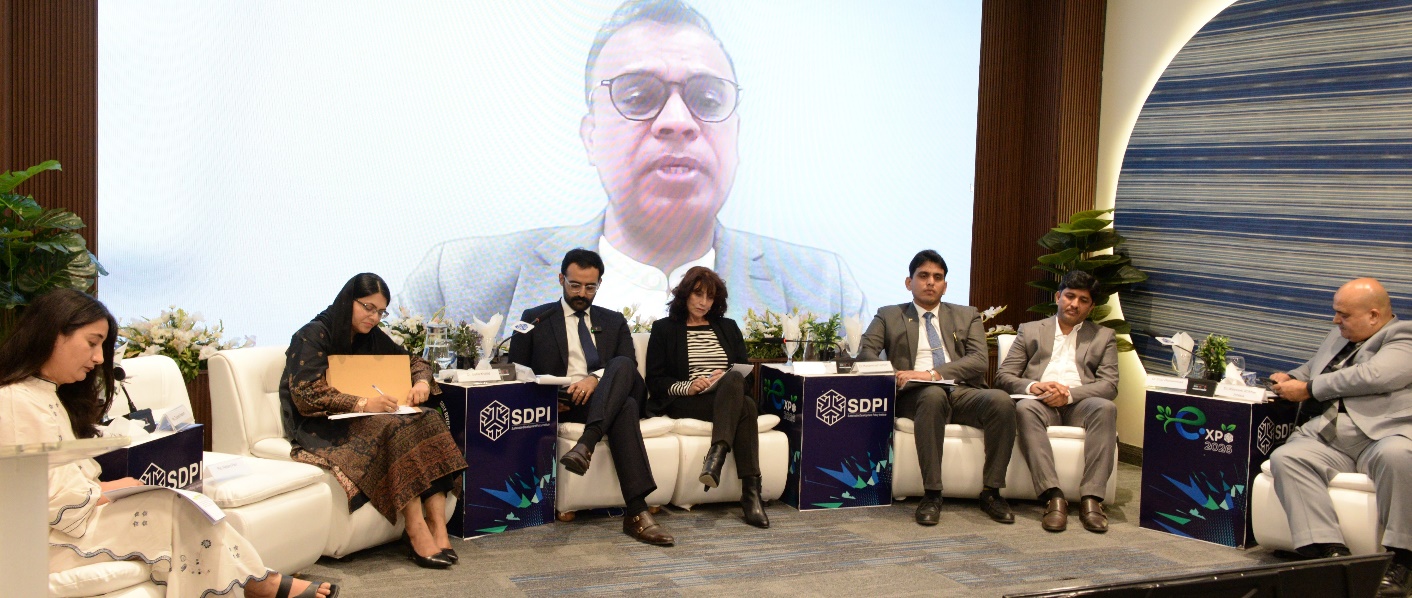
Dr Sher Muhammad, Promote Sensing Specialist (Cryosphere Monitoring Lead) International Centre for Integrated Mountain Development (ICIMOD), Kathmandu, Nepal, called for stronger regional cooperation, standardized monitoring protocols and data sharing to improve disaster risk reduction, warning that traditional early warning systems may not be sufficient to detect emerging hazards.
He said Pakistan needed to expand its risk assessment beyond geographical boundaries, as disasters originating in neighbouring countries could also threaten its communities.
He stressed that disaster preparedness should go beyond conventional early warning mechanisms and incorporate continuous monitoring and data-driven systems capable of detecting unusual signals, including seismic activity, that could indicate potential hazards.
"After such incidents, we need to move beyond traditional early warning systems and explore other forms of early detection based on regular monitoring and data," the speaker said.
Dr Muhammad Usman, Manager Research, National Institute of Disaster Management (NIDM), National Disaster Management Authority (NDMA), warned that thousands of glacial lakes in Pakistan's northern areas pose a growing threat to mountain communities, calling for stronger early warning systems, local capacity building and improved scientific research to reduce disaster risks.
He identified four major risks, including glacial lake outburst floods (GLOFs), accelerating glacial melt, heavy snowfall and compound disasters.
He said Pakistan's northern areas had more than 13,000 glacial lakes, many of which could become potential sources of catastrophic flooding if monitoring and preparedness mechanisms remained inadequate.
"Most of these lakes are potential ticking time bombs, and we must have advanced early warning systems to alert communities before an outburst occurs," he said.