Experts for adaptive social protection, legal cover for informal workers, recognition of care work for just energy transition, Day 2, A9, 03 Nov
Experts for adaptive social protection, legal cover for informal workers, recognition of care work for just energy transition
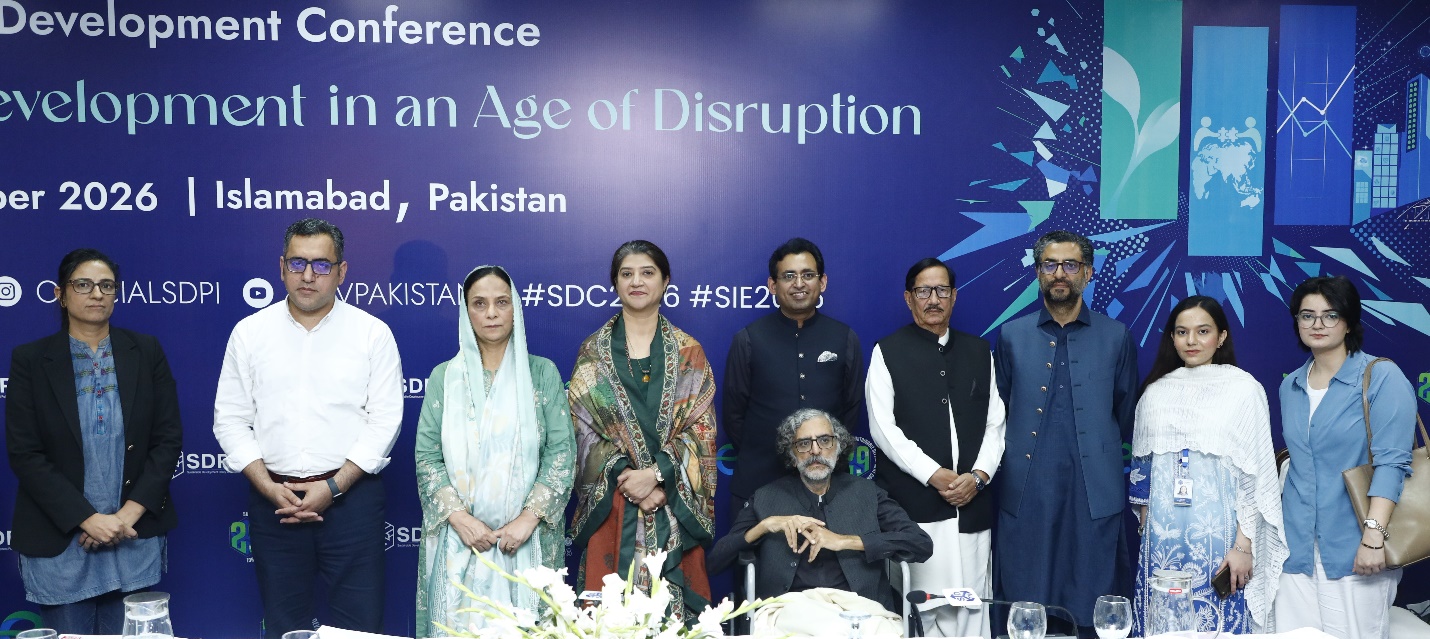
ISLAMABAD (03 November 2026): Experts and lawmakers have called for Pakistan's energy transition to be built around adaptive social protection, legal and social security cover for informal workers, recognition of women's unpaid care work, and the inclusion of trade unions and communities in transition planning.
They were speaking at a policy roundtable, titled: "Rethinking Climate Adaptation: Labour Rights and Care Economy in Pakistan's Just Energy Transition", organized on the second day of 4-day Sustainable Development Conference by the Sustainable Development Policy Institute in collaboration with FES at the Allama Iqbal Open University here on Tuesday.
Dr Syeda Shahida Rehmani, Secretary of the Women’s Parliamentary Caucus (WPC) said climate change affects women most, even though they are central to community resilience, food security and natural resource management.
She said unpaid care work is an essential part of the economy and must be recognised in public policy. She called for investment in affordable childcare, social protection, clean energy and accessible public services, and for women's meaningful representation in climate governance and energy planning at national and local levels. She said that without gender justice there would be no just transition.
Ms Rehmani said Pakistan's problem was not a lack of laws but weak implementation. She said the National Industrial Relations Commission (NIRC) sits only in Islamabad, forcing union representatives from across the country to make repeated trips and spend large sums, sometimes for years, without getting registered. She said no major labour legislation had been passed since 2012 even as the economy moved towards digital platforms and electric vehicles. She asked what strategy the government had for workers displaced by these changes, and for youth and women.
She said child labour laws were not being enforced and that many workers had no EOBI registration, health or education cover. She said contract-based hiring was allowing even minimum wage rules to be bypassed, citing the example of a cleaner at Parliament Lodges who she said was paid about Rs23,000. She thanked SDPI, FES and other development partners for convening the discussion and urged that such sessions continue so that findings reach decision-makers.
Mr Iftikhar Ahmed of WageIndicator said workers must be placed at the centre of the transition. Governments, he said, must ensure that fundamental labour rights, including social protection and social dialogue, are protected. He said most of Pakistan's workforce is informal and therefore outside the reach of existing labour protections, and that policy must extend those protections to everyone, whether they work in the formal or informal economy.
He said workers such as rooftop solar installers face heat exposure and unsafe conditions, and that sectors including coal mining lacked effective occupational safety regulation. As solar adoption changes the job market, he added, people who lose jobs will need support and skills development, and social protection must be linked to these systems.
Dr Fareeha Armughan of SDPI said the transition must be gender-responsive. She said climate vulnerability, gender inequality, the non-recognition of women's care work and the lack of community benefit from centralised power generation were intersecting problems that any just transition must address. Women, she said, face indoor air pollution from biomass fuels and very long hours of domestic work.
She proposed using adaptive social protection, which combines social safety nets with climate adaptation, as the central policy tool. Pakistan, she said, already had tested systems, including the National Socio-Economic Registry, and did not need to build new ones. She called for anticipatory and long-term planning beyond cash transfers and for better coordination among social protection, climate, labour and energy policy, which she said currently operate in separate silos. She cited examples from countries such as Bangladesh that could be adapted.
Mr Muhammad Badar Alam of PRIED warned that the transition could push more workers into informality as mines and plants close. He pointed to communities such as Thar that bear the cost of coal mining and coal-based power generation without adequate access to the benefits. He called for rehabilitation, social protection, income support, retraining and pathways to decent green jobs, with trade unions and affected communities involved in transition planning. He also said technologies such as microgrids and virtual power plants could help ensure that those who cannot afford to invest are not left dependent on increasingly costly grid power.