From Coal to Clean: Towards a Phased, Just Energy Transition, Day 3, B5, 04 Nov
Pakistan urged to accelerate coal-to-clean energy transition through financial reforms
ISLAMABAD (04 November 2026): Energy experts, policymakers and development practitioners have called for a phased, financially viable transition from coal-fired electricity to renewable energy in Pakistan, warning that rising capacity payments, declining coal plant utilization and rapid solar adoption are exposing structural weaknesses in the country's power sector.
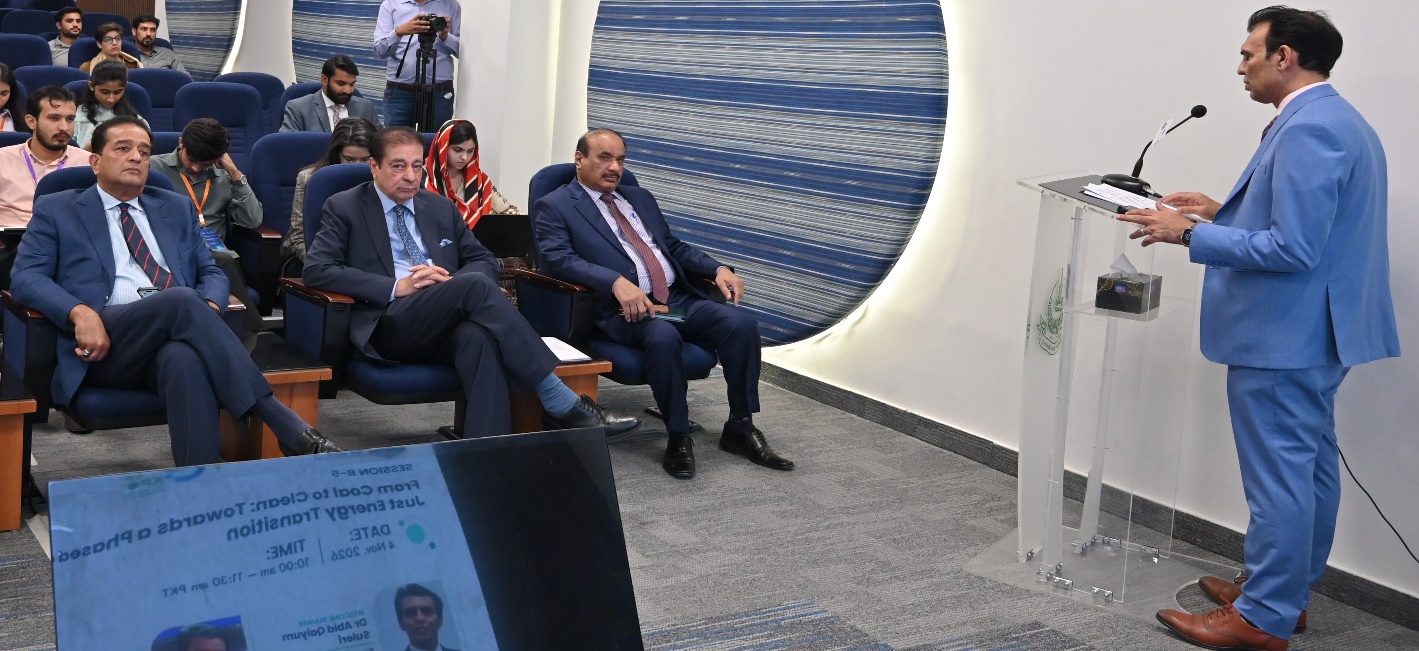
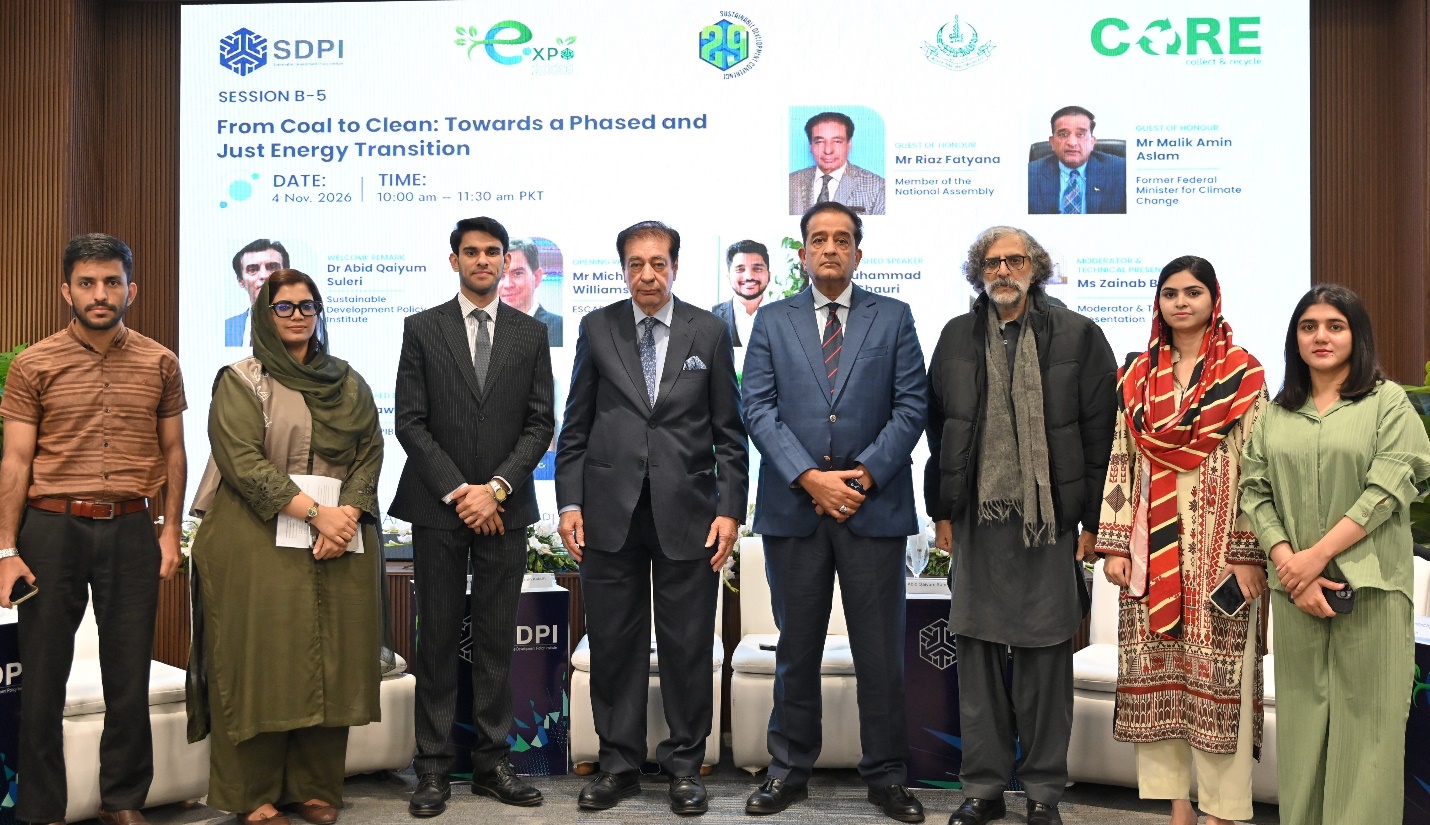
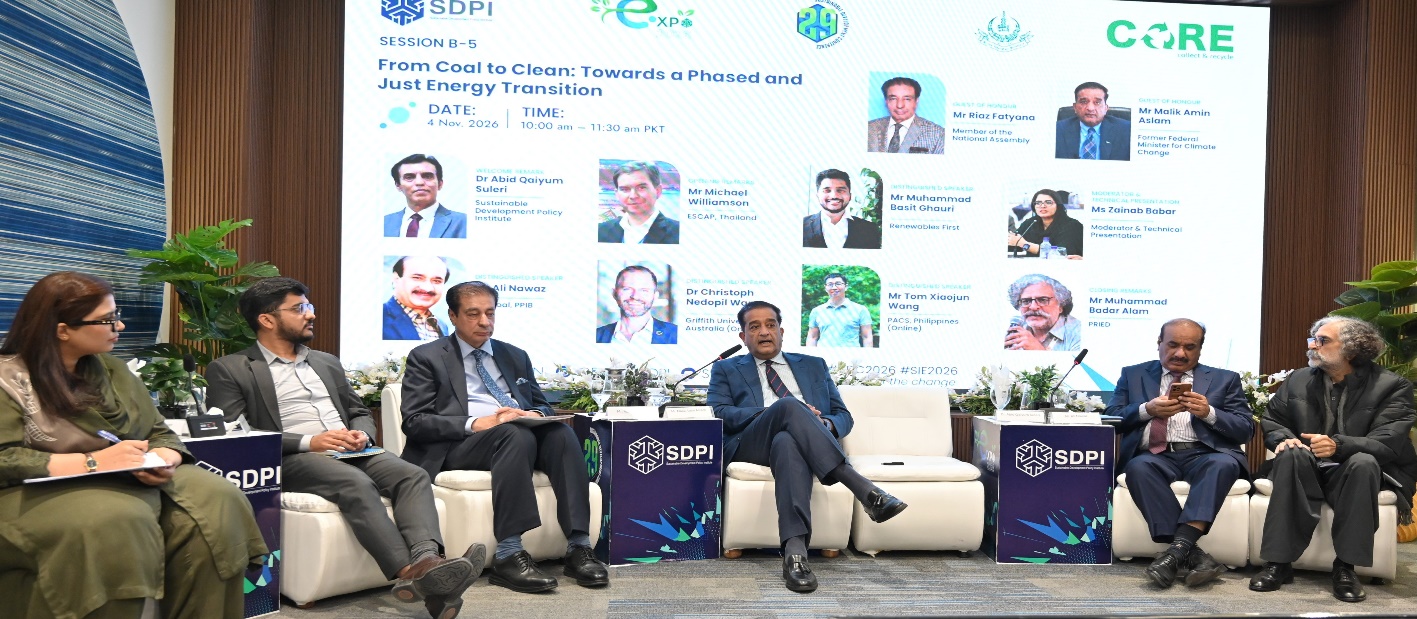
They were speaking at a policy dialogue, titled: "From Coal to Clean: Towards a Phased, Just Energy Transition", organized on the third day of the four-day Sustainable Development Conference, held by the Sustainable Development Policy Institute (SDPI) at the Allama Iqbal Open University here on Wednesday.
Former federal minister for climate change Malik Amin Aslam said Pakistan had access to international financing mechanisms for retiring coal-fired power plants but lacked the political will to implement reforms.
He cited the Asian Development Bank's Energy Transition Mechanism (ETM) and South Africa's $8.5 billion Just Energy Transition Partnership as examples of financing opportunities. Aslam criticised capacity payment obligations and questioned electricity demand projections underpinning earlier independent power producer (IPP) policies. He alleged that inflated projections and excessive financial incentives had created enduring liabilities for consumers.
He said Pakistan's rapid solar expansion demonstrated that households and businesses were already pursuing cleaner electricity, while government policies had failed to keep pace.
Michael Williamson from the United Nations Economic and Social Commission for Asia and the Pacific (UNESCAP) said Pakistan faced a complex challenge because most coal-fired power plants were commissioned after 2015 and retained substantial financial obligations.
He identified three priorities: fair compensation for early retirement, replacement through clean energy and energy efficiency, and protection of workers and coal-dependent communities. Williamson said ESCAP and SDPI had collaborated on a study exploring repurposing coal plants for solar and wind generation, battery storage, synchronous condensers and potentially data centres.
Member of the National Assembly Riaz Fatyana called for reducing electricity tariffs, rationalizing renewable energy taxes and encouraging competition in alternative energy markets. He proposed developing small hydropower projects along Punjab's canal network to provide affordable, clean electricity to surrounding villages.
Dr Christoph Nedopil Wang, an international energy transition expert, stressed that coal retirement financing must reflect realistic asset valuations based on future electricity demand rather than contractual expectations.
Drawing lessons from Indonesia and Germany, he recommended plant-specific financial restructuring, renegotiation of power purchase agreements and innovative mechanisms, including concessional financing and reverse auctions.
Muhammad Basit Ghauri of Renewables First warned that imported coal plants were already becoming underutilized assets. Citing research on accelerated retirement, he said restructuring selected plants could potentially avoid substantial future capacity payments. He identified political commitment, investor negotiations and consistent government policies as essential conditions for implementation.
However, Ali Nawaz Leghari of the Private Power and Infrastructure Board defended the historical development of coal plants, explaining that they were established to address severe electricity shortages. He said converting imported coal plants to indigenous Thar coal could reduce fuel imports and strengthen energy security. Reliable generation, he maintained, remained necessary alongside renewable energy expansion and battery storage.
PRIED Chief Executive Officer Badr Alam challenged Pakistan's electricity demand forecasting and questioned further dependence on Thar coal. He warned that rooftop solar adoption was reducing grid electricity sales while fixed generation obligations continued burdening remaining consumers.
Yingjie Chen from Greenovation Hub, China emphasized that Pakistan-China cooperation on coal transition required commercially viable proposals, predictable regulations and effective investor risk management. She recommended pilot projects combining renewable energy, storage, industrial electrification and financing arrangements capable of attracting Chinese and international investment.
Tom Xiaojun Wang, PACS Philippines, an international coal transition expert joining virtually from China's Shanxi province, said the transition must prioritize workers and communities dependent on coal industries. Referring to a survey of approximately 9,000 Chinese coal-sector workers, he highlighted concerns over job security, limited retraining opportunities and alternative employment, particularly among middle-aged workers.
Citing examples of coal companies diversifying into tourism and retraining employees, he stressed that Pakistan should incorporate skills development and community engagement into its transition strategy.
Participants stressed that Pakistan must move beyond policy discussions towards financially credible projects that reduce electricity costs, protect affected communities and support sustainable development through coordinated government action, international financing and Pakistan-China cooperation.
SDPI’s Noorul Ain highlighted mounting financial pressures within the electricity sector, citing transmission and distribution losses, circular debt and declining grid demand. The official said seven Chinese-financed coal plants under the China-Pakistan Economic Corridor (CPEC) presented significant transition challenges.He suggested financial restructuring, regulatory reforms and greater engagement with multilateral development banks to support a national coal transition roadmap.