From Policy to Practice: Strengthening Extended Producer Responsibility for Better Systems in Pakistan, Day 4, C1, 05 Nov
Minister stresses for stronger systems of collection, segregation and recycling
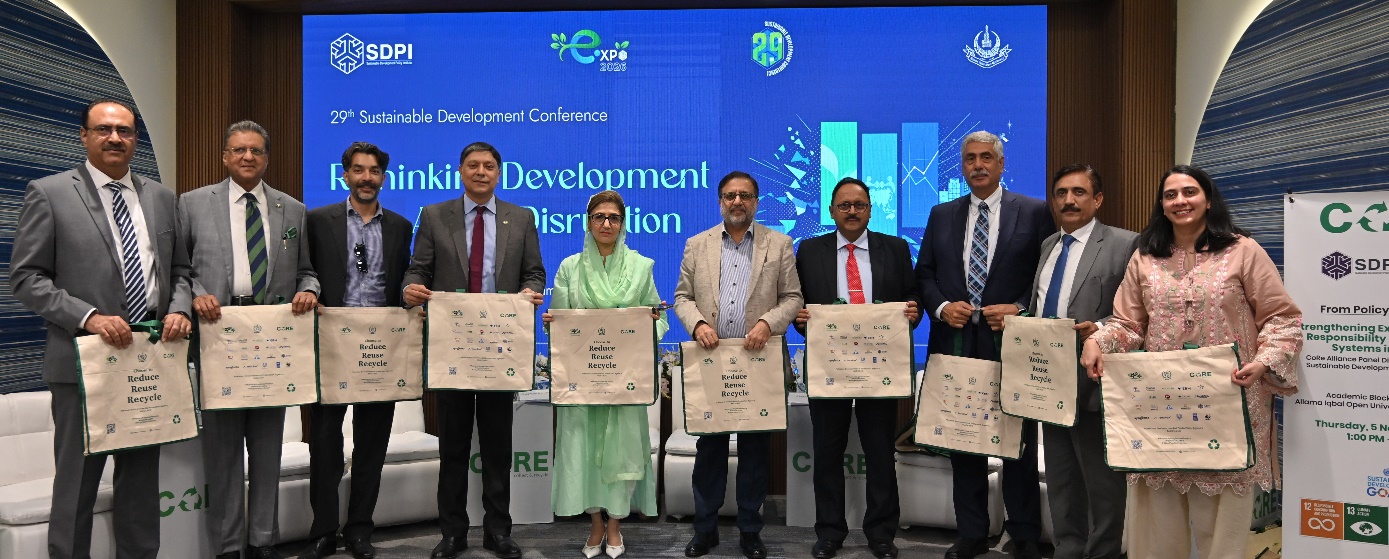
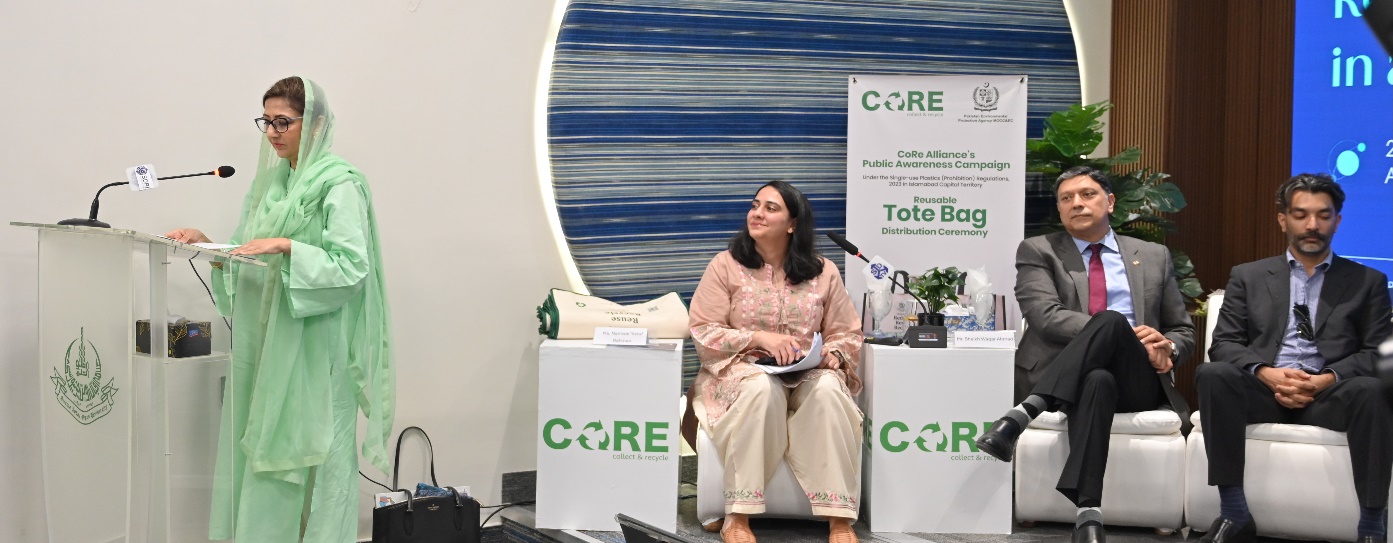
ISLAMABAD (05 November 2026): Dr Shezra Mansab Ali Khan Kharal, Minister of State for Climate Change, stressed the urgent need for stronger systems of collection, segregation and recycling, while recognizing the significant reliance on the informal waste collection sector while pointing out the challenges created by differing plastic regulations and enforcement approaches across jurisdictions.
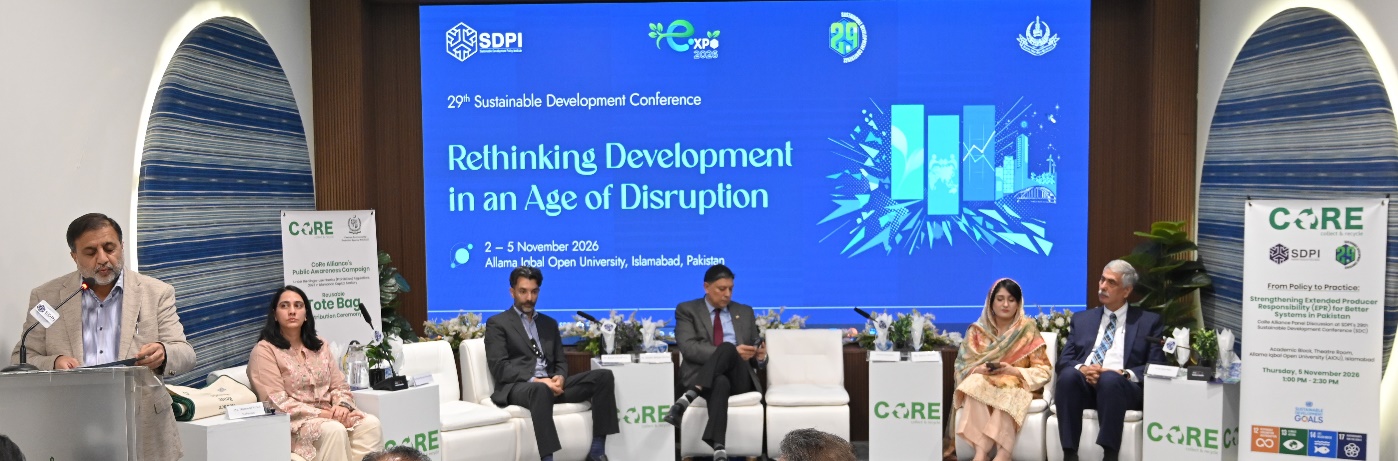
The session, titled: “From Policy to Practice: Strengthening Extended Producer Responsibility (EPR) for Better Systems in Pakistan,” was organized on the fourth day of 29th Sustainable Development Conference, by the Sustainable Development Policy Institute (SDPI), here on Thursday.
The Minister also shed light on the Single-Use Plastics Prohibition Regulations 2023 and Pakistan's participation in the Global Plastic Action Partnership (GPAP), which the country joined in 2022, leading to the development of a National Action Roadmap to reduce plastic pollution.
She added that recycling infrastructure needs greater investment to strengthen Pakistan’s capacity for effective waste collection, segregation and recycling.
Amir Mohyuddin, Additional Secretary, Climate Change Division, spoke on the scale of Pakistan’s waste management challenge, noting that poorly managed waste is visible across the country’s streets, drains, water bodies and rivers. He stressed that the issue extends beyond plastic itself to the inadequate infrastructure and systems responsible for its collection, segregation and disposal.
“Collection is fragmented, collection at source is limited, and the system depends heavily on informal waste workers who often operate without adequate protection or formal recognition,” he observed, while reiterating the need to address systemic gaps alongside plastic pollution. While acknowledging the Single-Use Plastics (Prohibition) Regulations 2023 as an important foundation, he called for a broader national policy framework that aligns federal and provincial approaches and moves them in the same direction.
Ms Namwar Yusuf Rahman of the Collect and Recycle Alliance (CoRe Alliance) presented the white paper, titled: “Harmonized and Phased Extended Producer Responsibility (EPR) Framework for Packaging in Pakistan.” The paper outlined key recommendations for developing an effective EPR framework, including meaningful engagement with all stakeholders, particularly the informal waste sector, and extending the framework to cover multiple priority waste streams.
Babar Aziz Bhatti, CEO, Green Earth Recycling, Lahore, highlighted the importance of prioritizing materials based on their recyclability, noting that while the design of an effective EPR scheme may vary across companies, material-specific challenges must inform its implementation. PET, for instance, is comparatively easier to recycle than multi-layer plastics (MLPs), making it important to focus greater attention on materials that are particularly difficult to recover and recycle, he added.
Mr Sheikh Waqar Ahmad, CEO, CoRe Alliance and Head of Corporate Affairs and Sustainability at Nestlé Pakistan, reinforced the need for greater industry responsibility and a value-chain approach. He stressed that Pakistan's infrastructure constraints make a harmonized system essential, particularly given that EPR implementation falls largely within provincial jurisdictions. While provinces must lead implementation with federal government support, he accentuated that their respective approaches need to be aligned to avoid fragmented systems. He also advocated for a phased approach to EPR implementation, consistent with international practices.
Ms Zainab Naeem, Associate Research Fellow at SDPI, challenged the prevailing perception that waste management is solely the government's responsibility, pointing instead to significant regulatory gaps that also present an opportunity for systemic reform. She stressed that waste segregation must be the starting point for tackling plastic pollution, noting that plastics account for just 4% of Pakistan's waste, while 60% is organic waste, half of which is food waste. Speaking on the potential to recover food waste from the hospitality sector and reduce post-harvest losses, she said that there is a need to look beyond plastic bans and recognise the livelihoods tied to its management. “Banning is easier, but that’s adhocism, it’s not a solution. The only solution is segregation,” she emphasized.
In his closing remarks, Mr Zia Hyder Naqi, CEO, Synthetic Products Enterprises Limited (SPEL) Group, said that no technology is inherently good or bad; rather, its impact depends on how it is used. Applying this principle to plastics, he distinguished between recyclable materials, which retain economic value, and hard-to-recycle plastics, for which either the necessary technology or effective collection systems are lacking. He noted that several difficult waste streams, including sanitary pads, diapers, multi-layer plastics (MLPs) and bin liners, remain particularly challenging to recover and recycle.
Speaking on the critical role of consumers in the recycling value chain, he argued that producers and recyclers cannot deliver effective waste management without responsible consumer behaviour. However, he cautioned against placing responsibility on consumers where viable alternatives are not available. He called for greater public awareness around waste segregation and proposed that municipal bodies establish systematic collection schedules, with different waste streams collected on designated days of the week.
Mr. Naqi also spoke on the need to clearly define responsibilities across the entire waste management value chain, challenging the tendency to place the burden of disposal solely on consumers rather than producers or on the government. He maintained that once responsibilities are clearly established among producers, consumers, recyclers and municipal authorities, implementing an effective Extended Producer Responsibility (EPR) system in Pakistan would become considerably more achievable.