From Primary Production to Secondary Value: Scaling an Integrated Circular Textile Economy, Day 3, B2, 04 Nov
Experts say it’s time to capitalize on the recycling provisions
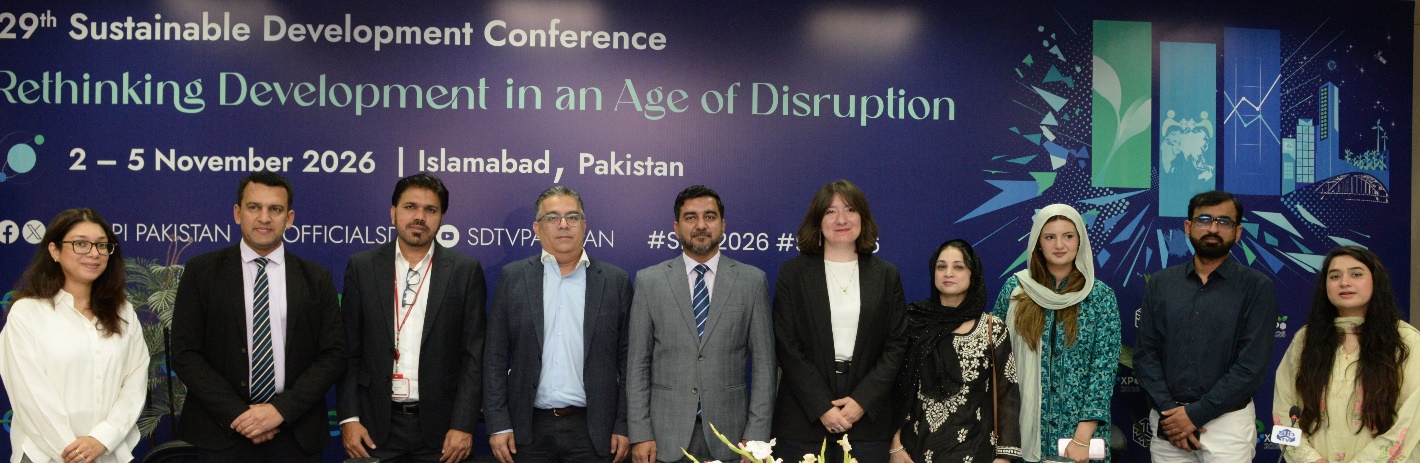
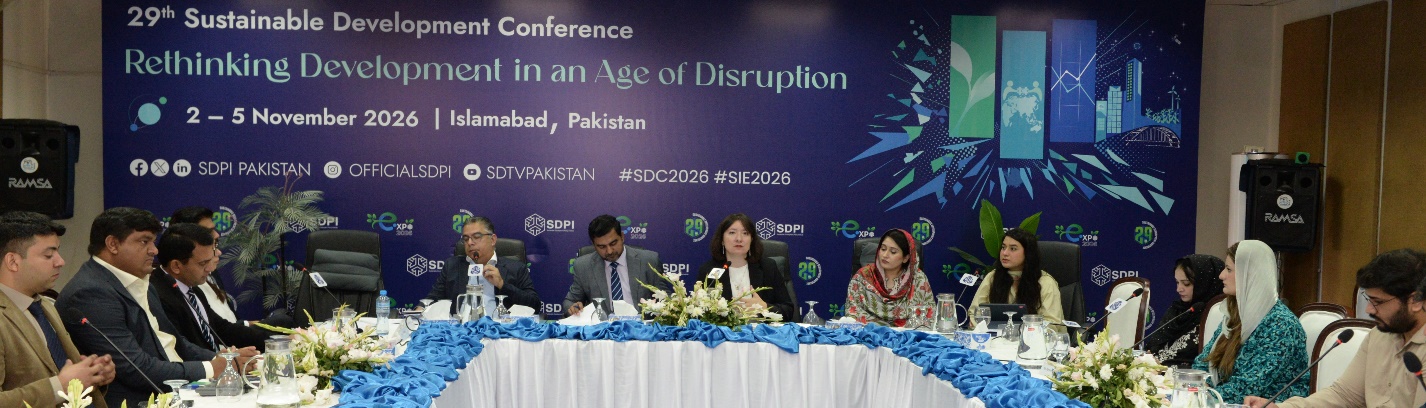
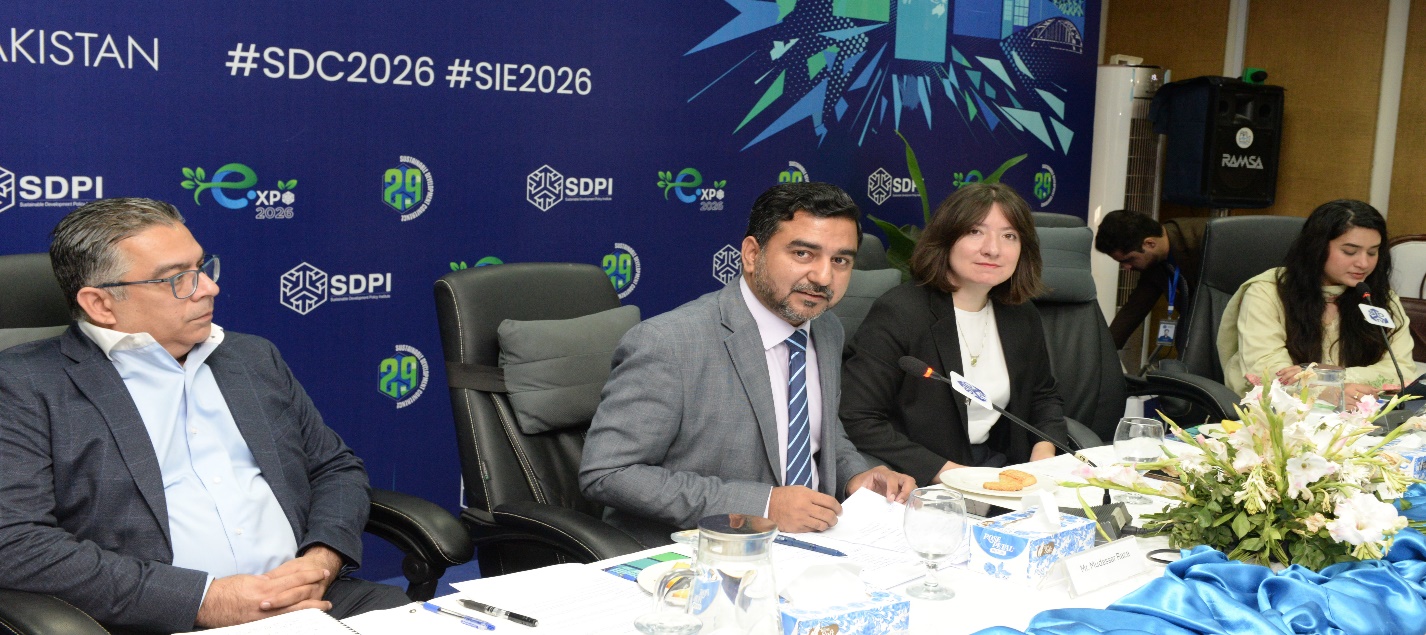
ISLAMABAD (04 November 2026): Experts at a session highlighted Pakistan’s potential to transform its vertically integrated textile sector into a globally competitive, circular and sustainable industry, saying it’s time to capitalize on the recycling provisions.
The session, titled: “From Primary Production to Secondary Value: Scaling an Integrated Circular Textile Economy” , was organized on the third day of 29th Sustainable Development Conference, by the Sustainable Development Policy Institute (SDPI), here on Wednesday.
Ms Yulia Bazhenova, Head of Project (AV) at GIZ Pakistan, said that scaling this transition requires bridging critical information gaps faced by small and medium-sized enterprises (SMEs), strengthening industry-wide data collection across the value chain from collection, sorting and recycling to re-exporting, and bringing textile associations and chambers into conversation.
She called for targeted technical assistance to enhance productivity, improve resource efficiency and reduce carbon emissions, alongside innovative financing mechanisms to unlock private-sector investment. With 15 companies already having invested over €400,000, she noted that mobilizing finance for SMEs, often overlooked by private banks due to perceived risks, will be critical to turning Pakistan’s circular textile ambitions into measurable economic and environmental gains.
Adding an international perspective to the discussion, Ms Beatriz Fernandez of UNEP, Switzerland, who joined the discussion online to share insights from a joint Pakistan-European Union initiative aimed at measuring textile waste across its entire lifecycle, from reuse and recycling to upcycling and final disposal. She also spoke on the growing economic potential of textile waste recovery, with the global textile recycling market projected to reach $6.8 billion by 2034.
Jennifer Wang, CEO of Full Cycle Resource Limited (FCR), shed light on the recycling industry’s potential to drive affordability, create employment and promote economic mobility, particularly for women. However, she said that affordability must be assessed from the receiving country’s perspective and called for a clear, harmonized definition of used clothing, warning that discrepancies between exporting and receiving countries could disrupt the entire recycling value chain.
Mustafa Sattar, Retex Global (Private) Limited CEO, spoke on the detriments of the Basel Convention that is trying to classify used clothing as an environmental hazard. He pointed out that if the convention is adopted, it will backfire on the very goals it is trying to achieve, which has less waste and less fast fashion consumerism. “The regulations coming our way will decide if this industry survives or is finished,” he said, adding that Pakistan is unique in the sense that it imports, uses, and re-exports used textiles, so while other countries might have a difficult time adopting Europe’s new regulations, Pakistan has a golden opportunity to capitalize on the recycling provisions.
Alan Wheeler, CEO of the Textile Recycling Association, recognized Pakistan’s expertise in textile sorting, repairing, recycling and re-exporting while echoing concerns over the potential implications of the Basel Convention. He stressed that policies and regulations must be grounded in reliable, measurable evidence, citing the GIZ report on Ghana and a study on Tanzania, which found that only one-third of materials were waste. He also highlighted a finding of SDPI’s report that the actual number of waste in Pakistan’s textiles is lower than popularly quoted statistics.
Ms Marriam Kaiwan, an educationist, called for a fundamental shift in textile and fashion education, urging institutions to move beyond the traditional design-and-produce model towards a circular approach encompassing design, use, repair, re-use and material recovery. She said that students should also be introduced to Pakistan’s local second-hand clothing market and equipped to create durable, repairable designs with at least three life cycles.
She added that circularity must be linked to viable business opportunities rather than treated solely as a moral obligation towards sustainability. Highlighting the contribution of women in the informal sector, she called for the formalization of used-textile collection and sorting activities to improve their livelihoods while strengthening the wider circular textile industry.
Prof. Dr Muhammad Naveed, an expert of Biotechnology (Genomics and Bioinformatics), stressed the need for design thinking and connecting research, policy, agriculture and consumer angles in one place to formulate industry policies for circular economy. He also spoke on the need for integrating sustainable financing, including concessional loans and tax breaks, while also ensuring that testing centers for textiles also be brought on board.
Dr Udaya Namalgama, from Sri Lanka’s Consumer Affairs Authority said that South Asian countries can work together to harmonize textile and used clothing classifications as well as custom’s conditions.
Dr Jaweria Shakeel, Director Sustainability at Assure International said that the new regulations being implemented by the European Union are stringent and Pakistan’s textile industry needs to rapidly align with evolving global standards. She also spoke on the importance of addressing water consumption and scarcity, alongside the energy-intensive processes across the value chain, particularly spinning.
Mr. Manzoor Fareed Hashmi, Reverse Resources Country Director, noted that Pakistan’s circular textile industry faces challenges similar to those encountered across the region. He said that addressing these common hurdles through coordinated action could position Pakistan as a global hub for textile recycling, “and if we don’t, other countries in the region will.”
Mudassar Raza, Director-General at the Ministry of Commerce, concluded that while used textiles is called the secondary economy, “I do not consider it secondary because recycling is part of our national fabric,” so it is as significant as the primary economy. He also discussed the measures taken by the government, such as financing accessibility for Textile SMEs through the Digital Portal, and continuous consultations with the industry stakeholders while formulating industry and export policies. He also noted that Pakistan is already in talks with the European Union to address potential implications and risks arising from the Basel Convention.