Govt has adopted Dr Ishrat’s reform recommendations as basis for institutional restructuring: FM, Day 2, Plenray 2.1, 03 Nov
Govt has adopted Dr Ishrat’s reform recommendations as basis for institutional restructuring: FM
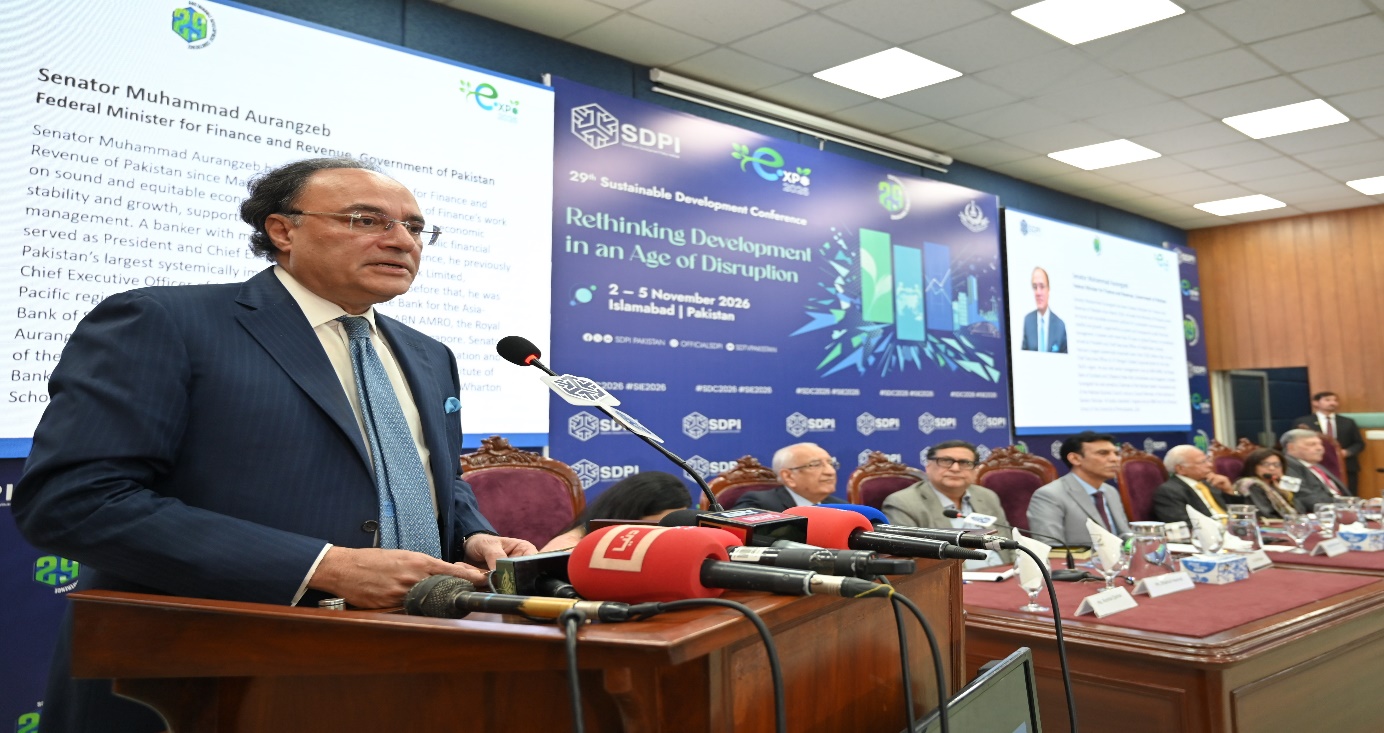
ISLAMABAD ((03 November 2026): Finance Minister Muhammad Aurangzeb on Tuesday said the government had adopted former State Bank governor Dr Ishrat Hussain’s institutional reform recommendations as the basis for its restructuring agenda, acknowledging his pivotal role in transforming Pakistan’s banking sector and laying the groundwork for wider governance reforms.
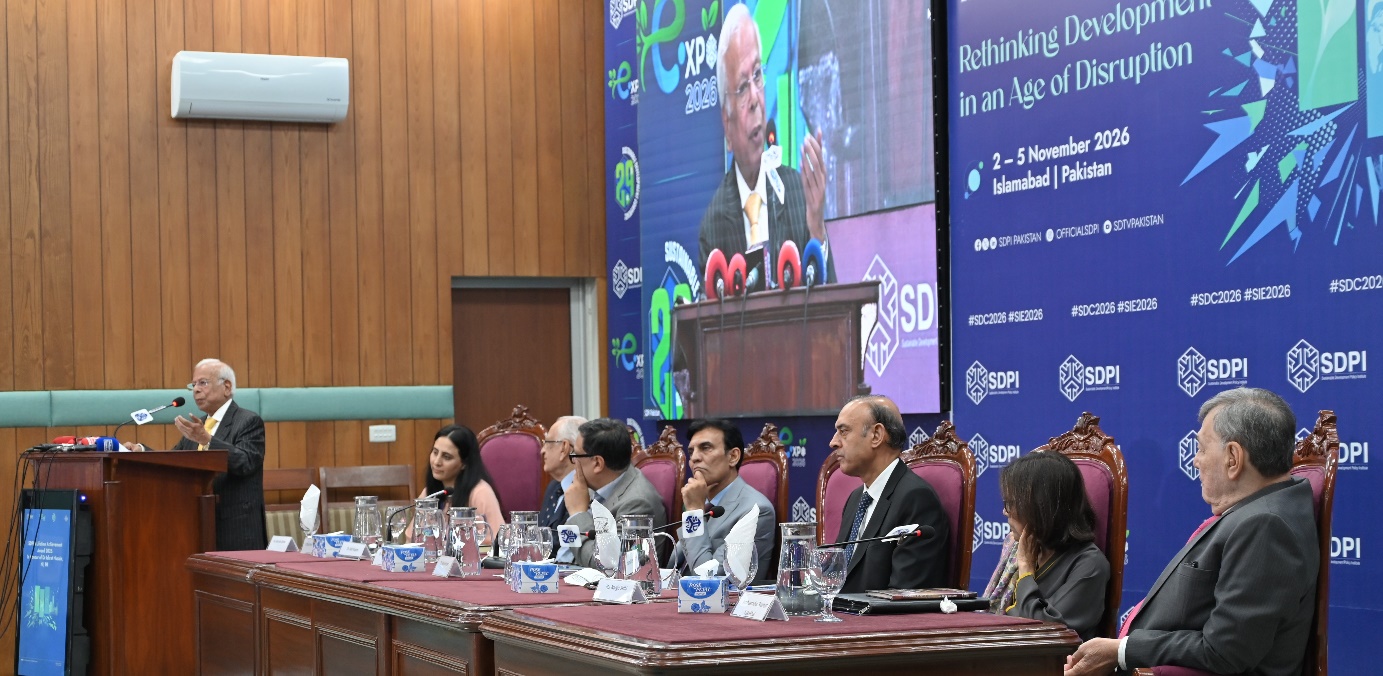
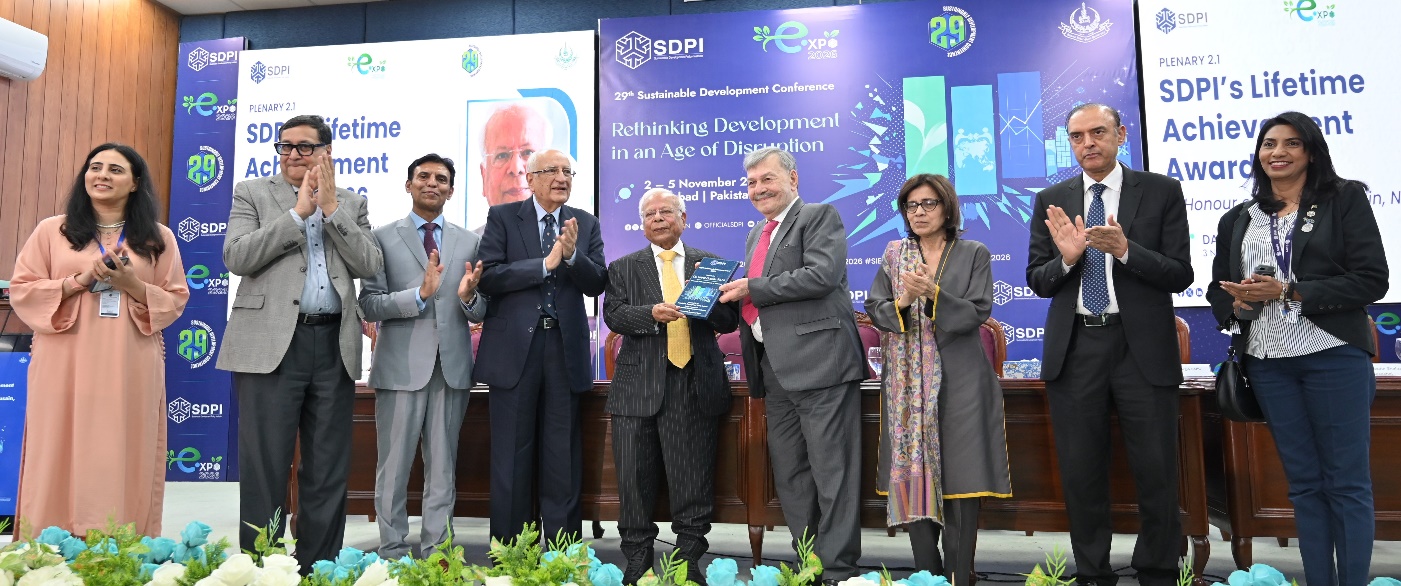
He was addressing a plenary, titled: SDPI’s Lifetime Achievement Award 2026: In Honour of Dr Ishrat Hussain (HI, NI), organized by the Sustainable Development Policy Institute (SDPI) on the 29th Sustainable Development Conference here on Tuesday where SDPI conferred a Lifetime Achievement Award on Dr Ishrat Hussian, the former Governor of the State Bank of Pakistan.
The finance minister said the government was building on the work of previous administrations rather than discarding existing initiatives and starting afresh. He said he had specifically approached Dr Ishrat for his institutional reforms report and adopted it as the basis of the government's restructuring agenda. The principal modification, he explained, was to implement the recommendations in phases rather than simultaneously, given the large number of ministries and attached departments involved.
He cited the closures of PASCO, Utility Stores Corporation and the Pakistan Works Department, besides the transfer of 26 entities to the Privatization Commission, as examples of the ongoing reform process. He also recalled his first interaction with Dr Ishrat in the late 1990s, when the latter assumed charge as SBP governor. “Two initiatives had particularly impressed him: the emphasis on strengthening the central bank's research function and the early recognition of technology as a transformative force in banking”.
Mr Aurangzeb described the SBP as the country's best regulator and credited Dr Ishrat's reform agenda and technological vision with playing a significant role in shaping the banking industry and the central bank's regulatory framework.
The finance minister also praised his contribution to transforming the Institute of Business Administration (IBA), Karachi, after his tenure at the central bank. He said institutional transformation required improvements in people, processes, technology and content, rather than merely upgrading physical infrastructure.
State Bank Governor Jameel Ahmed, paying tributes to Dr Ishrat, described his contribution to the country's socio-economic development and financial sector as significant. Recalling his first professional interaction with Dr Ishrat in December 1999, Mr Ahmed said he had joined the central bank with a clear vision and an ambitious plan for its transformation. Although some officials initially questioned the feasibility of implementing such an extensive reform agenda, Dr Ishrat translated his vision into a strategic document that was implemented before his departure from the institution, he said. Mr Ahmed also acknowledged his role in bringing market professionals, including internationally trained PhD economists and experienced bankers, into senior leadership positions, helping develop a more professional and capable institution.
Former federal minister Abdul Razak Dawood said Dr Ishrat had made two lasting contributions, particularly the transformation of the central bank through professional management and institutional restructuring. Recounting his experience as a member of the SBP board during Dr Ishrat's governorship, he said he had witnessed firsthand how effectively the latter organised the institution and brought in professionals.
Habib Bank Limited Chairman, Sultan Ali Allana, described Dr Ishrat as an institution in himself, highlighting his unusual combination of civil service experience and international financial expertise. Recalling his first interaction with him at the State Bank, Mr Allana said he had been impressed by Dr Ishrat's experience and wisdom, which he had not previously encountered at the central bank. He said Dr Ishrat's experience as a civil servant, coupled with his senior positions at the World Bank, had made his leadership particularly valuable.
Former secretary to the prime minister Nargis Sethi recalled working closely with him during his tenure as chairman of the National Commission for Government Reform (NCGR), established by the government in 2006. She said the commission was headed by Dr Ishrat with the status of federal minister and reported directly to the president and prime minister. According to Ms Sethi, he approached the assignment as a mission to reform the entire value chain of civil servants rather than treating it as a routine bureaucratic exercise.
Ms Sethi said the commission proposed replacing the superior services system with greater equality among cadres, non-cadres and ex-cadre officers. It recommended abolishing six of the 12 occupational groups and retaining six directly linked to state functions: district management, Police Service of Pakistan, Foreign Service, audit and accounts, customs and income tax.
The report also proposed reducing the number of federal ministries from 41 to 23 and divisions from 46 to 37, while recommending equal career progression opportunities for federal, provincial, district and autonomous-body officers. Ms Sethi described Dr Ishrat as a person of integrity, humility and determination, driven by the desire to establish institutions based on equity, meritocracy and competence.
Dean Emeritus at Boston University's Pardee School of Global Studies, Dr Adil Najam, said this aspect of his legacy was often underestimated because attention largely remained focused on his achievements as a policymaker.
Speaking at the ceremony, Dr Najam described Dr Ishrat as a mentor who had been generous with advice, including honest and sometimes difficult guidance. Recalling Dr Ishrat's tenure at IBA Karachi, he said its transformation went beyond leadership changes, institutional expansion or growth of its endowment. He said he had personally sought a meeting with Dr Ishrat during that period, underscoring the importance of institutional collaboration and healthy competition in improving academic standards.
Former Punjab governor Shahid Hamid recalled his 62-year association with Dr Ishrat, dating back to November 1964, when both joined the Civil Service of Pakistan as members of the same batch.
He said several members of the 1964 batch went on to hold prominent positions, including federal ministers, federal secretaries and the presidency, while he himself served as Punjab governor and federal minister. Recalling their training in East Pakistan in 1965, Mr Hamid shared their experiences of working under renowned development expert Akhtar Hameed Khan at the Pakistan Rural Academy in Brahmanbaria, where they learned about rural development and grassroots engagement.
SDPI Executive Director Abid Suleri also recalled Dr Ishrat's exceptional punctuality and extensive knowledge, describing him as a source of guidance on subjects ranging from agriculture and trade to economics, education, environment and climate change. Mr Suleri said that at a time when internet search engines such as Google were not commonly used, Dr Ishrat had effectively served as their "Google", as they could approach him for advice and guidance on almost any subject.
Earlier, SDPI Board of Governors Chairperson Ambassador Shafqat Kakakhel highlighted Dr Ishrat Husain’s distinguished career spanning civil service, international financial institutions, policymaking and academia, noting his senior leadership roles at the World Bank, tenure as State Bank governor and extensive contributions to institutional reforms, economic research and scholarly literature.