Living with Disasters: Understanding Risks, Anticipatory Planning and Financing for Preparedness, Day 3, B3, 04 Nov
Regional cooperation, sustainable financing vital for disaster management, say experts
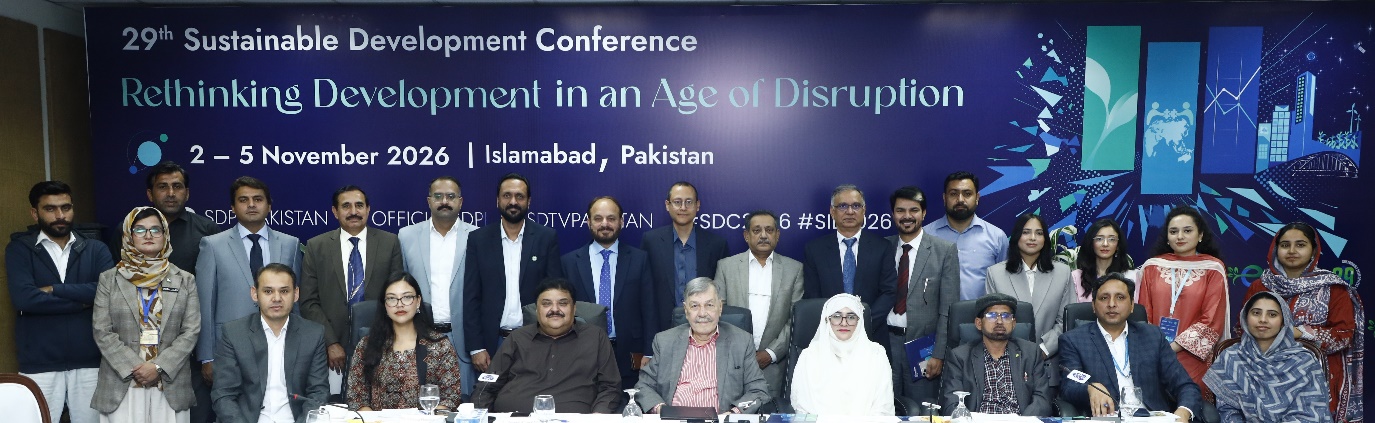
ISLAMABAD (04 November 2026): Experts at a roundtable have called for stronger risk-informed planning, sustainable financing, effective early warning systems and community-based preparedness to reduce the growing impact of natural disasters in Pakistan and other South Asian countries.
They roundtable, titled: “Living with Disasters: Understanding Risks, Anticipatory Planning and Financing for Preparedness”, was organized on the third day of 29th Sustainable Development Conference by the Sustainable Development Policy Institute (SDPI) in collaboration with the World Food Programme (WFP) and the International Centre for Integrated Mountain Development (ICIMOD), here on Wednesday.
The expert emphasized that disaster preparedness should be integrated into national and provincial development policies, infrastructure planning and government budgets rather than treated as the sole responsibility of disaster management authorities.
Dr Paras Kharel, a representative of South Asia Watch on Trade, Economics and Environment (SAWTEE), Nepal, said the devastating floods in his country on August 26 had exposed gaps in disaster monitoring, early warning and preparedness. He said stronger regional cooperation, particularly in satellite-based monitoring and early warning, was needed to anticipate disasters. He estimated recovery needs at least $5 billion, while the Loss and Damage Fund had pledged around $20 million, pointing to a substantial financing gap.
Ms Anum Malik Mengal, an official of Provincial Disaster Management Authority (PDMA), Balochistan, said the protection needs of women and vulnerable groups, particularly the risk of gender-based violence, were often overlooked during emergencies. She said overcrowded shelters, inadequate lighting, poorly secured toilets and limited access to water and sanitation could expose women and girls to additional risks. Pregnant women and mothers also needed dignity kits and appropriate maternal and child health services. She said PDMA Balochistan had established a gender-based violence cell with support from UNFPA and other partners.
Amir Khan Goraya of the National Disaster Risk Management Fund (NDRMF) called for a shift from response-based approaches towards risk-informed development. He said effective governance and utilisation of resources were as important as financing.
Ms Shreeya Manandhar of ICIMOD, Nepal, said migration should be recognised as a potential adaptation strategy. She said financial and social remittances from migrant communities could help households respond to disasters and invest in climate-resilient livelihoods.
Mr Naeem Gul of WFP said Pakistan had made progress in institutionalising anticipatory action through national dialogues and pilot initiatives. He said the National Anticipatory Action Strategy had been approved and was expected to be linked with the national disaster risk reduction policy.
Aftab Alam, Chief Executive of IRADA Foundation for Research and Advocacy, said resilience should include not only the ability to withstand disasters but also the capacity to protect livelihoods, build assets and improve family well-being. He said women-headed and marginalized households faced additional risks because of poverty, food insecurity, limited mobility and unequal access to education. Recovery programmes, he said, should help affected families rebuild their lives with dignity.
Mr Babar Ali of Welthungerhilfe (WHH) said his organisation had been working on anticipatory action in Pakistan since 2018-19 with WFP, FAO, OCHA and the International Federation of Red Cross and Red Crescent Societies. He said district-level preparedness was being strengthened through emergency operations centres in Sindh and Balochistan.
Arif Jabbar Khan of Mercy Corps Pakistan said anticipatory action should be integrated into governance and the planning of all government departments, including those responsible for schools, health facilities and infrastructure.
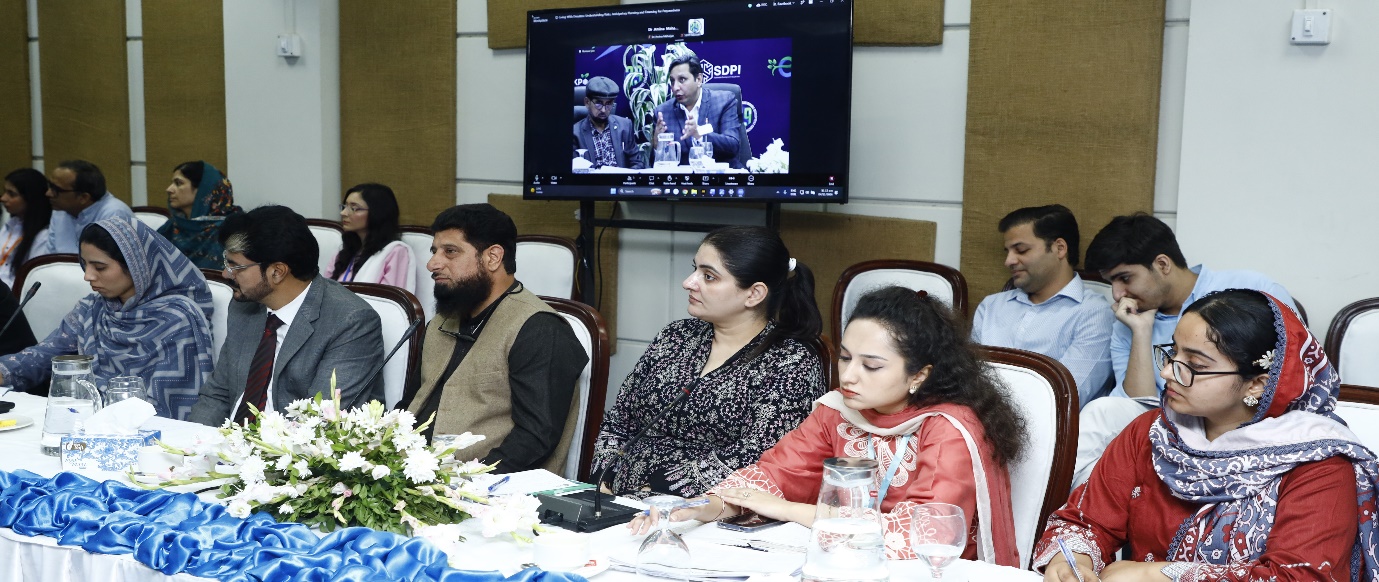
Dr Amina Maharjan of ICIMOD, Nepal, speaking online, said early warning systems should account for mobile populations, including tourists, workers and people travelling through vulnerable areas. She said warnings needed to be clear, accessible and specific about the action people should take.
Saleem Jalbani of the Planning and Development Board, Government of Sindh, said disaster financing should be integrated into development planning and government policies. He called for provincial departments to allocate resources for anticipatory measures and stressed that implementation remained a major challenge.
Naveed Ahmed Sheikh of PDMA Balochistan said understanding climate change and its local impacts was essential for effective preparedness. He said the authority was working with government departments, development organisations and academic institutions to strengthen district-level disaster risk management.
He said the province had improved its capacity through equipment, district teams, hazard mapping and coordination with relevant departments. It was also sharing advisories and daily situation reports with communities through social media and local networks.
In his closing remarks, Ambassador Shafqat Kakakhel, Chairperson of the SDPI Board of Governors, said the number, severity and impact of disasters had increased due to population growth, climate change and other pressures. He said the growing number of institutions involved in relief and recovery has made coordination essential.