Making Tariff Reforms Work for Industry and Exports, Day 3, B8, 04 Nov
Experts seek coordinated reforms to make tariff policy boost industrial growth, exports
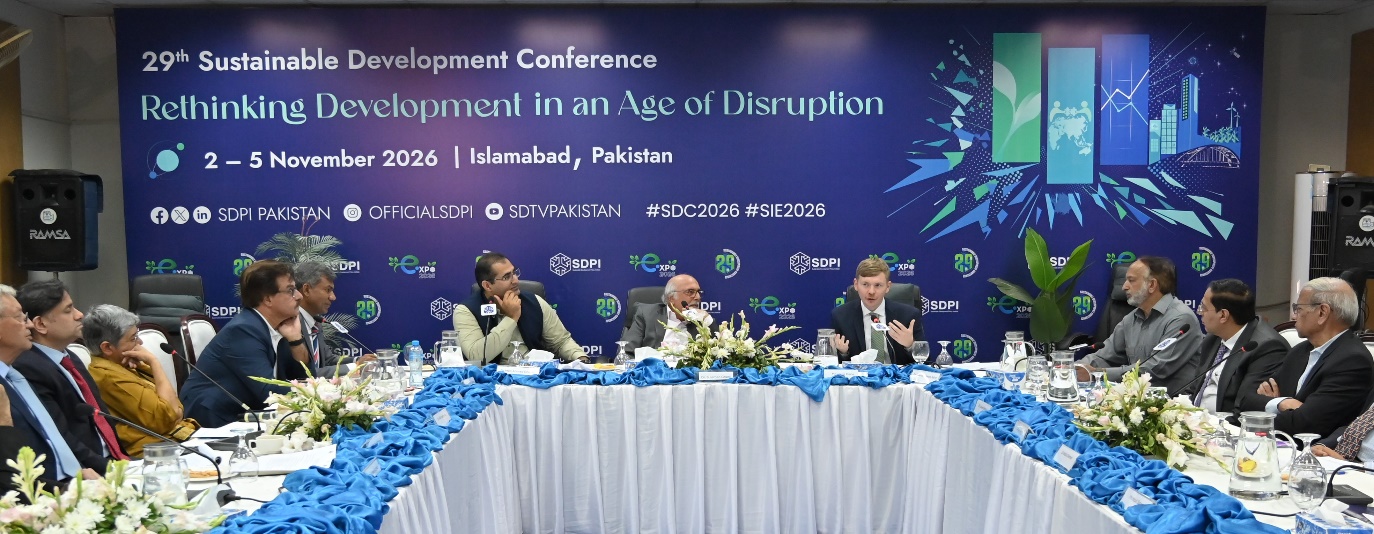
ISLAMABAD (04 November 2026): Experts at a roundtable have called for coordinated industrial, trade and taxation reforms, saying tariff rationalization alone cannot transform Pakistan’s economy without improvements in productivity, infrastructure, energy costs, access to technology and a predictable business environment.
The roundtable, titled: “Making Tariff Reforms Work for Industry and Exports,” was organized on the third day of 29th Sustainable Development Conference by Sustainable Development Policy Institute here on Wednesday.
The experts also called for time-bound protection for industries, with clear sunset clauses instead of indefinite subsidies. Government support, they said, should focus on export certification, research and development, technology transfer and strengthening firms’ productive capabilities.
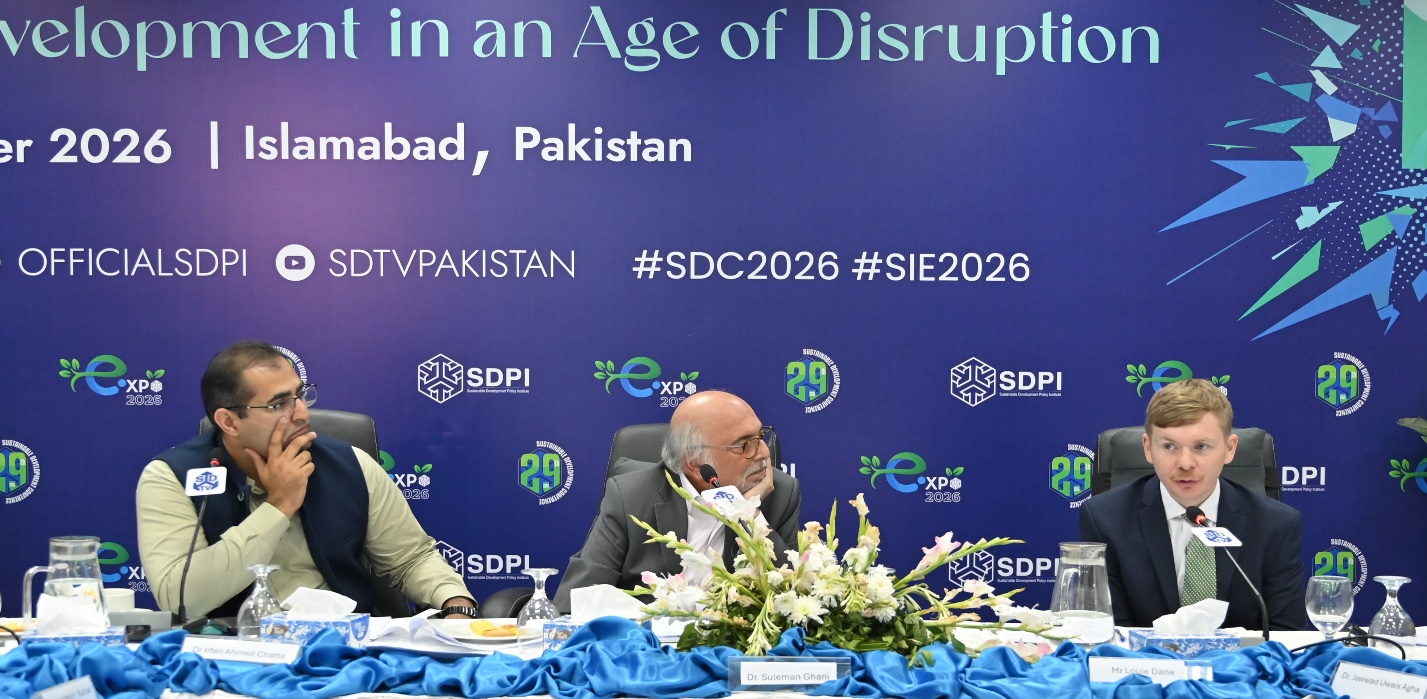
Louie Dane, Senior Economic Advisor at British High Commission, Islamabad said Pakistan remained among the countries with the most restrictive trade regimes, according to research conducted in 2022. Drawing a comparison with the English Premier League, he said international participation by foreign players and coaches had improved standards and productivity. Similarly, greater exposure to international competition could help Pakistani industries acquire technology, expertise and competitiveness.
Dr Kaiser Bengali, a renowned economist, argued that Pakistan’s industrial problems went beyond tariff structures, saying the country lacked a coherent industrial transformation policy. Its narrow export base and dependence on imported inputs had restricted industrial development, while prevailing incentives encouraged investment in real estate, shopping malls and other activities offering higher returns than manufacturing. He called for policies that rewarded productive investment, local processing and job creation rather than speculation and vested interests.
Mr Suleman Ghani, former federal secretary for Industries and Commerce, who also chaired the session, questioned the need for a separate Ministry of Industries, suggesting that its functions could be incorporated into the Ministry of Commerce, while specialized institutions such as the Engineering Development Board could perform technical functions. He said industrial development primarily required skilled labour, realistic exchange rates and rational tariffs to attract investment and technology.
Dr Manzoor, international trade and customs facilitation expert, argued that Pakistan did not need an existing exportable surplus before opening its economy to international trade. Citing Vietnam, he said, investment, openness and access to imported inputs could create new industries and export capacity.
He recalled that Pakistan’s earlier liberalization efforts had helped exports increase from around $9 billion to $20 billion. However, regulatory duties introduced following the 2008 global financial and fuel crises, followed by additional customs duties, complicated the tariff structure and undermined the progress. He warned that trade-weighted average tariffs could give a misleading picture because high duties on certain products were not adequately reflected when their import volumes remained low.
Hassan Masood Kunwar, a representative of Khyber Pakhtunkhwa Board of Investment and Trade. highlighted the province’s structural disadvantages, including its distance from seaports, high freight charges and prolonged closure of trade routes with Afghanistan and Central Asia. He said disruptions had severely affected businesses and forced some industries to close.
He urged the government to rationalize transportation costs and promote value addition in the mineral sector, particularly copper. Exporting minerals without adequate processing deprived Pakistan of opportunities to develop local industries, establish complete value chains and generate greater economic benefits.
Syed Wajid I. Bukhari, a representative of steel sector, said the steel industry was already facing a crisis when tariff reforms began in 2024, with companies closing, workers being laid off and manufacturers restructuring their businesses. Although the initial assessment suggested that the first two years of the policy would not adversely affect the sector, he warned that rising electricity prices, interest rates and taxes could create serious difficulties in subsequent years.
He also proposed reducing the time required to decide anti-dumping cases to around three months so that affected industries could receive timely relief. Consistent policies, merit-based appointments and an efficient regulatory environment were equally important, he added.
Mr Suleman Ghani, former federal secretary for Industries and Commerce, who also chaired the session, questioned the need for a separate Ministry of Industries, suggesting that its functions could be incorporated into the Ministry of Commerce, while specialised institutions such as the Engineering Development Board could perform technical functions. He said industrial development primarily required skilled labour, realistic exchange rates and rational tariffs to attract investment and technology.
Dr Anil Salman, Chair, Economic Security, Islamabad Policy Research Institute (IPRI), criticized the government's tendency to formulate economic policies in isolation, saying the NTP needed to be aligned with industrial and taxation policies. He called for continuous monitoring instead of waiting for fixed three- or five-year reviews. Performance should be measured through new industries and exporters, productivity improvements and actual export growth.
Rubina Akhtar, former chairperson of National Tariff Commission, said the establishment of a dedicated Tariff Policy Board was an important institutional step towards ensuring continuity, transparency and effective monitoring. She clarified that the policy specifically covered customs duties and did not extend to sales tax or other import-stage levies.
Sharing findings of a perception survey of 204 exporters in Karachi, Lahore, Faisalabad, Sialkot and other cities, she said around 90 per cent supported continuation of tariff reductions. However, nearly 80 per cent identified electricity and utility costs as major constraints, followed by customs administration and freight-related difficulties.