Media and AI in the Age of Influence: Journalism, Public Discourse and Countering Violent Extremism, Day 3, B14, 04 Nov
Speakers call for stronger editorial controls and anticipatory fact-checking as AI reshapes Pakistan's information space
ISLAMABAD (04 November 2026): Journalists and academics at a policy roundtable said that artificial intelligence is making verification harder for newsrooms, since editorial gatekeeping, early fact-checking and trust in public institutions are central to limiting the spread of disinformation and online hatred, including content that feeds violent extremism.
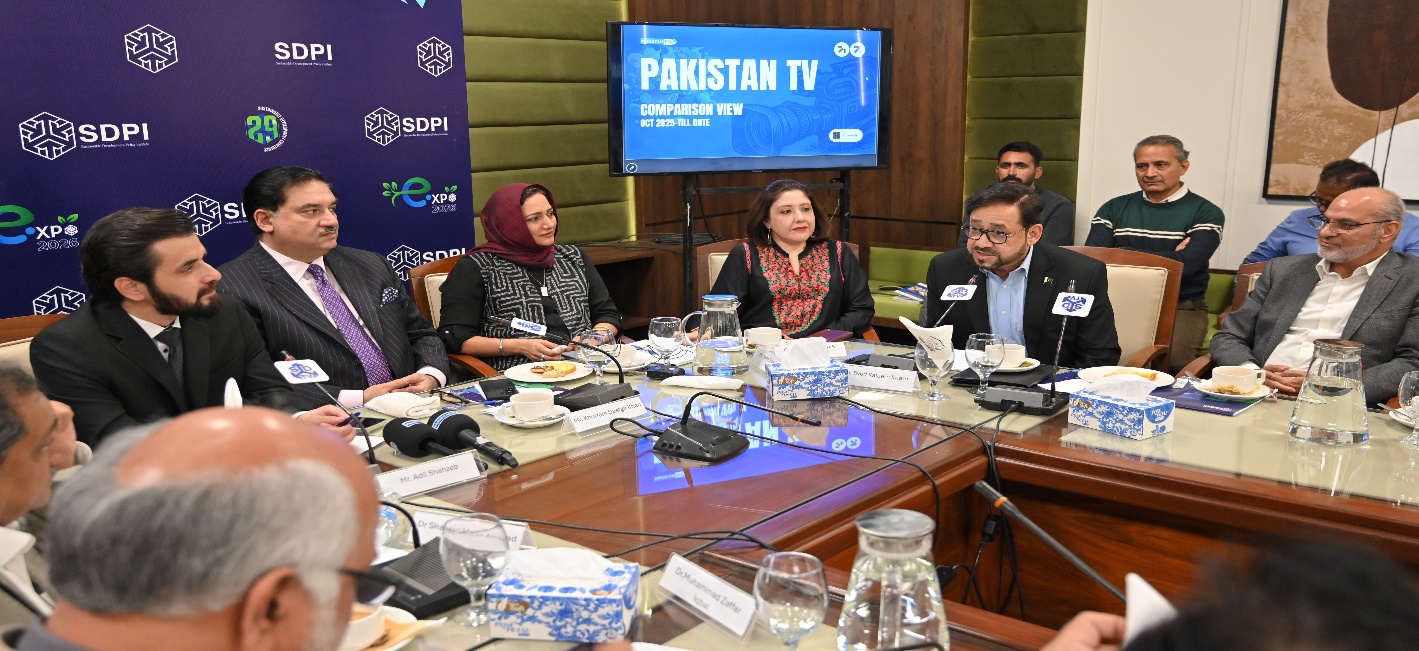
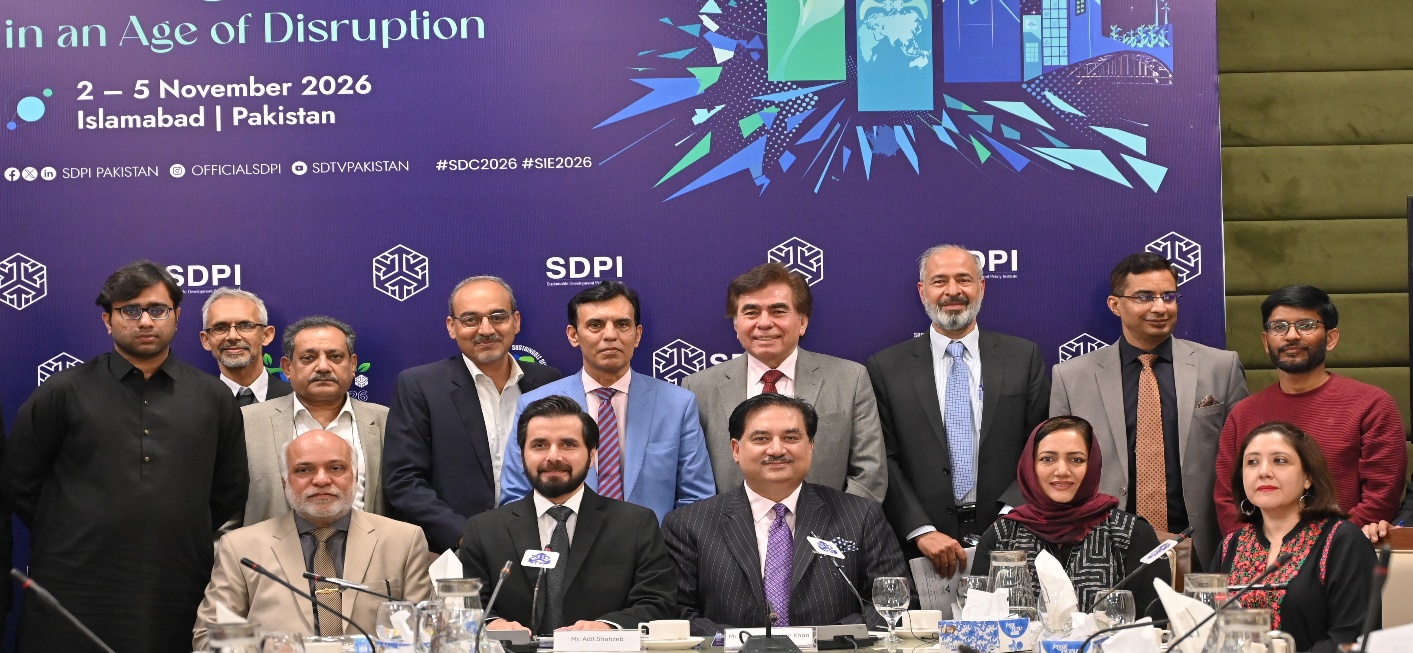
The policy roundtable, titled: "Media and AI in the Age of Influence: Journalism, Public Discourse and Countering Violent Extremism ", was organized on the third day of 29th Sustainable Development Conference by the Sustainable Development Policy Institute here on Wednesday.
Engr. Khurram Dastgir Khan, former federal minister, said online manipulation had grown since the 2016 Cambridge Analytica episode and that AI would worsen it. He said bans offer only a temporary response and that regulation lags well behind technology.
He described the link between poverty and extremism as weak and said the threat has to be countered on media, security and social fronts.
Ms Zebunnisa Burki of The News International, who presented the opening paper, said AI affects journalism in several ways: it speeds up transcription and translation, but it also enables misinformation and deepfakes. She described a "liar's dividend," in which genuine material can be dismissed as AI-generated.
She said online disinformation and hate content often run on a business model of engagement and income rather than ideology. She cited a May 2026 investigation into Islamophobic AI-generated videos traced to a Pakistani Facebook page.
Ms Burki said blocking and banning websites or accounts would not solve the problem. She noted that major platforms are privately owned and said moderation often misses abuse written in Urdu, Punjabi and other regional languages. She said editorial control in mainstream media is not the same as censorship, and urged newsrooms to do basic reporting and verification before publication rather than relying on fact-checking afterwards. She also said factchecking should be "anticipatory," ahead of predictable events such as floods, elections and court verdicts.
Adil Shahzeb, Head of Pakistan TV, said the task of journalists has shifted from finding stories to verifying them. He said Pakistan TV set up a copy-editing and gatekeeping desk after he took over a year ago, and that he considered the lack of such desks across much of the media a concern.
Ms Asma Shirazi, Senior Pakistani Journalist, proposed adding a question before the traditional five Ws: whether a claim is true or false. She called for stronger editors' desks in newsrooms, wider use of fact-checking tools and community notes, and reliance on reporters on the ground. She said some fact-checking efforts, including by state actors, could themselves distort facts, and that journalists face coordinated online campaigns and AI-generated material.
Prof. Dr Zafar Iqbal, Vice-Chancellor of Gomal University, said discussion of AI in Pakistan was dominated by fear. He said it should also address opportunities such as new job markets and entrepreneurship, and proposed a collective fact-checking resource centre for media.
On extremism, he said television debate formats that reward conflict can intensify polarization and radicalization. He proposed moving from television rating points (TRP) to an "impact rating point," and a conflict index that advertisers could use to guide spending. He also called for regulating cross-media ownership.
Dr Syed Kaleem Imam, former Inspector General of Police and Federal Secretary, former UN Police Commissioner and a governance, security and rule of law expert, said the shift from physical to digital radicalisation had been rapid. He said counternarratives need trust, good governance and truthfulness, and that credibility determines relevance. He said public grievances over costs of living and governance feed anger that extremist and hate narratives can exploit, and he urged policymakers to address them.