Pakistan’s Adaptation Agenda: From National Framework to Subnational Implementation and Lessons from Global Practices, Day 2, A7, 03 Nov
Pakistan urged to integrate climate adaptation into development budgets
ISLAMABAD (03 November 2026): Pakistan must integrate climate adaptation into development budgets, environmental policies and social protection systems to minimize economic losses and safeguard vulnerable communities.
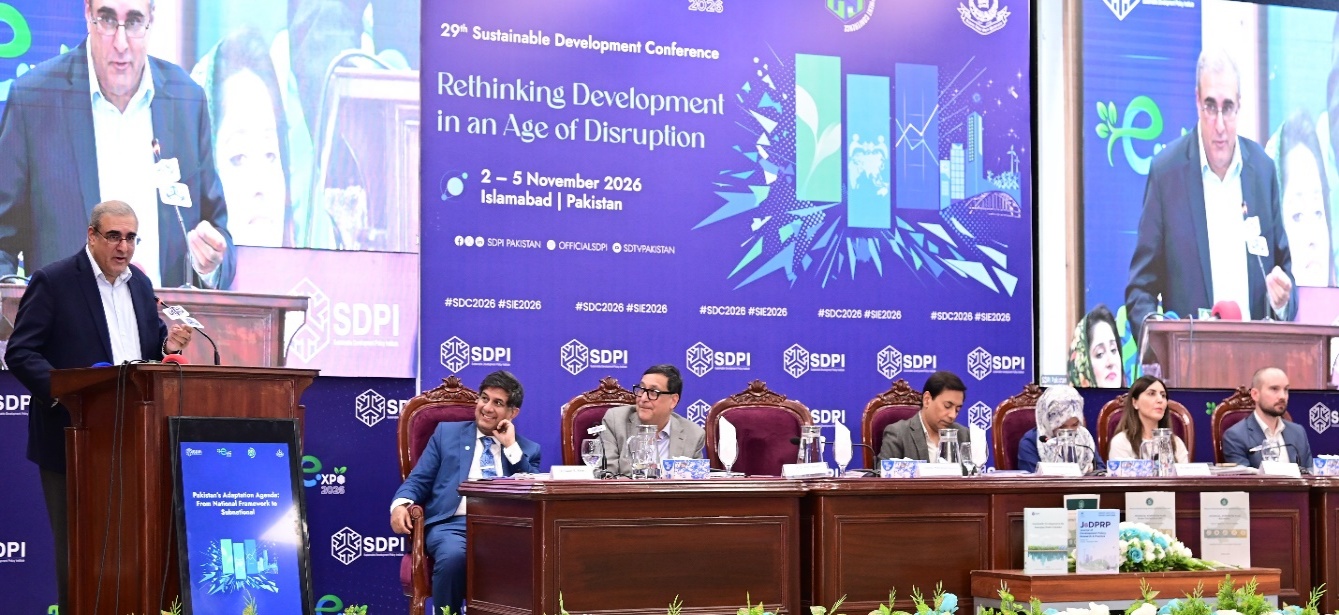
This was agreed by experts at a dialogue, titled: ‘Pakistan’s Adaptation Agenda: From National Framework to Subnational Implementation and Lessons from Global Practices,’ at the 29th Sustainable Development Conference organized by Sustainable Development Policy Institute here on Tuesday.
The discussion highlighted proposed climate adaptation investments of approximately Rs517 billion for Khyber Pakhtunkhwa and Balochistan, underscoring the urgency of translating climate vulnerability assessments into practical interventions.
Dr Adil Najam, President of WWF International, warned against allowing repeated planning exercises to delay implementation. He argued that climate adaptation must become a national development priority rather than remain dependent on international assistance.
“Show me a good adaptation project. I will show you a good development project,” he said, urging the government to integrate climate resilience into the federal Public Sector Development Programme (PSDP) and provincial Annual Development Programmes (ADPs).
Awais, Secretary-in-Charge, Ministry of Climate Change and Environmental Coordination, emphasized domestic ownership and provincial responsibility for implementation. He noted that KP's development programme stood at Rs524 billion against the Rs384 billion estimated requirement of its adaptation plan.
He maintained that financing priorities should be integrated into existing development expenditure, with provinces taking responsibility for planning, implementation and monitoring, while the federal government provided coordination and technical support.
Zainab Naeem of SDPI presented provincial climate risk assessments, explaining that the KP adaptation plan identified 28 priority interventions costing Rs384.83 billion, addressing floods, glacial lake outbursts, landslides, droughts and livelihood vulnerabilities.
The Balochistan plan proposed Rs132.16 billion in interventions targeting flash floods, groundwater depletion, extreme temperatures and coastal ecosystem degradation.
Humaira Jahanzeb, National Adaptation Plan Project Team Lead, outlined progress under Pakistan's National Adaptation Plan, approved in August 2023. She highlighted institutional strengthening, early warning systems, resource mobilisation, gender inclusion and monitoring mechanisms, alongside provincial and district-level planning.
Dr Ehtisham, formerly associated with KP's Planning and Development Department, stressed that costed and prioritised adaptation plans offered an opportunity to move beyond fragmented initiatives. He recommended dedicated development allocations, stronger institutional coordination and clearly defined implementation responsibilities.
Batool Asadi, representing Balochistan's Planning and Development Department, highlighted the province's environmental and socioeconomic vulnerabilities. She said communities in Naseerabad continued to face the consequences of the 2022 floods, while women remained disproportionately exposed to agricultural, livelihood and health-related risks.
She called for stronger monitoring, district-specific interventions and integration of maternal health, nutrition and livelihood protection into adaptation programmes. She noted that the Naseerabad District Adaptation Plan remained under government review.
Dr Saad Asghar, Additional Secretary at the Federal Board of Revenue and former National Project Director of the adaptation initiative, questioned inconsistent costing methodologies and unrealistic financing projections. He urged greater standardisation, institutional capacity and accelerated implementation before the project's June 2027 deadline.
Dr Ehtisham, former Punjab Education Secretary, highlighted the economic and social consequences of climate-related educational disruption. Citing the 2022 floods, he said 25,900 schools were damaged, another 7,000 used as shelters and approximately 3.5 million students affected.
He warned that prolonged school closures disproportionately affected girls, increased dropout risks and threatened future earnings. He recommended introducing climate change as a dedicated school subject, alongside public awareness campaigns promoting environmental responsibility.
Alun David Cooper, Climate Action Lead at the International Organization for Migration (IOM), identified overlapping adaptation frameworks, duplicated data collection and inadequate local capacity as obstacles to implementation.
He advocated integrated climate resilience projects linking agriculture, water management, disaster preparedness and community-based early warning systems. He also stressed sustainable financing and stronger district institutions to maintain projects after international support ended.
Tracy Mamoun, Director of Global Policy Engagement at Southern Voice, called for greater decision-making authority, technical capacity and direct access to climate finance at provincial and local levels.
Joining virtually, she said Southern Voice, a network of 82 think tanks across 40 countries in Africa, Asia, Latin America and the Caribbean, had identified locally grounded climate action and financing as essential to effective implementation.
She emphasised that adaptation strategies must reflect differing climate risks, vulnerabilities and socioeconomic conditions while allowing local institutions flexibility to respond to community needs.
Mamoun called for cooperation between formal government institutions, traditional authorities, religious institutions and community-based organisations, saying such partnerships could incorporate local knowledge, strengthen public ownership and prevent resistance to poorly designed interventions.
She recommended integrating climate adaptation into existing development plans, institutional frameworks and budgets rather than creating additional administrative structures.
She also advocated climate budget tagging to identify climate-related expenditure within existing government allocations.
Highlighting the importance of matching local responsibilities with adequate resources, Mamoun called for simplified procedures for accessing climate finance, targeted technical assistance and investment in institutional capacity-building.
She said Southern Voice would continue examining how international financing and governance arrangements could better support locally led adaptation and effective subnational implementation.
Participants urged the Ministry of Climate Change and Environmental Coordination, Ministry of Planning, Development and Special Initiatives, provincial planning and development departments and disaster management authorities to establish coordinated implementation and monitoring mechanisms.