Pakistan’s Reform Agenda for Integrated Economic Governance, Day 3, B1, 04 Nov
Experts call for shift from crisis management to sustainable, export-led economic growth
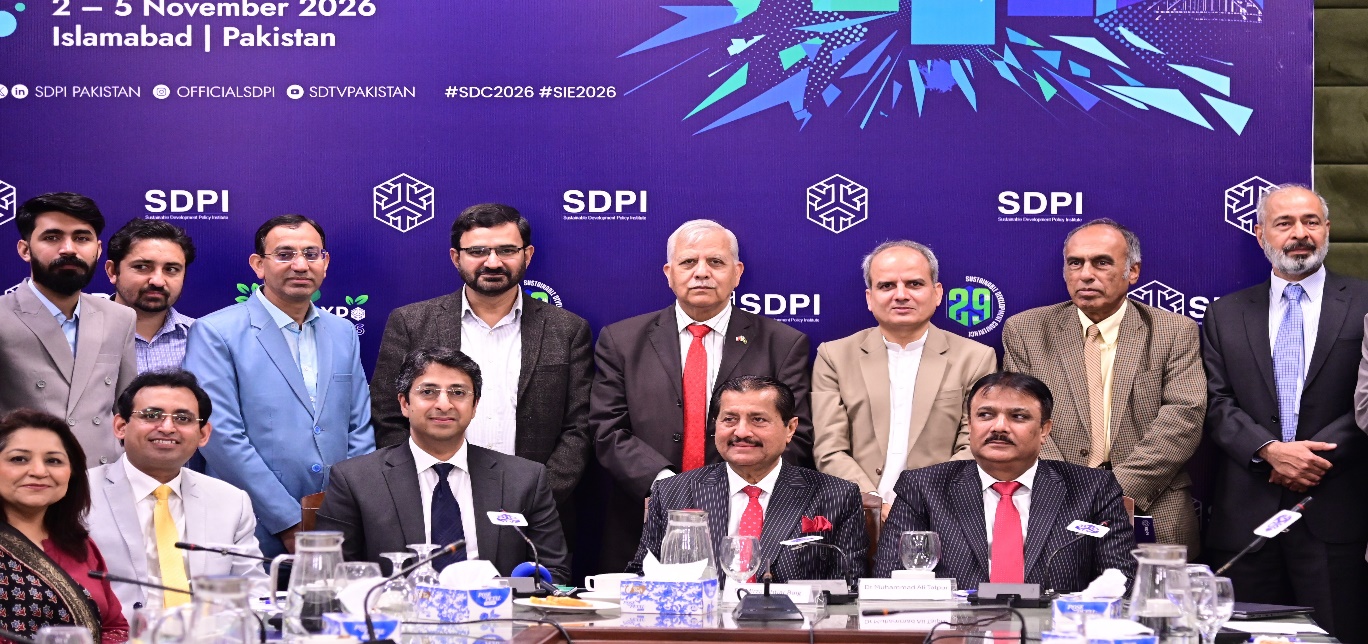
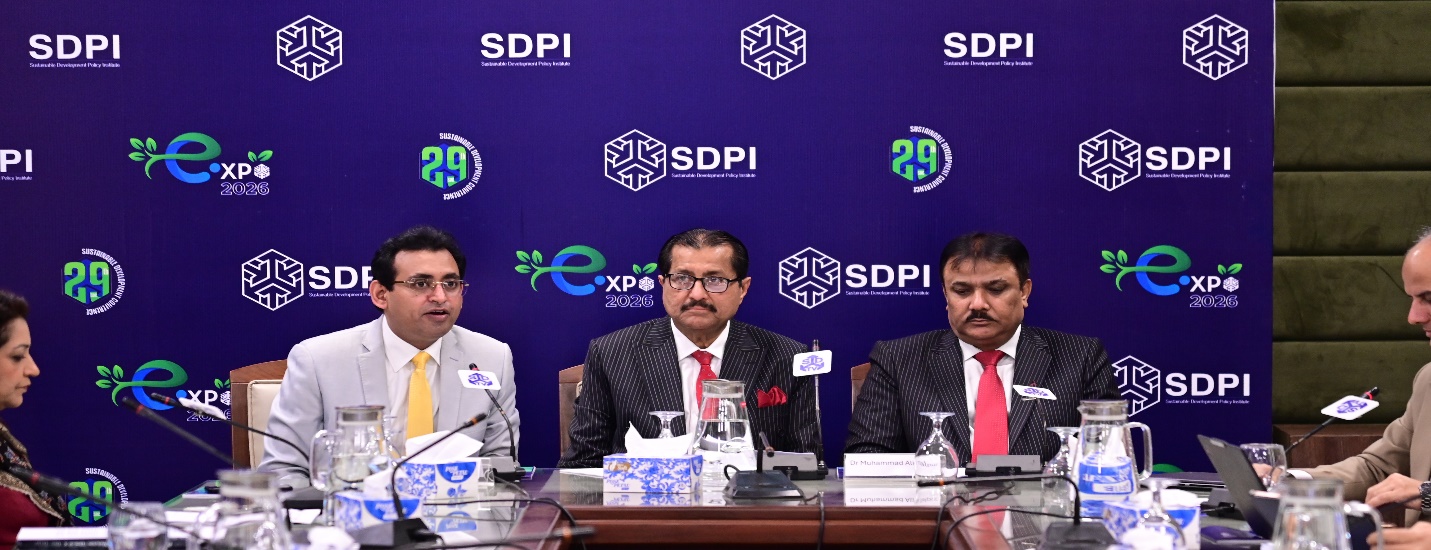
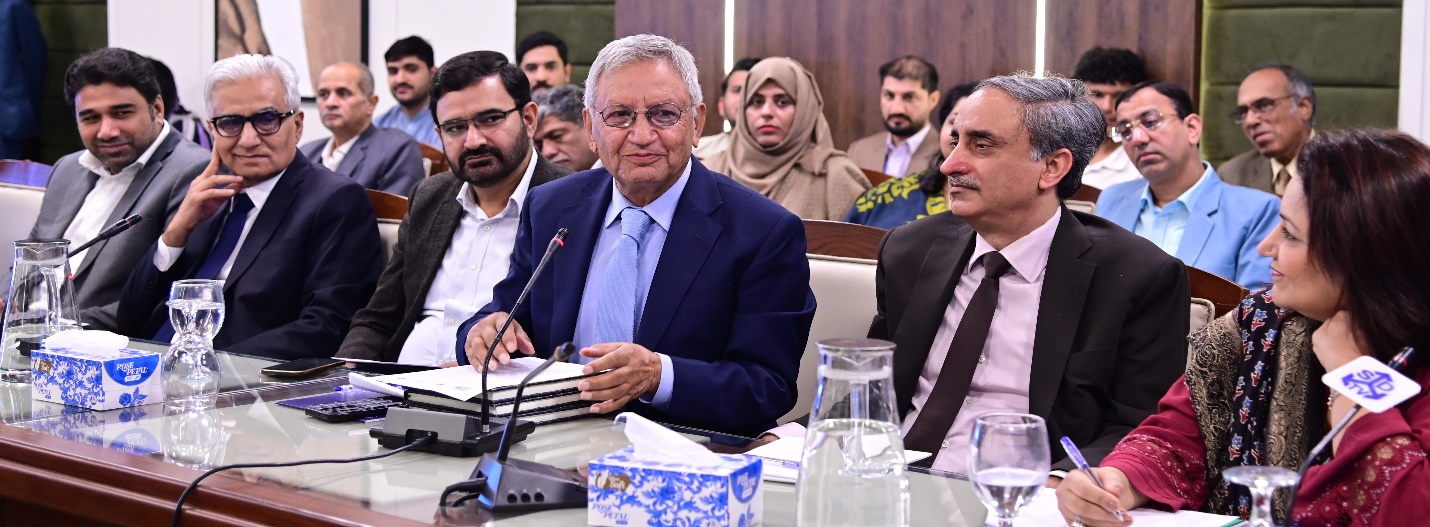
ISLAMABAD (04 November 2026): Pakistan needs to move beyond crisis-driven economic management and adopt a sustainable, export-led growth model through integrated economic governance, policy consistency, institutional reforms and greater private-sector investment, said Rana Ehsan Afzal Khan, Coordinator to the Prime Minister on Commerce and Industry, and other economic experts said at a roundtable discussion.
The discussion, titled: “Pakistan’s Reform Agenda for Integrated Economic Governance”, was organized in collaboration with Friedrich-Ebert-Stiftung (FES). Participants highlighted the need for coordinated reforms to translate macroeconomic stability into industrial growth, employment generation, export expansion and improved living standards.
Rana Ehsan said Pakistan had achieved significant macroeconomic stability, with inflation declining to single digits, foreign exchange reserves improving, the country's credit rating strengthening and the exchange rate stabilizing under a market-based mechanism.
He said the economy recorded 3.7 per cent growth last year without a current account deficit, although remittances continued to play an important role in supporting external stability.
However, he identified geopolitical tensions and restricted regional connectivity as major obstacles to economic development. Regional trade accounts for less than five per cent of Pakistan's total trade, compared with 60 to 70 per cent in the European Union, highlighting the considerable untapped potential of regional economic cooperation.
He described the National Tariff Policy, covering approximately 7,500 tariff lines, as an important structural reform aimed at reducing the cost of raw materials, encouraging value addition and improving industrial competitiveness.
On SME financing, he said around 320,000 small and medium enterprises currently had access to bank loans, and the government aimed to double this number by 2028. The government was also restructuring the Small and Medium Enterprises Development Authority (SMEDA) to strengthen its role in policy advice, feasibility studies, industrial cluster development and facilitating access to finance.
Acknowledging taxation and documentation as major business challenges, he said the government had taken measures to reduce the tax burden, including adjustments to the super tax and taxes on exporters.
Mirza Ikhtiar Baig, Member of National Assembly Standing Committee on Finance, Commerce and Economic Affairs, said Pakistan had achieved fiscal consolidation and moved away from the immediate risk of default but had failed to translate economic stability into employment generation, export growth and relief for ordinary citizens.
He criticized restrictions on letters of credit (LCs) for essential imported raw materials, including dyes, chemicals and polyester fibre, saying such disruptions undermined export-oriented industries and affected their ability to meet international orders.
Baig said exports remained stagnant at around $31 billion to $32 billion and stressed that Pakistan needed consistent policies to support industrial production rather than slowing economic activity whenever growth accelerated.
He also emphasized that foreign exchange reserves should be strengthened through exports and foreign direct investment (FDI), rather than excessive borrowing, arguing that sustainable foreign inflows were essential for long-term economic stability.
Dr Muhammad Ali Talpur, Chief Economist at the Planning Commission, said political stability, policy consistency and effective implementation were essential for sustainable economic growth. He said the government had developed a long-term economic strategy under a five-year plan, supported by annual plans and a mid-term review to assess sectoral performance and introduce necessary policy adjustments.
He said the government needed to create an enabling environment to attract private investment and FDI, acknowledging that inadequate investment remained a major constraint on implementing economic reforms.
Khaqan Najeeb, a senior economist, identified a serious competence crisis in both the public and private sectors. He attributed weaknesses in private businesses partly to family-run ownership structures that often restricted professional management, institutional development and business expansion. He said public-sector performance was constrained by the existing civil service system and called for reforms in government appointments, particularly at the secretary and joint secretary levels.
Criticizing Pakistan's repeated reliance on the International Monetary Fund (IMF), he said the country had entered 25 IMF programmes over 79 years but had remained dependent on external assistance for decades. He stressed the need to address structural weaknesses instead of repeatedly relying on external financial support.
Omar Malik of UNDP Pakistan said the country's growth model needed to focus on underserved segments of society to ensure inclusive and sustainable economic development.
He said a large section of the population remained excluded from economic growth, with its benefits concentrated among certain groups. He identified small and medium enterprises, small and medium-scale farmers and vulnerable households as groups requiring greater policy attention.
Noreen Khalid of Oxfam highlighted the economic costs of environmental challenges, saying the 2022 floods caused losses equivalent to 2.2 per cent of GDP, while air pollution cost Pakistan around 6.5 per cent of GDP annually. She also warned that 40 per cent of children faced long-term developmental challenges.
Sharing findings from a recent assessment of Pakistan's climate finance datasets, she called for improvements in data availability, credibility and integration to strengthen policymaking and financial planning. She stressed that climate considerations should be incorporated into economic planning rather than treated as a separate development concern.
Shahbaz Rana of The Express Tribune said Pakistan's economic governance suffered from the absence of a consistent governance model, political patronage and the selective use of corruption allegations.
He called for an independent judiciary in line with the original 1973 Constitution, merit-based appointments across government institutions and genuine media freedom, arguing that institutional independence and accountability were essential for effective economic governance.