Private Sector Growth and the Fiscal Policy agenda for 2027, Day 4, 4.1, 05 Nov
Govt to reform tax policy, push exports growth through SME financing: Kayani
ISLAMABAD (04 November 2026): Minister of State for Finance and Revenue Bilal Azhar Kayani has said that the government is planning to reform tax policy, improve access to finance for small and medium enterprises (SMEs) and incentivize banks to lend to export-oriented businesses as part of efforts to accelerate exports growth and break Pakistan's recurring boom-and-bust cycle.
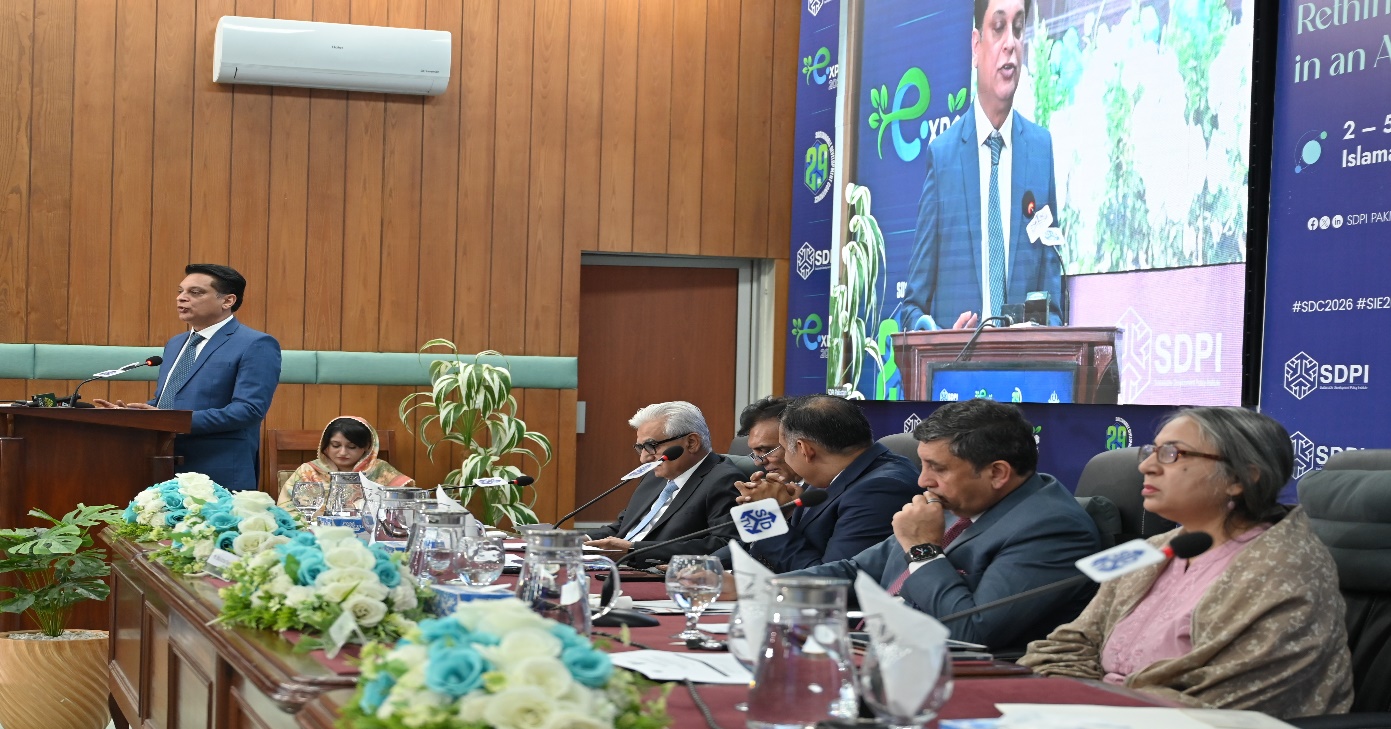
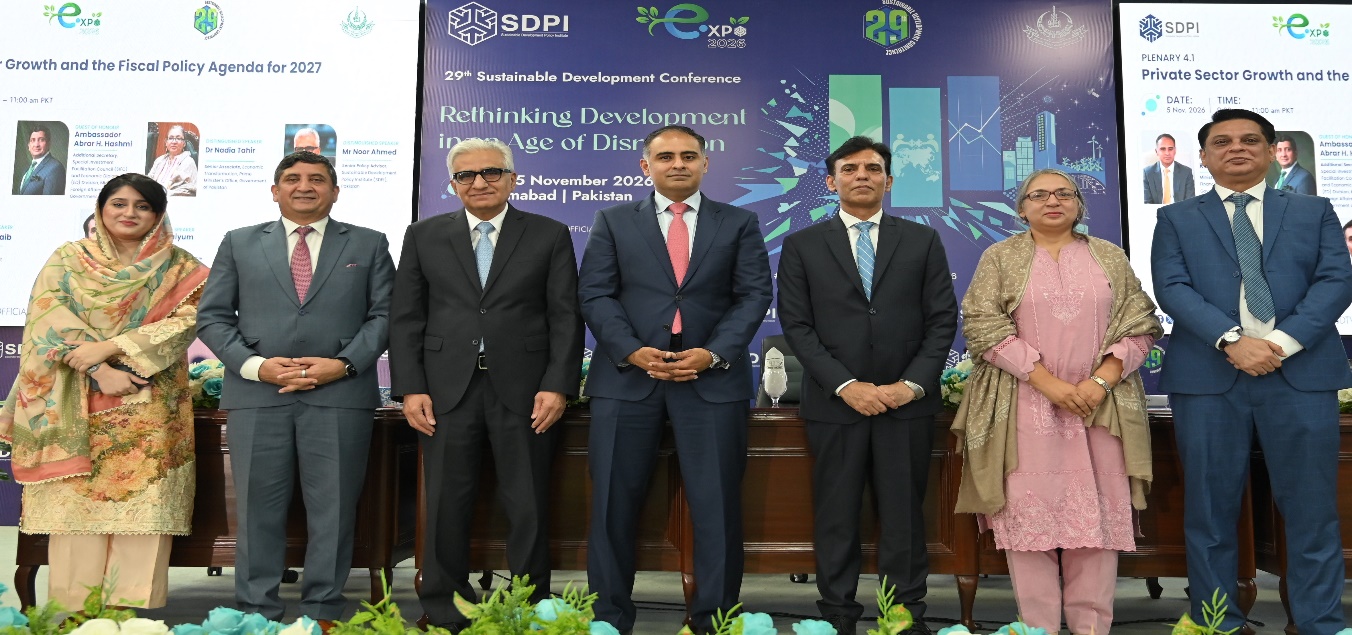
He was speaking at a session, titled: 'Private Sector Growth and the Fiscal Policy Agenda for 2027' organized on the last leg of 29th Sustainable Development Conference by the Sustainable Development Policy Institute (SDPI) here on Thursday
The minister said that the government would differentiate between banks extending credit to agriculture and SMEs and those reluctant to finance these sectors, while ensuring policy predictability and a business-friendly tax regime to encourage investment, exports and employment generation.
Access to finance was the most frequently raised concern in his interactions with SMEs, he said, adding that while larger businesses primarily sought a reduction in the policy rate, smaller enterprises faced difficulties in obtaining loans. Kayani said the government was providing working capital under the Export Finance Scheme at six percent, but smaller businesses were not benefiting adequately. Similarly, he said, under the Long-Term Export Growth Financing Facility, exporters could obtain financing for machinery and plants at two percent for the first two years and five percent for the subsequent eight years.
He said the government wanted to make existing policies accessible to smaller businesses instead of introducing new schemes. Under the Export Facilitation Scheme, exporters could also import inputs duty-free, provided these were exclusively used for export production. He said the government had also engaged the private sector in shaping economic policies through working groups covering taxation, energy, agriculture and information technology.
On the recommendation of the Export Development Fund working group, the government abolished the 0.25 percent surcharge on export proceeds and restructured the fund's board, giving the private sector a majority representation and appointing a private-sector chairperson. He said several recommendations of the taxation working group were incorporated into the June budget, including relief in super tax for salaried individuals and businesses, abolition of super tax on exporters and extension of the final tax regime for IT exports.
Kayani acknowledged a trust deficit between businesses and the government, saying policy announcements often failed to deliver results because of implementation problems and multiple regulatory requirements imposed by federal and provincial agencies.
Additional Secretary, Special Investment Facilitation Council (SIFC) and Economic Diplomacy Division, Ministry of Foreign Affairs, Ambassador Abrar H. Hashmi said Pakistan's ability to attract and retain investment depended not only on available opportunities but also on investor confidence, policy stability and regulatory consistency.
He said economic diplomacy could connect international investors, development partners and multilateral institutions with Pakistan's private sector.
He said the SIFC provided an institutional platform to improve coordination, facilitate investment and address administrative and policy bottlenecks. However, policy continuity, contract enforcement and coordination among government institutions remained major concerns for foreign investors.
He called for greater reliance on equity-based financing, blended finance, green financing and public-private partnerships to mobilize resources without adding excessive pressure on public finances.
He also emphasized engaging the Pakistani diaspora to promote exports, attract investment and mobilize financial resources and skills. Hashmi said Pakistan's 2027 fiscal agenda should reinforce macroeconomic stability while ensuring predictable policies, regulatory consistency and stronger institutional and international coordination. The Foreign Ministry, he added, would act as a partner in connecting external investors and development partners with domestic businesses.
Former Executive Director of Asian Development Bank, Noor Ahmed, said Pakistan had one of the lowest GDP growth rates among the bank's 56 member countries, while its per capita income also remained among the lowest. He said economic stability and growth must go hand in hand, adding that Pakistan needed a comprehensive framework to accelerate economic expansion while addressing poverty and other pressing social challenges.
Mr Ahmed said impatience for growth was understandable given widespread poverty and social problems, but sustainable progress required addressing deep-rooted structural weaknesses. "Tax policy is killing the economy, while the cost of energy is also killing businesses," he observed, calling for fundamental restructuring and reforms.
He said loss-making state-owned enterprises were draining national resources and stressed the need to get rid of such entities. He also called for a long-term export policy, affordable energy and removal of regulatory barriers to improve business competitiveness.
Nadia Tahir, Senior Associate for Economic Transformation at the Prime Minister's Office, said the government was implementing reforms in the power sector, state-owned enterprises and investment climate, although tangible results were still awaited. She said private-sector credit had recorded cumulative annual growth of 204.7 percent, indicating an upward trend, but progress remained slower than anticipated.
Tahir said the Reform Unit was auditing 31 ministries as part of efforts to right-size the federal government.
She said ongoing reforms could create space for private-sector-led green industrialisation, but translating policy initiatives into tangible business opportunities would require stronger implementation and sustained engagement with businesses.