Reducing Fossil Fuel Reliance: Driving Climate Action and Business Continuity, Day 3, B13, 04 Nov
Pakistan urged to accelerate clean energy transition to ensure economic growth, environmental sustainability and social equity: SDPI dialogue
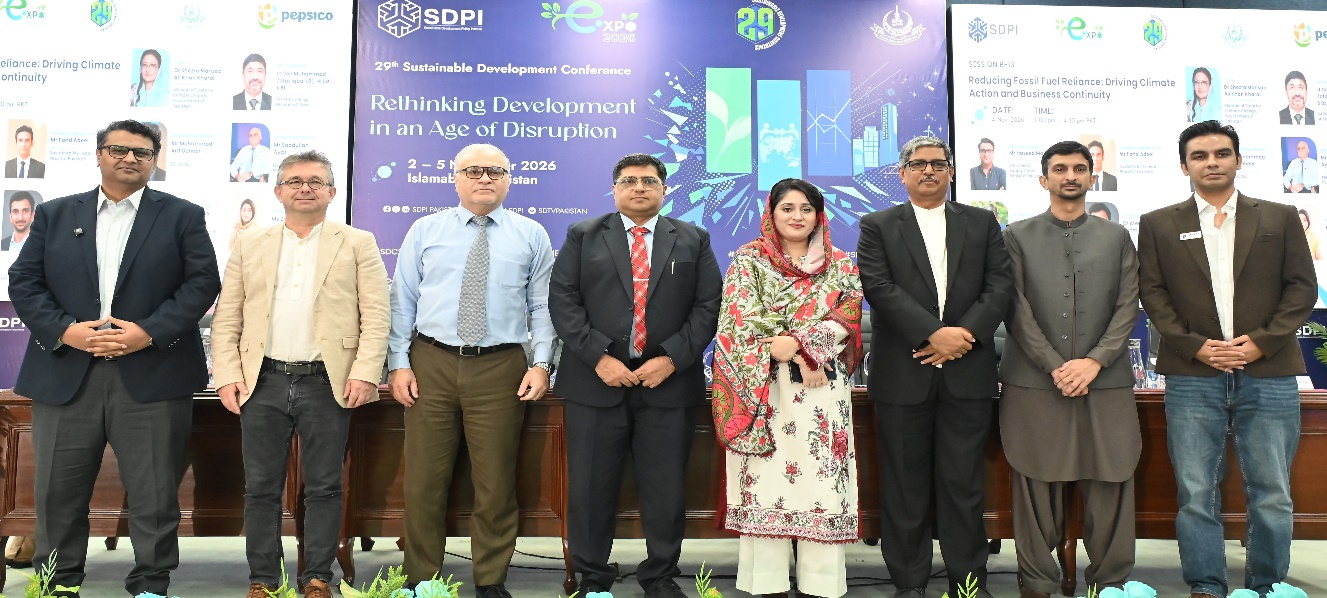
ISLAMABAD (04 November 2026): Pakistan must accelerate its transition from fossil fuels to renewable energy through affordable financing, consistent policies and climate-resilient infrastructure to strengthen industrial competitiveness, protect the environment and ensure equitable access to energy, experts and policymakers said at a dialogue.
The dialogue, titled: “Reducing Fossil Fuel Reliance: Driving Climate Action and Business Continuity,” was organized on the third day of 29th Sustainable Development Conference by the Sustainable Development Policy Institute hee on Wednesday.
Highlighting the economic opportunities offered by solar energy, biomass and energy-efficient technologies, they underscored the importance of protecting vulnerable communities and ensuring that businesses remain resilient to climate shocks.
Lt-Gen (retd) Muhammad Zafar Iqbal, Special Assistant to the Prime Minister on Energy, said Pakistan was undergoing a significant shift towards cleaner energy, driven partly by rapid consumer adoption of solar power.
He said approximately 7,000 megawatts of solar capacity had been added over the past five years, while the government planned to develop another 11,000 megawatts of hydropower over the coming decade.
He said no new coal, re-gasified liquefied natural gas or furnace-oil power plants would be added, reflecting the government's commitment to cleaner electricity generation. He also highlighted plans to promote electric vehicles, targeting 30 percent of new vehicle sales by 2030.
Haseeb Malik, Senior Director Supply Chain at PepsiCo Pakistan, said Pakistan's abundant sunlight and agricultural resources offered significant opportunities to reduce industrial dependence on conventional fuels.
He emphasized that renewable energy adoption must deliver economic benefits, reliable supplies and long-term business continuity. Malik identified unorganised biomass supply chains as a major challenge, saying better market structures were needed to ensure fair returns for farmers while providing industries with affordable agricultural residues.
He said future industrial energy systems would increasingly combine solar power, biomass, battery storage and grid electricity. Improved energy conservation and artificial intelligence-enabled energy management could further reduce operational costs and wastage.
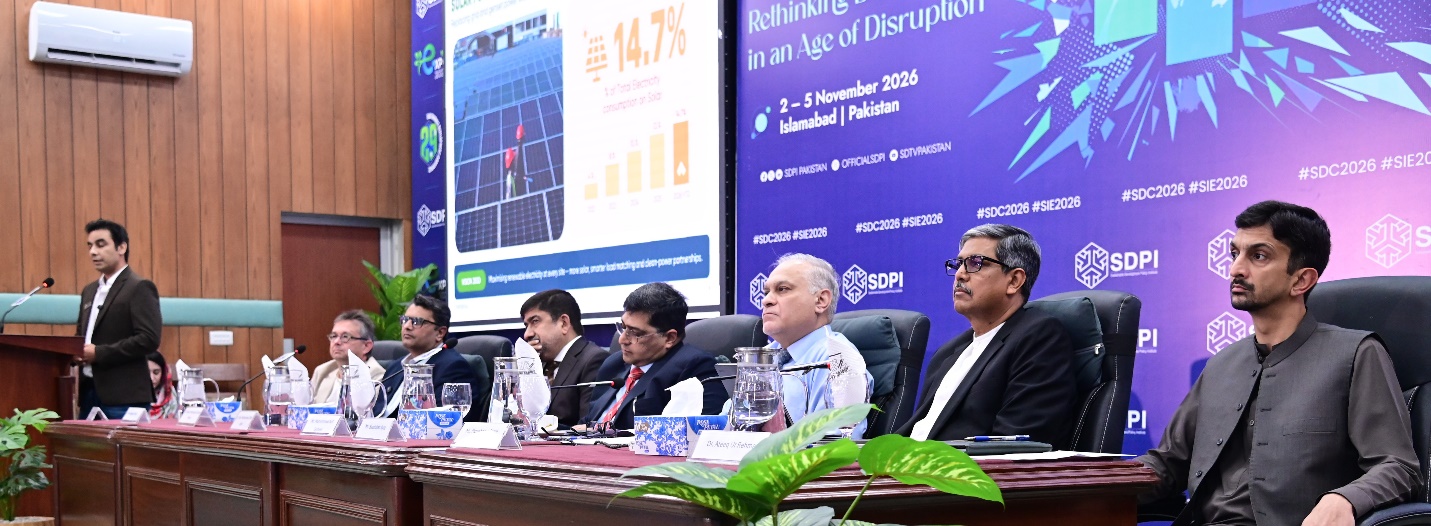
Fahad Adeel, Sustainability Lead at PepsiCo Pakistan, presented the company's clean-energy initiatives, reporting a 40 percent reduction in fossil fuel dependence through biomass-based thermal energy solutions.
He said 50 per cent of manufacturing lines were operating on green fuel, while solar and other green electricity accounted for 14.7 percent of total electricity consumption. He also highlighted initiatives involving solar-powered agricultural equipment, biogas and improved farming practices aimed at reducing emissions across supply chains.
Arif Goheer, Executive Director of the Global Change Impact Studies Centre (GCISC), warned that climate change threatened both energy infrastructure and industrial productivity. He said extreme temperatures, flooding and other climate hazards could disrupt power generation, manufacturing and agricultural operations, making climate-risk assessments essential for future investments.
Goheer urged industries to develop facility-level greenhouse gas inventories and integrate climate, energy and carbon risks into business planning. He offered GCISC's scientific expertise to support businesses in emissions assessments and climate-resilient development.
Saadullah Ayaz, Member Mitigation at the Pakistan Climate Change Authority (PCCA), said Pakistan's principal challenge was not the absence of climate policies but weak coherence and inconsistent implementation. He stressed the importance of stronger federal-provincial coordination, inclusive policymaking and meaningful private-sector participation to improve governance and investor confidence.
Ayaz also highlighted the potential of carbon markets and private investment to support climate mitigation, provided regulatory frameworks encouraged commercially viable projects.
Mozaharul Alam, Regional Coordinator for Climate Action at the United Nations Environment Programme's Asia-Pacific office, said businesses must integrate climate adaptation into renewable energy investments and supply-chain strategies. He noted that companies increasingly adopted clean energy to protect production against electricity disruptions, but warned that shifting sourcing locations alone would not adequately address growing climate risks. Instead, he called for strengthening the resilience of existing suppliers and production systems, alongside corporate initiatives supporting climate-vulnerable communities.
Ateeque Rehman, Consultant Energy at MPDS, identified high upfront investment costs, limited access to finance and regulatory uncertainty as major barriers to industrial decarbonization.
He recommended public-private partnership arrangements, including Build-Operate-Transfer and other project financing models, and urged commercial banks and development partners to make green financing affordable.
He suggested linking loan repayments to energy savings generated through renewable energy and efficiency investments, while stressing that stable policies were essential for long-term investor confidence.
Tobias Klaus, Senior Researcher at the Deggendorf Institute of Technology, emphasised that energy justice required community participation in rural electrification projects.
He said mini-grids must be designed around local needs, traditional knowledge and reliable maintenance systems to remain operational. Klaus also advocated grid expansion and exploration of pumped-storage hydropower as a long-term solution for storing surplus solar electricity.
Moderating the discussion, Zainab Naeem of SDPI called for stronger cooperation between scientific institutions, businesses and policymakers. She urged companies to utilise domestic technical expertise for emissions assessments rather than relying excessively on foreign consultants, while emphasizing the importance of consistent regulations, transparent emissions reporting and equitable access to clean-energy.