Shifting Geopolitics: Risks, Resilience and Prosperity, Day 3, B10, 04 Nov
Pakistan needs to navigate uncertainty amid global power dynamics shift: speakers
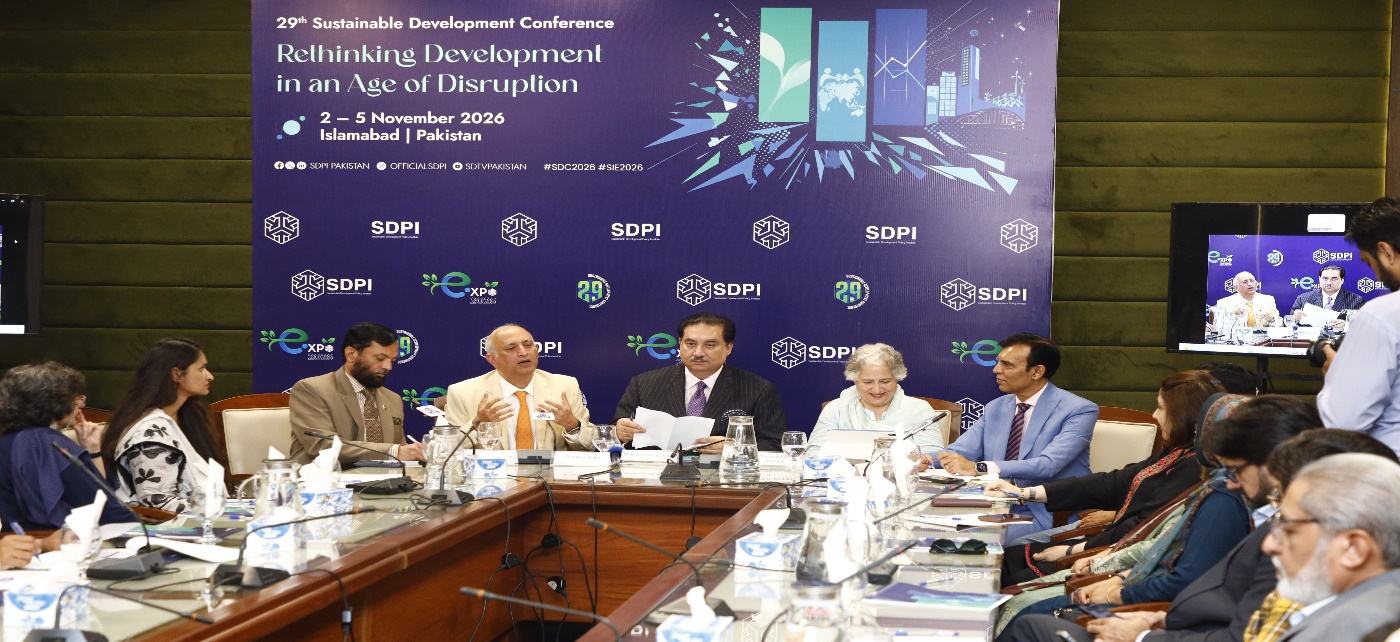
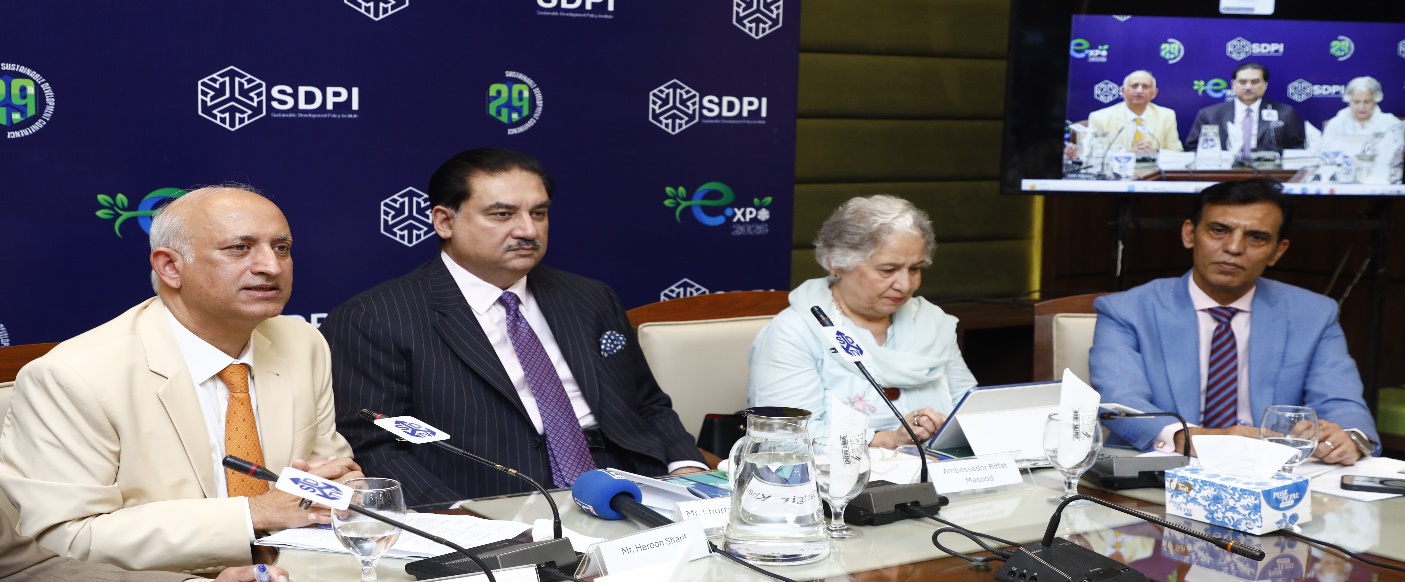
ISLAMABAD (04 November 2026): As geopolitical fault lines shift and global power dynamics are redrawn, Pakistan needs to find itself navigating an increasingly complex landscape of uncertainty, risk and opportunity, says experts at a session, while examining the changing contours of the global world order and what they mean for Pakistan’s strategic and economic future.
The session, titled: “Shifting Geopolitics: Risks, Resilience and Prosperity” was organized on the third day of 29th Sustainable Development Conference, by the Sustainable Development Policy Institute (SDPI), here on Wednesday.
Opening the discussion, SDPI Executive Director Dr. Abid Qaiyum Suleri unpacked the evolving geopolitical landscape in the wake of the US-Israel-Iran war, accentuating Pakistan’s precarious position amid the conflict and the urgent need to navigate emerging challenges with strategic foresight and resilience.
Former Federal Minister Khurram Dastgir Khan identified the United States’ withdrawal from its traditional global role as one of the most significant shifts in the international order. He warned that the longstanding assurance of freedom of navigation, vital to global maritime trade, was increasingly under threat. “Today it is the Strait of Hormuz; tomorrow it could be the Bab el-Mandeb, followed by the Suez or even the Panama Canal,” he said.
“Pakistan’s foreign standing has improved faster than Pakistan’s internal strength,” he said, adding that a change in US leadership could bring a shift in Washington’s approach towards Islamabad, particularly given the American establishment’s longstanding preference for closer ties with India. “We do not know how long this will last,” he added.
He echoed the need for Pakistan to prioritize energy diversification and strengthen its engagement along its western borders. Cautioning against the risks of becoming entangled in regional rivalries, he noted that tensions between Saudi Arabia and Iran could place Pakistan in a difficult position if forced to choose sides. “An escalation of the US-Iran war into an Arab-Iran conflict would be Pakistan’s nightmare, and this is where our leadership deserves credit for ensuring that such a scenario does not materialize,” he said.
Stressing the need for careful scrutiny of Pakistan’s external commitments, including its engagements with the IMF, he said that strong institutional credibility and consistency in economic policymaking are essential for long-term economic prosperity, rather than allowing the country’s economic direction to be dictated by external pressures or the IMF’s changing priorities.
Mr. Haroon Sharif, Chairman of the Pakistan Regional Economic Forum (PREF), identified two major changes. He said that first and foremost, the ability of one country to use violence to control other nations has changed. Secondly, the persistent global economic uncertainty, compounded by escalating macroeconomic risks have changed the investment climate all over the world. He noted that these developments have also significantly constrained investors’ ability to navigate markets and make decisions, with Pakistan facing similar challenges.
He said that if there was a major intervention in the ongoing US-Iran conflict, it would lead to even higher risk premiums for trade, and in particular for exports for Pakistan. He said that Pakistan is “debt-steered” meaning it’s dependent on the US and the EU and therefore currently in a very precarious situation.
On the way forward, Mr. Sharif called for a multidimensional strategy to strengthen Pakistan’s economic resilience, including diversifying trade and investment partnerships, particularly with China and emerging Asian economies, and leveraging opportunities arising from its geopolitical position. On energy, he urged Pakistan to look beyond supply-side interventions and give greater attention to demand-side management. “The rest of the world has moved towards managing energy demand, while we remain focused on the supply side. We have made progress on that front, but it is time to broaden our approach,” he said.
He noted three global priorities that Pakistan must also focus on: alternative energy, food security and a technology-light economy. He identified China as a potential strategic partner in advancing these areas. “Pakistan needs to pick a few winners. We cannot do everything,” he said.
Mr Sharif suggested that Pakistan could position itself as an alternative market to the Gulf, but stressed that this would require sub-regional multilateral initiatives centered on climate, food security and the economy.
Riffat Masood, former Ambassador to Iran, said that the region has endured conflicts for generations and has developed its own capacity to navigate them, with Iran being a case in point. Turning to Pakistan’s regional outlook, she said that the country had neglected its borders, particularly along its western frontiers with Iran and Afghanistan. “We have missed several opportunities to build a stronger relationship with Iran without compromising our ties with the Gulf,” she said.
She said that there are four conflicts happening right now, Arab-Israel, US-Israel-Iran, Arab-Arab, and Arab-Iran. “The moment you pick a side, you’re in trouble,” she said, adding that Pakistan needs to focus on two things: not picking sides and securing its borders.
Maj-Gen. (Retd) Dr Ehsan Mehmood Khan said that the global order has always been in transition. He said that war generates war economy, which has long been a foundation for the politics and political economy of major powers around the world.
He noted that Pakistan’s strategic geographical location offers an opportunity to emerge as a hub for human, economic and security integration. Reflecting on the changing global order, he identified three major shifts: a redistribution of global power, which is now increasingly dispersed and contested; the growing influence of artificial intelligence (AI); and the realignment of traditional alliances.