Strengthening Power Systems for Energy Transition in South Asia, Day 2, A5, 03 Nov
Call to integrate grid planning, better visibility of rooftop solar, regional power trade & stronger institutional coordination for South Asia's energy transition
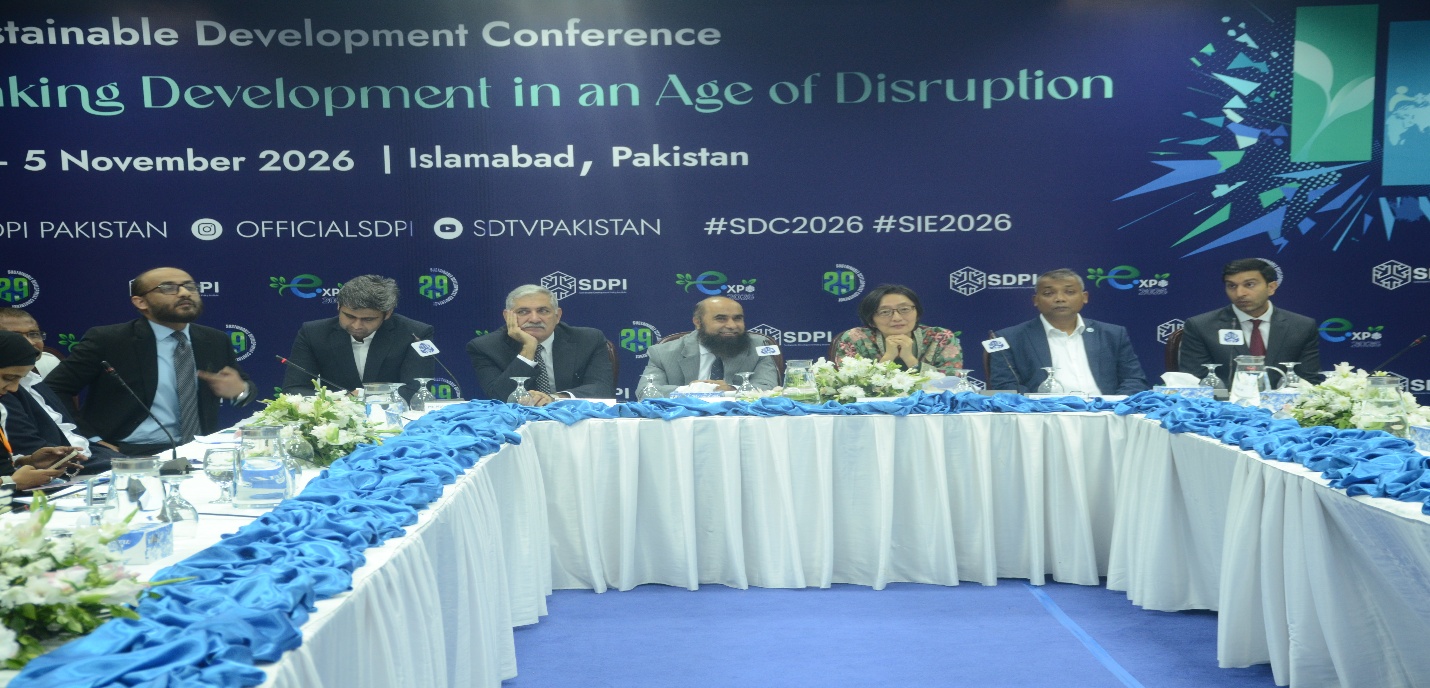
ISLAMABAD (03 Nov 2026): Regional and global experts have called for integrated planning of generation, transmission and distribution, better visibility and control of distributed solar, stronger coordination among power sector institutions, and deeper regional cooperation to make South Asia's grids ready for a rapid rise in renewable energy.
They were speaking at a session, titled: "Strengthening Power Systems for Energy Transition in South Asia", organized on the second day of 4-day Sustainable Development Conference held by the Sustainable Development Policy Institute in collaboration with the UN Economic and Social Commission for Asia and the Pacific (UNESCAP). at the Allama Iqbal Open University here on Tuesday. The overarching theme of this year’s conference is ‘Rethinking Development in an Age of Disruption’.
Ms Mikiko Tanaka, Director and Head of the UNESCAP Subregional Office for South and South-West Asia, said the growing share of solar and wind in Asia-Pacific had made the seasonal variability of these resources a critical issue. She said the region faced inadequate transmission infrastructure, regulatory and institutional challenges, and financial constraints on grid upgrades. Stronger grids and integrated systems, she added, could help countries electrify their economies. She said UNESCAP was proud to partner with Pakistan on the grid review study.
Speaking online, Mr Joseph George, Economic Affairs Officer at UNESCAP's Subregional Office for South and South-West Asia, said the three countries studied, Pakistan, Bangladesh and Sri Lanka, already had significant generation capacity. The real question, he said, was whether their grids could deliver that power efficiently and economically to where they were needed.
He said solar plants connected directly to distribution networks were not fully visible to system operators, which created challenges for system stability and could lead to losses for plants. He stressed that generators, system operators, transmission utilities and distribution companies must coordinate, not only nationally but across borders. He hoped the study would help other countries that are facing similar challenges and support knowledge exchange and common standards.
Mohammad Solaiman, Deputy Secretary at the Power Division of Bangladesh's Ministry of Power, Energy and Mineral Resources, said his country's earlier focus on adding generation, with capacity payments and little competitive bidding, had become a heavy burden on the economy. He said the recent regional energy crisis had exposed Bangladesh's dependence on imported fuel.
Renewables currently supply only about 5.95 percent of Bangladesh's grid, he said, and the government has announced ambitious solar targets because the country has limited hydro and wind potential. With around 65 percent of consumers in rural areas, he said, modernizing weak distribution networks was a priority. He added that Bangladesh was also seeking more electricity from Nepal and Bhutan.
A representative from Sri Lanka said system operators there maintain minimum thermal and hydro capacity for stability, and that solar output had met a large share of demand at certain times. He said Sri Lanka could learn from the experience of other countries in the region.
Mr Abdul Rasheed Jokhio, Director of the SAARC Energy Centre, who chaired the session, said the pace of the transition would depend on whether grids could stay reliable and affordable while handling variable sources. He said investment in grid modernisation must keep pace with renewable plants, and planning must treat generation, transmission and distribution together. He said interconnected regional systems could absorb variability more efficiently than any single national system, and urged more work on capacity building for utilities, regulators and system operators.
Dr Fiaz Ahmad Chaudhry, Chairman of the Board of Directors of the National Grid Company of Pakistan (NGC), who was the guest of honour, said power sector professionals should remain neutral on technology. The goal, he said, was to produce electricity at the lowest cost with the least environmental impact.
Dr Khalid Waleed, Research Fellow at SDPI, presented the study, which assesses grid readiness against five dimensions and 64 indicators. He said Pakistan, Sri Lanka and Bangladesh share similar concerns: distributed solar, the gap between usable and installed capacity, transmission and substation reliability, flexibility, and utility finances.
For Pakistan, he said, unplanned distributed solar had turned the "duck curve" into a "dragon curve". He also pointed to capacity payments for under-utilized plants and called for making distributed solar visible to system operators, preparing for flexibility, installing grid-level storage and moving ahead with market reforms.
Syed Faizan Ali Shah, Energy Advisor at the Ministry of Energy (Power Division), said inverter standards were being revised and battery energy storage systems would be placed at substations facing heavy reverse power flow. He said the global energy crisis was pushing Pakistan towards indigenisation through solar and battery systems, and that planning must be robust to avoid another crisis.
Mr Arqam Ilyas of the Lahore Electric Supply Company (LESCO) said household solar had led to reverse power flow of about 30 megawatts at some substations. He said a shift from gas to electricity in homes over the past seven months could become a major challenge, but also an opportunity, and that the system needed to address night-time demand.