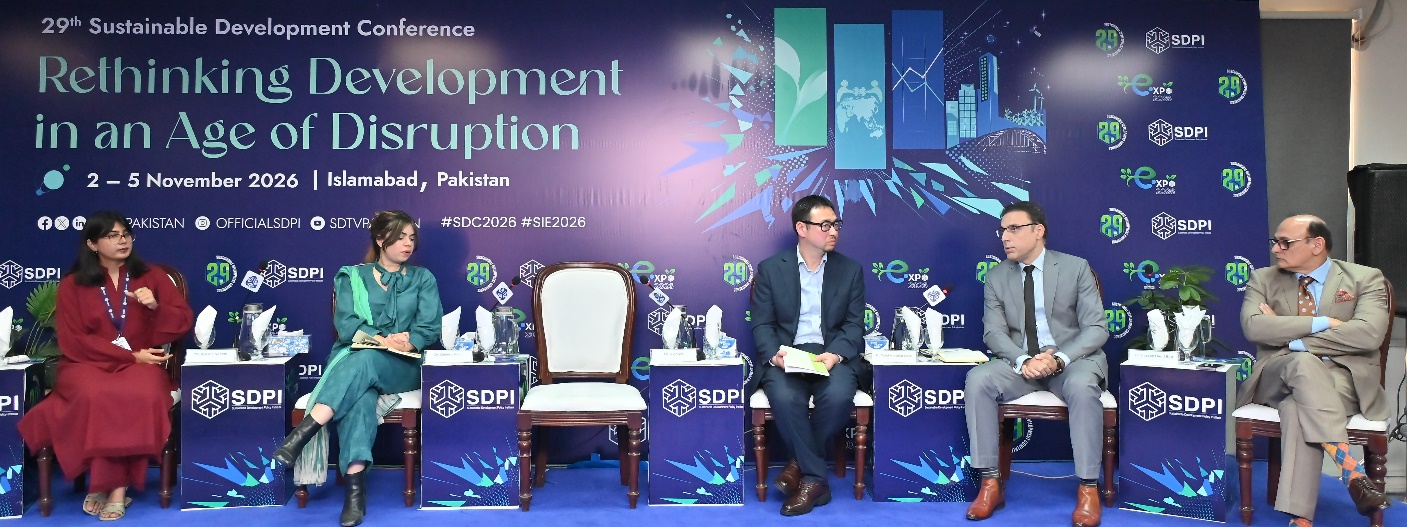
Sustainability Governance of China’s Overseas Infrastructure Investments: Insights from Pakistan, Day 3, B6, 04 Nov
Experts urge stronger governance, trust and community benefits for CPEC 2.0
ISLAMABAD (04 November 2026): Researchers and policymakers said that making China-backed infrastructure sustainable in Pakistan will need stronger governance, community benefit-sharing and long-term planning, not just more projects.
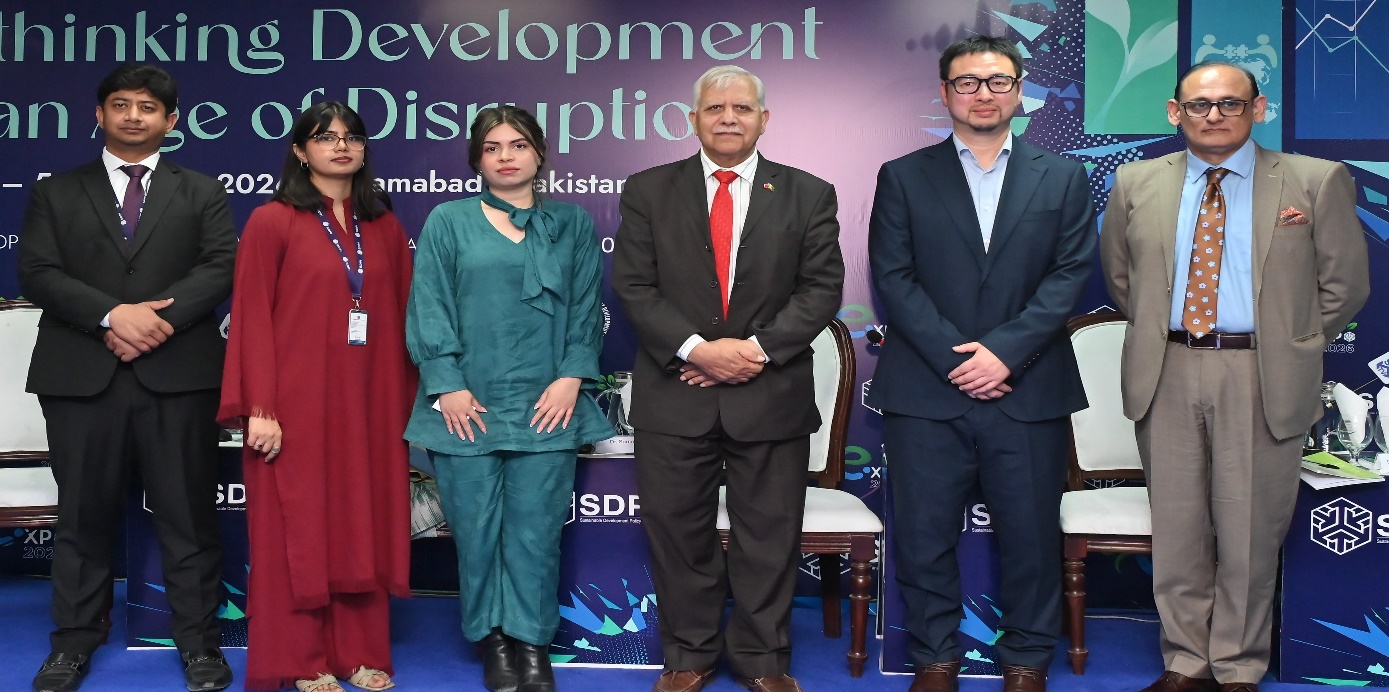
They were speaking at a policy roundtable, titled: ‘Sustainability Governance of China's Overseas Infrastructure Investments: Insights from Pakistan ", organized on the third day of 4-day Sustainable Development Conference held by the Sustainable Development Policy Institute in knowledge partnership with PCI and in collaboration with SGAIN, University of Bath. The conference theme is "Rethinking Development in an Age of Disruption."
Dr Shen Wei of the International Institute of Green Finance (IIGF) presented a new dataset of Chinese overseas renewable energy projects. It covers more than 1,200 projects and is updated quarterly. He said about 75 percent of the projects involve technology supply or construction contracts rather than direct investment. "Chinese are very good builders for other people's assets," he said, noting that Chinese firms are wary of unbankable state utilities as sole power buyers, weak demand in low-income markets, and land and social-licence disputes.
He said South Asia is a partial exception. Direct investment there is about 15 percent, higher than the rest of Asia and Africa. In Pakistan, he said the dataset documents about 17 renewable projects over five years. Five are solar and most are hydropower, which he said totals over 15 gigawatts. He added that Chinese firms are not systematically embedded in national grid planning.
Mr Jiuyang Liu, doctoral researcher at the University of Bath, presented a study based on 36 interviews held in Islamabad in July. He argued that green norms under CPEC are co-produced rather than imposed. China opens the channel, he said, while Pakistan presses its own demands on environmental concerns, energy security and fiscal pressure. One option under discussion is converting coal plants to battery storage and solar, but no co-signed text exists yet.
Dr Hassan Daud Butt, Senior Advisor to Energy China, said Chinese interest in Pakistan remains strong. He pointed to more than 120 Chinese enterprises registered with the Chinese chamber of enterprises in Pakistan. He said CPEC 2.0 should focus on making existing assets productive, building skills and industrial capacity, and shifting from front-loaded to back-loaded incentives. He also argued for incentives tailored by region rather than one-size-fits-all.
"To attract a phoenix, you have to build the nest first," he said, adding that the nest is good governance built on trust.
Dr Sauleha Kamal of the Ministry of Planning, Development and Special Initiatives said Pakistan's governance problems do not stem from a lack of formal safeguards, which are already part of the PC-1 project lifecycle. The real gaps, she said, are trust, policy continuity and unclear responsibility, with agencies duplicating or diffusing accountability. She said devolution after the 18th Amendment remains incomplete until it reaches union councils and local governments.
Dr Syed Hasanat Shah of the CPEC Centre of Excellence (CoE-CPEC) said Pakistan should favour pilot projects over mega projects and avoid "shock therapies," drawing on China's gradual approach. He stressed infrastructure, institutions and connectivity, and called for CPEC to deliver more for the youth.
Dr Hina Aslam of the Australian National University said China's 2021 overseas investment guidelines encourage higher standards where host-country rules are weaker. She called for community benefit agreements in CPEC project contracts, with local employment, transparent compensation and independent enforcement. She also urged clearer federal, provincial and local roles.
Dr Yixian Sun of the University of Bath, who introduced the project and joined online, said speakers broadly agreed that stronger governance is needed for bilateral cooperation and the sustainability transition. He said that while CPEC 2.0 has moved from government-to-government to business-to-business cooperation, it should also bring all stakeholders to the table. He said the dialogue will continue at a series of events with SDPI at COP31 next week.
Ms Ayesha Naeem, researcher at SDPI, presented findings from four Chinese-financed wind plants in Sindh that generate around 200 MW. Residents reported lost access to farmland and grazing areas, restricted fishing access, and weak consultation. They also reported that CSR funds are not reaching communities and that job benefits are uneven. Women reported reduced mobility and fear of insecurity.