Transformation Dialogue, An Early Warning on a Post-2030 Agenda: Building Inclusive Narratives for Real Transformation, Day 3, A16, Nov 3
Experts call for rethink of global development agenda beyond 2030
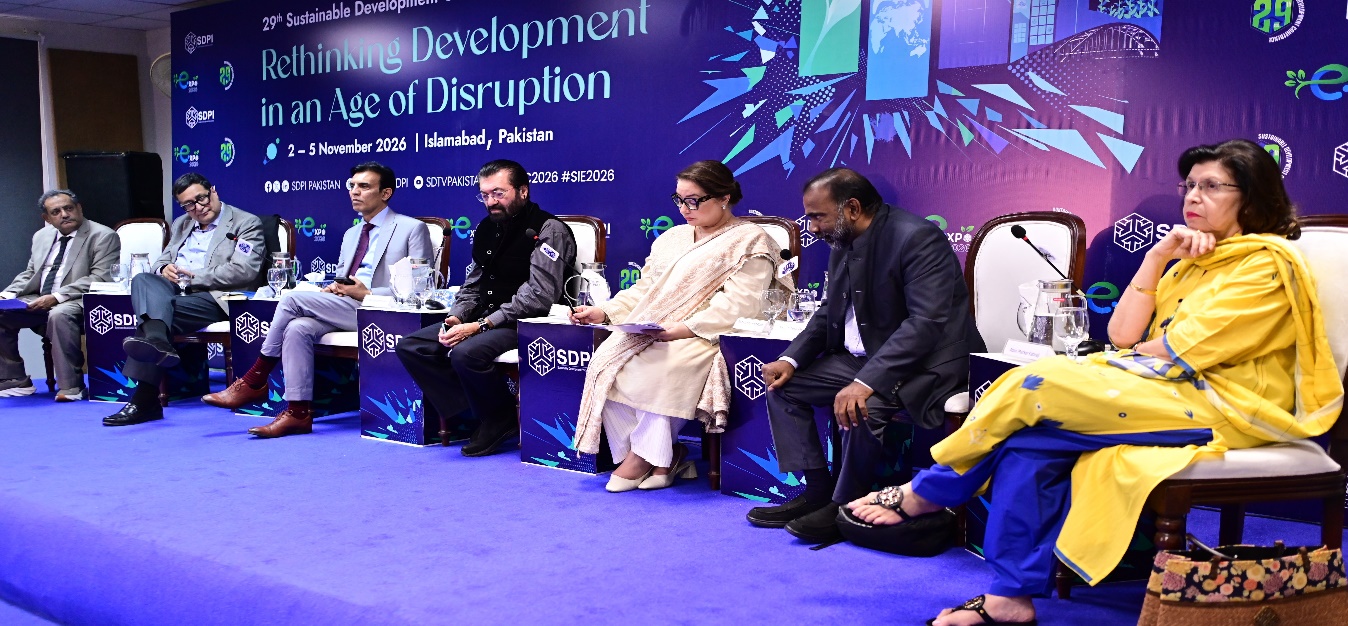
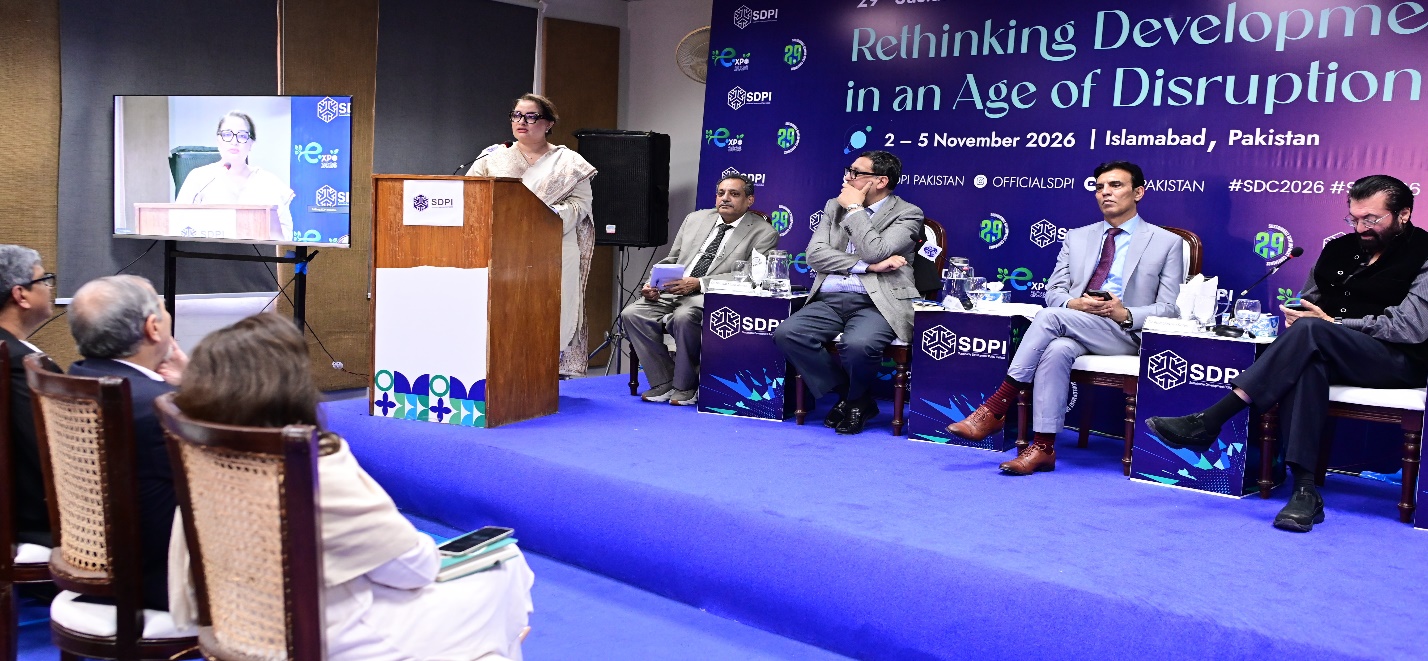
ISLAMABAD (03 November 2026): Development experts at a session have called for a fundamental rethink of the global development agenda beyond 2030, urging countries to move beyond unfulfilled commitments and fragmented policies towards practical solutions, equitable financing and stronger international cooperation.
The session, titled: “Transformation Dialogue, An Early Warning on a Post-2030 Agenda: Building Inclusive Narratives for Real Transformation” held here on Tuesday as part of the Sustainable Development Policy Institute’s 29th Sustainable Development Conference.
Coordinator to the Prime Minister on Climate Change and Environmental Coordination, Romina Khursheed Alam, called for a shift from conference discussions to practical solutions to shared development challenges, particularly the Sustainable Development Goals (SDGs).
Recalling her role in advancing the SDGs in Parliament, she said hunger and poverty must remain central to development efforts, noting that the SDG wheel can mean little to a hungry child without food.
She criticized developed countries for imposing conditions and sanctions on developing nations while failing to address the disproportionate burden they face from global challenges.
She stressed that developing countries share similar problems and suffering but need greater cooperation and concrete solutions rather than repetitive conference discussions.
Uditcha De Zoysa, Chairman GLOSS, Sri Lanka, said the SDGs lack the foundational principles of the 1992 Rio Declaration and Agenda 21, arguing that monitoring frameworks alone cannot drive meaningful transformation.
He warned that nine planetary boundaries have been crossed, underscoring the urgency of rethinking sustainable development and moving towards regenerative systems.
He criticized the failure to translate international commitments into development financing, noting that the funding gap in the developing world has continued to widen.
Drawing on Sri Lanka’s SDG implementation experience, he said mapping 425 government agencies exposed fragmentation and the need for integrated planning and stronger coordination.
He stressed that sustainable development requires turning aspirations and warnings into concrete action rather than repeatedly creating new agendas without delivering results.
Dr Adil Najam, international expert on climate change, environmental policy and sustainable development, urged younger generations to reconnect with the principles established at the 1972 Stockholm Conference and the 1992 Rio Earth Summit, warning that their historical significance is fading.
He said the Rio Summit’s key achievement for developing countries was securing principles that recognized their distinct responsibilities and development needs.
He highlighted the principle of “common but differentiated responsibilities”, arguing that it recognised the shared nature of environmental challenges while acknowledging countries’ differing contributions and capacities.
He stressed that the polluter-pays principle, under which those responsible for environmental damage should bear the cost of addressing it, was a major achievement that has since lost prominence in international negotiations.
He also highlighted the principle of additionality, which requires environmental funding to be provided over and above existing development assistance rather than replacing it.
Dr Pratyush Sharma, Head of Research and Innovation at Southern Voice, India, called for reforming the strained international rules-based order rather than abandoning it, warning that global cooperation is essential to achieving the 2030 development agenda.
He said the SDGs face a legitimacy crisis, with only 18% of targets reportedly achieved, but cautioned against launching a new SDG framework given the difficulty of securing political consensus.
He advocated consolidating goals, localising implementation and strengthening governance and partnerships, highlighting SDGs 16 and 17 as central to achieving the other goals.
Dr Abid Qaiyum Suleri, Executive Director, SDPI, called for reforming international financial institutions, arguing that their governance structures give disproportionate influence to a handful of powerful countries over development financing decisions.
He criticized the declining availability of climate and development finance, noting that developing countries face growing climate vulnerabilities and obligations despite inadequate funding.
He warned that geopolitical disruptions and rising defence spending in donor countries are further shrinking bilateral development assistance.
He urged developing countries to take greater domestic responsibility for development beyond 2030, stressing government accountability and prioritizing human development, including education and healthcare.
Aban Marker Kabraji, a conservation and climate-policy expert, said the current disruption in international order reflects longstanding weaknesses in multilateral institutions, which have become increasingly rigid and ineffective.
She criticized the fossil fuel industry for suppressing climate science and delaying the integration of climate risks into economic policymaking, despite decades of available scientific evidence.
She urged developing countries to move beyond dependence on external assistance and pursue homegrown solutions through stronger regional alliances.
She said Pakistan’s strategic geography offers an opportunity to strengthen regional cooperation on climate, development and infrastructure.
Dr Tariq Banuri, Chairman, Institute of Urbanism (IoU), Pakistan, urged young people to rethink how humanity can coexist amid poverty, inequality, conflict and environmental destruction.
He said past efforts, including the Rio Conference, Millennium Development Goals and Sustainable Development Goals, had achieved only partial success in addressing these challenges.
He called for a dual approach: strengthening domestic development while pursuing global cooperation to address shared problems.
He stressed that countries must develop solutions that serve the collective global interest rather than focusing exclusively on their own priorities.
He urged participants to rethink the institutions, targets, values and operational systems needed to guide development beyond 2030.
He called on the younger generation to take ownership of the debate and help shape a new agenda for a more equitable and sustainable world.