Transforming Pakistan’s Agriculture and Food Systems in an Age of Disruption: AI for Regenerative and Climate-Smart Farming, Day 3, 4.2, 05 Nov
Experts call for regenerative farming to secure Pakistan’s food future
ISLAMABAD: Experts at a plenary have called for an urgent transition to regenerative agriculture in Pakistan, stressing that restoring soil health, protecting smallholder farmers and adopting climate-smart technologies are essential to strengthen food security amid growing climate risks.
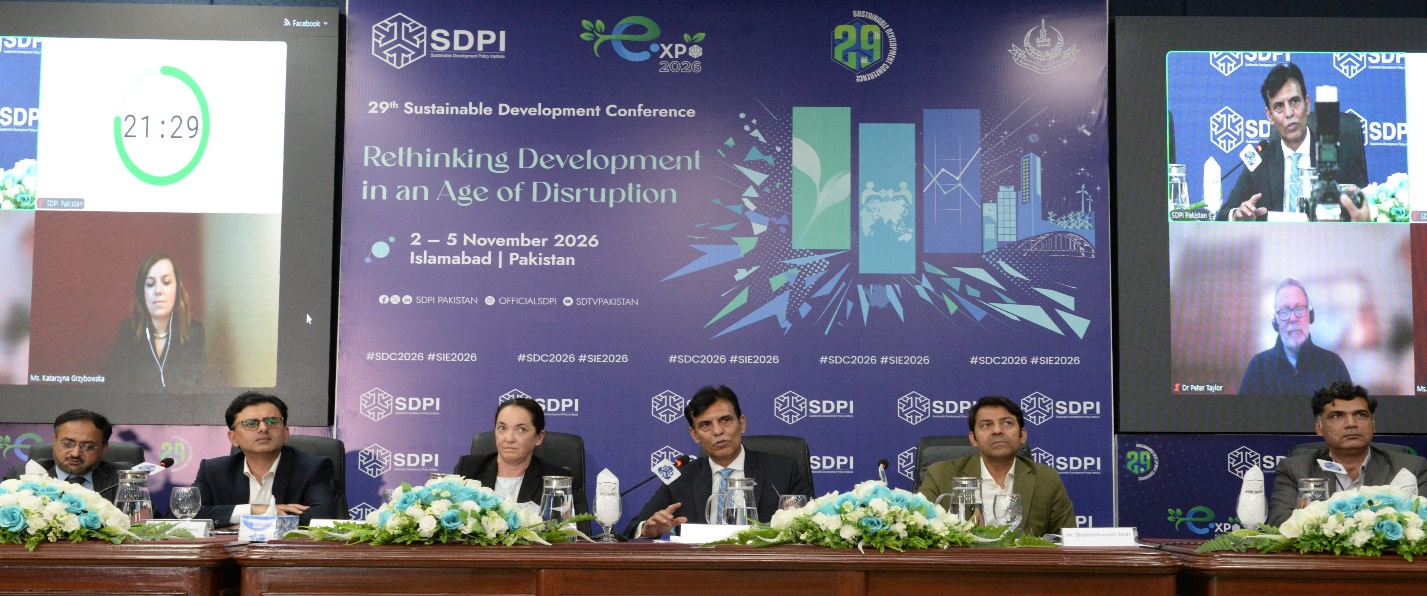
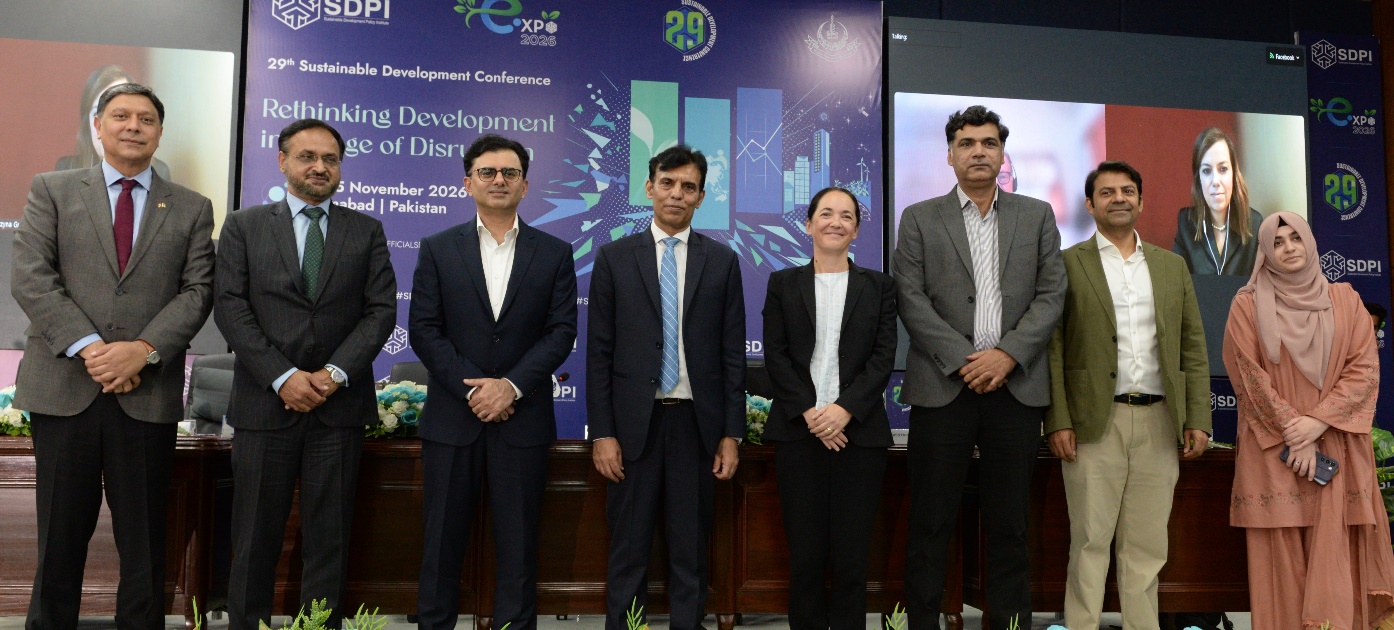
The Plenary, titled: “Transforming Pakistan’s Agriculture and Food Systems in an Age of Disruption: AI for Regenerative and Climate-Smart Farming”, was organized on the last leg 29th Sustainable Development Conference by the Sustainable Development Policy Institute (SDPI) here on Thursday.
Dr Anita Hirsch, Country Director, World Food Programme (WFP), Pakistan, said the UN agency was using advanced forecasting technology and anticipatory action to protect smallholder farmers from climate-related disasters, including floods and heatwaves.
She said Pakistan had recently issued a National Anticipatory Action Strategy in collaboration with the National Disaster Management Authority (NDMA), providing a framework for early-warning systems to identify vulnerable areas and prepare communities before disasters strike.
Forecasting technology could help farmers take preventive measures, including delaying planting during anticipated droughts and relocating livestock to safer areas, she said.
Dr Hirsch stressed that anticipatory action was essential to prevent climate disasters from reversing agricultural gains. She highlighted efforts to develop parametric insurance and disaster risk financing and embed early-warning triggers in local institutions.
She also highlighted WFP's Homegrown School Feeding programme, which links smallholder farmers and women's organisations directly with school meal programmes, creating predictable markets and income for those adopting sustainable farming practices. An initiative based on this model has been launched in Balochistan.
Katarzyna Grzybowska, Head of Sustainability Zone AOA, Nestlé, Switzerland, called for stronger partnerships, farmer-focused financing and policy alignment to accelerate regenerative agriculture. She said Nestlé aimed to source 50 per cent of its ingredients from farms by adopting regenerative practices by 2030, with half of the target already achieved.
She identified four priorities for the transition: adapting practices to local conditions, building partnerships beyond individual companies, protecting farmers' economic interests and treating soil restoration as a long-term investment.
Responding to a question about systemic change, Grzybowska said the priorities of the private sector, farmers, suppliers and government must align with national food security and agricultural development goals. She also called for moving beyond traditional yield-based productivity measurements towards indicators such as soil health and soil capital.
Dr Peter Taylor, Professorial Research Fellow at the Institute of Development Studies, UK, warned that AI in agriculture could deepen global inequalities unless developing countries addressed infrastructure gaps, digital exclusion and the lack of locally relevant data.
He said around 570 million farms existed worldwide, with 84 per cent covering less than two hectares, making smallholders central to the global agricultural transition.
While generative AI could support precision farming, localized education and complex agricultural problem-solving, limited electricity, computing capacity, mobile connectivity and digital literacy could prevent farmers in developing countries from benefiting equally.
He said that AI should complement rather than replace essential support systems, including financial assistance, agricultural services and humanitarian aid during climate-related emergencies.
Faisal Nadeem, Head of Technical, Nestlé Pakistan, said regenerative practices could restore soil health by increasing organic matter and supporting beneficial microorganisms, while reducing dependence on chemical inputs and irrigation.
He said Nestlé was working with more than 25,000 dairy farmers across Pakistan, with approximately 125 farms already adopting some level of regenerative agriculture.
He highlighted integrated farming models in which biogas plants convert animal manure into energy, while the resulting slurry serves as organic fertiliser. Nestlé was also collaborating with LUMS, the University of Agriculture Faisalabad, the Pakistan Agricultural Research Council and SDPI on research, training and technological solutions.
Responding to a question about implementation and scalability, Nadeem said regenerative agriculture had moved beyond theoretical discussions, with successful applications demonstrated globally. The priority was now to scale up existing initiatives while addressing farmers' economic concerns during the transition.
Shahid Hussain Tarer, Managing Director of Galaxy Rice Mill (Pvt) Ltd and Convener of the Pakistan Basmati Heritage Foundation, said Pakistan must strengthen agricultural infrastructure, farmer support systems and financial safeguards before expecting AI and regenerative practices to transform the sector.
He said technology should serve as an advisory tool rather than a standalone solution. Smallholders cultivating 10 to 15 acres faced risks from climate change, crop diseases, unpredictable weather and volatile market prices, making them reluctant to adopt new practices without financial protection and incentives.
Tarer said AI could help identify crop diseases through image-based applications and improve farmers' access to agricultural advice, but access to certified seeds, technical guidance and finance remained fundamental.
Dr Zaigham Shahzad, Associate Professor at the Syed Babar Ali School of Science and Engineering, Lahore University of Management Sciences (LUMS), called for integrating regenerative agriculture into academic curricula, expanding farmer training and developing specialised crop varieties.
He proposed incorporating the subject into degree programmes, training business leaders through LUMS executive education, equipping agricultural extension workers with practical knowledge and establishing demonstration farms for peer-to-peer learning.
He stressed the need for research into crop varieties that could maintain yields with fewer synthetic inputs, particularly wheat varieties suited to regenerative farming.
Zaigham proposed a Centre of Excellence for Regenerative Farming to bring together agronomy, plant breeding, engineering, agribusiness and AI expertise.