Utility-Scale Renewable Energy: Federal Policy, Provincial Priorities and Implementation Gaps, Day 3, B15, 04 Nov
Parliamentarians call for coordinated push towards renewable energy
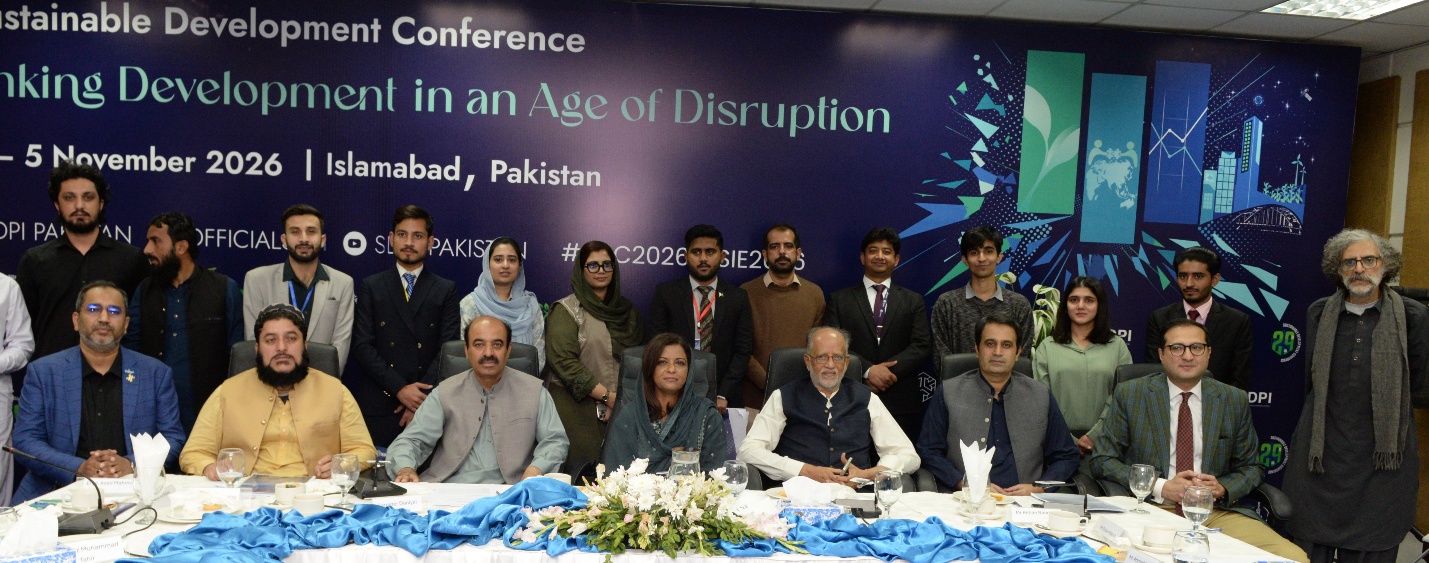
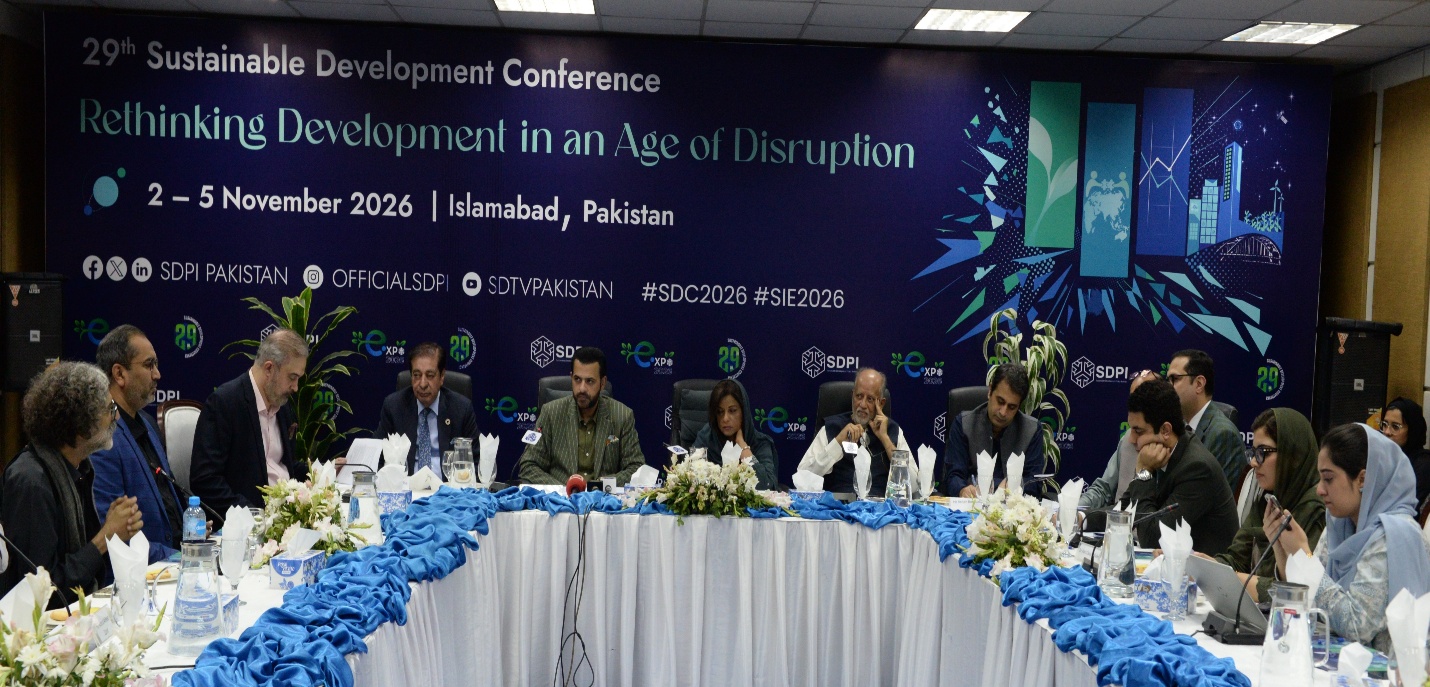
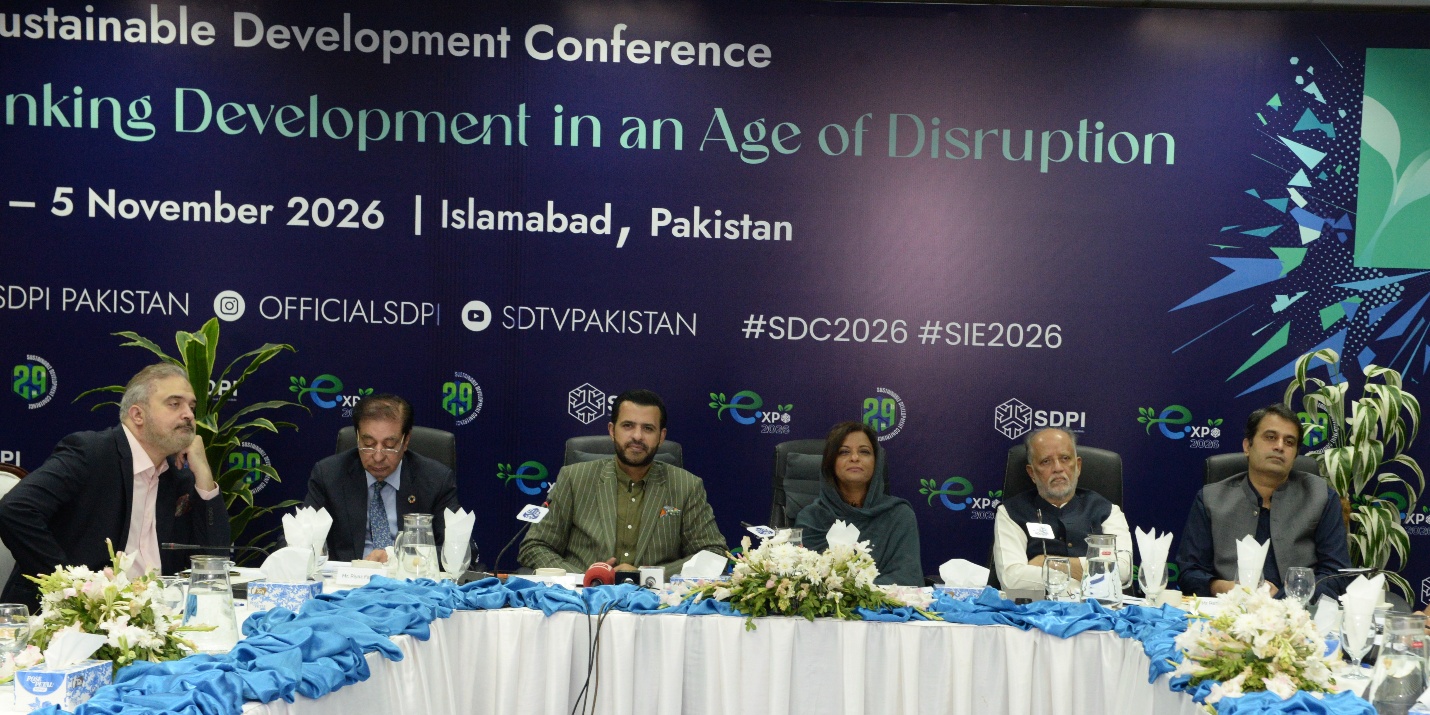
ISLAMABAD (04 November 2026): Parliamentarians, policymakers and development practitioners have called upon the federal and provincial governments to accelerate the transition towards utility-scale renewable energy by strengthening inter-governmental coordination, addressing policy inconsistencies and closing implementation gaps in the power sector.
The demand was made at a plenary, titled: “Utility-Scale Renewable Energy: Federal Policy, Provincial Priorities and Implementation Gaps”, organized on the third day of 29th Sustainable Development Conference by the Sustainable Development Policy Institute
Dr Nafisa Shah, the chair of the Special Committee on Gender Mainstreaming, said the disconnect between federal policymakers, provincial governments and elected representatives was among the major reasons behind the country's energy problems.
Identifying two contrasting developments in Pakistan's energy sector, she said the country was facing a severe energy crisis while simultaneously witnessing a citizen-led renewable energy revolution. "These are two stories of Pakistan: one is of energy crisis, and one is of renewable energy success," she said, adding that expensive power purchase agreements, take-or-pay contracts and dollar indexation had contributed to the crisis. "These are huge policy failures at the federal level. No province was involved … no province was consulted," she said. She warned that new federal energy initiatives could create additional stranded costs for consumers and stressed the need for energy federalism, equity and democracy.
"Until and unless the policy is equitable, it is not democratic and devolved, and doesn't engage all the stakeholders, I don't think, our issues will be resolved," she said, urging provinces to raise these concerns in their respective assemblies.
Riaz Fatyana, Member of National Assembly, said Pakistan had an installed electricity generation capacity of around 50,000 megawatts, with renewable energy accounting for approximately 20 per cent. He said the country could increase this share to 30 per cent by 2030 if the existing 2019 renewable energy policy remained in place. He called for restoration of the solar net-metering system, saying its discontinuation had created unrest among consumers who had invested in solar installations.
Requesting the government to restore solar net-metering system, which he said has caused unrest among people," he suggested an alternative for remote communities without electricity, particularly in Balochistan and Sindh (interior). He said small groups of 25 to 30 households could jointly establish and manage solar power systems with the help of soft loans. "Do not provide them with equipment. If the government provides equipment, the price will be high due to kickbacks. Give them soft loans," he said.
Barrister Danyal Chaudhry, Member of National Assembly, emphasized that Pakistan’s energy transition is an "economic necessity, a strategic imperative, and an opportunity to redefine our national future." He highlighted that citizens have embraced rooftop solar out of resilience, pushing net metering capacity significantly higher. However, he said that individual rooftop solutions are insufficient.
He urged policymakers to prioritize utility-scale solar projects and reform legislative frameworks, adding that "we cannot build this energy future of 250 million people without having a policy and without working on it."
Syed Hafeezuddin, chairman of the National Assembly Standing Committee on Industries and Production, said the Constitution provided a framework for federal and provincial cooperation in the power sector. Referring to Articles 142, 154 and 157 and the 18th Amendment, he said provincial governments had sufficient constitutional space to play a greater role in energy policymaking and implementation.
He said the Council of Common Interests could provide an appropriate platform for resolving federal-provincial issues. Electricity and water shortages are among the major reasons behind the closure of industries in Karachi, he said, adding that regulatory and legislative shortcomings need to be addressed. Mr Hafeezuddin called for amendments to the Pakistan Renewable and Alternate Energy Act and comprehensive changes to the existing CPPA Act to address gaps in the regulatory framework.
Rehan Bandukda, Member of National Assembly, highlighted critical gaps in Pakistan's energy sector, emphasizing that the country's crisis is rooted in delivery constraints rather than a shortage of generation.
Highlighting the heavy reliance on imported fuels and capacity payments, he said: "Our energy crisis does not mean that we have a shortage of energy; it means we are unable to get power from the plants to which we are paying for power generation." He also criticized centralized planning and infrastructure bottlenecks, urging policymakers to leverage renewable potential, streamline transmission, and seize growth opportunities like data center investments.
Ahmad Iqbal, Member of Provincial Assembly, criticizing over-centralization and tracing back Ayub Khan’s era, argued that electricity should be managed locally. Highlighting consumer vulnerability after a fatal electrocution in Zafarwal, he noted that "90% of the phone calls that I get as an MPA are not issues of the police station or courts, they are about electricity issues." He condemned pervasive overbilling and called for modernizing outdated statutes.
Hafiz Mohammad Tahir, Member of Provincial Assembly, said around 0.3 million people in his constituency had benefited from solar-powered water supply connections since he began installing such systems in 2009. He said he had also installed 75 water filtration plants in three years, highlighting the gap between government resources and delivery.
Referring to Taunsa’s district hospital, he said a Rs120 million solar power system installed during the tenure of former chief minister, Usman Buzdar, is non-functional due to delays in installing a green meter by Wapda; so people are unable to get benefit from the project.
Badar Alam of the Policy Research Institute for Equitable Development, who began by acknowledging the constitutional and legal foundations of provincial powers in the energy sector, also participated in the discussion.