
Concept Note:
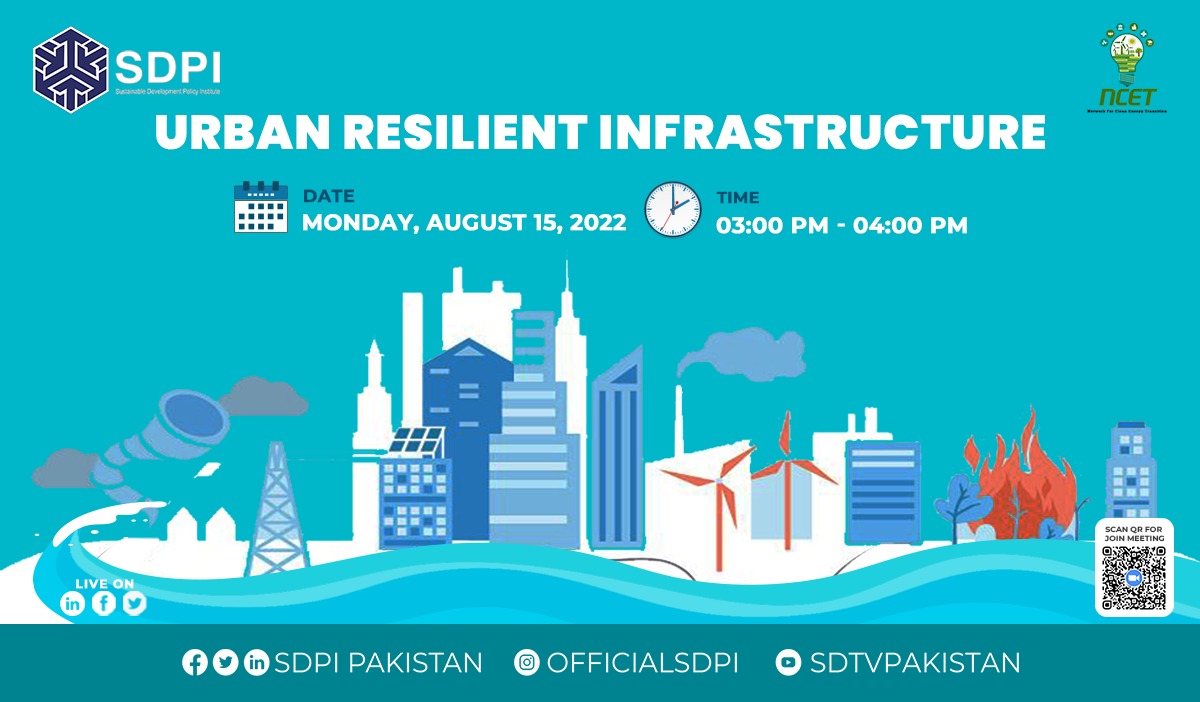
Urban Resilient Infrastructure in Pakistan Metropolitan cities in parts of the world are bearing the brunt of urban flooding due to heavy rains, caused by extreme weather events. The metropolitans in the developing countries including Pakistan with vulnerable and weak urban infrastructures and the metropolitans in rich countries which used to have strong infrastructure stand at risk of urban flooding as climate change is hitting them hard but differently. Largely the developing countries have weak infrastructure and are facing losses rapidly whereas the developed countries despite having comparatively strong infrastructure are facing losses but with low intensity. The reason is that climate change is eroding the existing infrastructures as they are no more resilient enough to sustain heavy rains leading to urban flooding. The faulty urban planning, and unsustainable land-use places Pakistan among at high-risk countries. According to German Watch, Pakistan has been ranked as the 5th most vulnerable countries in the world, experiencing severe episodes of urban flooding and heatwaves resulting in loss and damage to livelihoods, building infrastructure, environmental degradation, lives, and economy. The number of people living in informal settlements across the world will likely surpass 3 billion by 2050. Many live in substandard housing, ill-equipped to deal with climate change and related disasters. A warmer climate will intensify climate events and seasons, with implications for increased flooding, drought, heatwaves, and wildfires. Informal and low-income homes are particularly at risk of climate-related disasters, as they are typically constructed from poor materials and situated in vulnerable areas. Their vulnerability and housing poverty undermine urban adaptation and resilience for all urban environments and citizens. Additionally, inappropriate, and poor building materials and lack of implementation of the SDGs targets and indicators relating to ecosystem services, food, water, and solid waste management. Therefore, safe, and sustainable cities can minimize the climate risk by making infrastructure secure and resilient to withstand any natural hazard. The absence of resilient infrastructure caused heavy losses and damages to Pakistan’s big cities including Karachi, Islamabad, Lahore, and other cities. Against this backdrop, the Sustainable Development Policy Institute (SDPI) is organizing a seminar on 15th of August wherein experts will suggest some practical steps toward resilience building in Pakistan. They are like to:
Explore and share knowledge on the prospects of urban resilience building through sustainable infrastructure and climate friendly investments in Pakistan.
Identify role of public private partnership to overcome vulnerability challenges through providing a responsive disaster risk management.
Build capacity around available financing mechanisms and opportunities in climate resilient infrastructure development in Pakistan.

© 2026 SDPI. All Rights Reserved Design & Developed by NKMIS WEB Unit