Pakistan’s electricity-distribution reform has reached a point where ownership can no longer be treated as the central question.The more important issue is the market structure being created around that ownership. If distribution companies are privatised but continue to operate as territorially protected monopolies, with regulated returns, captive consumers and material risks retained by the state, Pakistan may solve a management problem while creating a new contractual one. After three decades of experience with Independent Power Producers, the question is therefore unavoidable: are we reforming electricity distribution, or creating a new class of ‘Independent Power Distributors’?
The case for privatisation is substantial. Electricity distribution in Pakistan combines the weaknesses of state-owned enterprises with the economics of a network monopoly. Public managers do not face the discipline of a residual claimant: efficiency gains rarely accrue to management, while losses can ultimately migrate to tariffs, subsidies, government guarantees or circular debt. This is the classic soft-budget-constraint problem. Principal-agent failures, political appointments, weak enforcement against influential defaulters, delayed investment and limited managerial autonomy compound it. Private ownership can change these incentives by placing capital at risk, strengthening accountability and creating stronger incentives to reduce theft, improve collections, digitise metering and maintain networks.
The sector’s current performance supports that argument. Nepra reported that no distribution company achieved its prescribed T&D-loss target in FY2024-25. Excess losses imposed an estimated financial impact of about Rs265 billion, while failure to meet recovery targets cost the ex-Wapda DISCOs more than Rs132 billion. Reliability, safety and service quality also remained weak.
Yet privatisation does not change the economics of a natural monopoly. Distribution wires, substations, feeders and transformers are networks in which duplication is generally inefficient. The contestable parts of the electricity business are increasingly generation, supply, trading, aggregation and energy services. This distinction is central to Pakistan’s CTBCM framework, which is intended to allow eligible consumers eventually to purchase electricity from competing suppliers while using distribution networks through open access. The policy objective should therefore not be private monopoly ownership but efficient network operation alongside progressively contestable electricity supply.
This is where the IPP analogy becomes important. Pakistan’s generation problem was not that private investment entered the sector. The deeper problem was how risk was allocated. The same mistake should not be reproduced in distribution. First, privatisation must involve genuine risk transfer. The current restructuring of the first-batch DISCOs includes carving selected assets and liabilities into a government-owned special-purpose vehicle before sale. Some balance-sheet cleaning is commercially understandable. But if legacy liabilities remain public, tariff shortfalls are automatically compensated, revenue requirements are guaranteed and changing market conditions trigger compensation, private ownership will not necessarily produce private risk.
Second, the regulatory model matters as much as ownership. Traditional rate-of-return regulation can create the Averch-Johnson problem: if the allowed return on capital exceeds the effective cost of capital, the utility has an incentive to expand its regulated asset base rather than minimise system cost. Pakistan could then move from public-sector under-investment to private-sector over-capitalisation. Investment should therefore be rewarded for measurable improvements in losses, reliability, safety and service quality.
Third, baseline-setting will determine who captures the efficiency gains. Investors will seek realistic starting assumptions for losses and recoveries. If those baselines are too generous, existing inefficiency becomes a regulatory entitlement; if they are unrealistically tight, credible investors will either avoid the transaction or price the risk into tariffs and contractual protections. Loss trajectories should therefore be independently verified, feeder-specific and embedded in multi-year performance frameworks.
Fourth, privatisation does not eliminate political economy. The first batch – IESCO, Gepco and Fesco – contains comparatively stronger utilities, all of which reported 100 per cent recovery in FY2024-25. By contrast, Qesco’s recovery was only 38.7 per cent, while Hesco and Sepco remained near 75 per cent. The most difficult distribution losses are concentrated where theft, weak state capacity, agricultural consumption, government arrears, security conditions and political protection intersect. These problems cannot be privatised away.
Fifth, future demand is becoming uncertain. Rooftop solar, batteries, efficiency, captive generation and direct procurement under CTBCM are changing the economics of the traditional utility. A private distributor acquiring a business on the assumption of captive demand may later resist consumer migration, distributed solar or competitive supply if these erode its regulated revenue base. Pakistan must avoid creating a distribution equivalent of stranded capacity payments, where yesterday’s investment assumptions become tomorrow’s unavoidable consumer obligation.
Sixth, vertical integration requires careful control. Investors in distribution may already possess interests in generation, fuel supply or other parts of the electricity value chain. Such participation can bring capital and sector expertise, but a privately owned monopoly network must not favour affiliated generators or suppliers. Non-discriminatory open access, related-party transaction rules and strong coordination between Nepra and the Competition Commission will therefore become more important after privatisation.
Seventh, ownership should not be confused with discipline. K-Electric shows both the possibilities and limitations of private distribution. Private management can operate outside direct federal ownership, yet losses, recoveries, tariff disputes, government receivables and payment disputes have not disappeared.
The synthesis should therefore be neither indiscriminate privatisation nor preservation of the existing DISCO model. Pakistan should privatise capital and management where this improves performance, but it should not privatise monopoly power.
The regulatory compact should be fixed before the transactions are completed. Distribution-network ownership and electricity supply should be legally and financially ring-fenced. The network company should evolve towards a neutral Distribution System Operator, while suppliers compete progressively for eligible consumers under CTBCM. Open access must be a regulatory right, not a concession granted by the network owner.
There should also be no distribution equivalent of take-or-pay. The government should not guarantee demand, minimum revenues, collection rates, or investor returns. Clearly defined policy and force-majeure risks can be allocated contractually, but shareholders should retain normal commercial risk. Nepra should move towards multi-year price-cap or revenue-cap regulation, with incentives tied to T&D losses, SAIDI, SAIFI, connection times, safety, voltage quality and complaints. Yardstick competition across privatised networks can further reduce information asymmetry by comparing one distributor’s performance with another.
Efficiency gains should also be shared with consumers. If a private distributor reduces losses faster than its regulatory trajectory, shareholders should retain part of the benefit, but consumers should receive part through lower future revenue requirements. Social policy should simultaneously be removed from DISCO balance sheets: lifeline protection and regional subsidies should be explicit, transparently financed and targeted to consumers rather than embedded in utility accounts.
Finally, the first three transactions should be treated as evidence-generating reform rather than ideological proof of concept. Their success should be judged against system cost, service quality, investment, open access, loss reduction and sovereign-risk transfer – not privatisation proceeds. More difficult territories may ultimately require different models, including concessions, management contracts, provincial participation or competitively rebid franchises.
Pakistan’s distribution crisis is fundamentally a problem of incentives, risk allocation, regulation and accountability. Privatisation can improve all four, but only if private capital is required to manage genuine commercial risk and if network ownership is separated from market power. Otherwise, Pakistan may move from state-owned DISCOs to Independent Power Distributors. That would not be electricity-market reform. It would be the IPP model moving one step downstream.
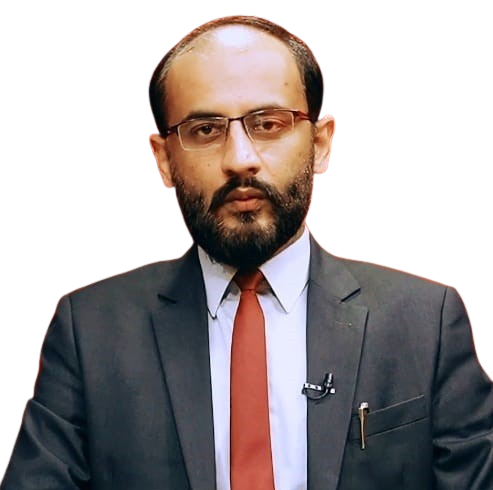
The writer has a doctorate in energy economics and serves as a research fellow at the Sustainable Development Policy Institute (SDPI). He tweets/posts @Khalidwaleed_ and can be reached at: khalidwaleed@sdpi.org
© 2026 SDPI. All Rights Reserved Designed and developed by NKMIS WEB Unit