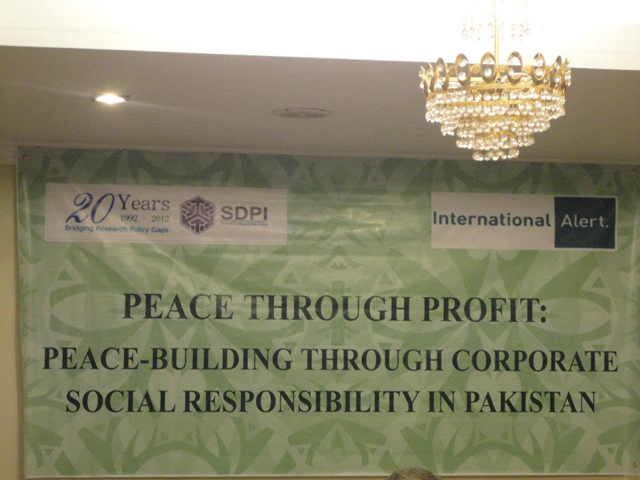
Assessing the Role of the Private Sector in Conflict Prevention in Pakistan
Partner: International Alert, London
Duration: August 2012 to December 2012
Locale: Faisalabad, Multan, Karachi, Sukkur, Peshawar, Quetta districts
Team Members: Dr. Vaqar Ahmed, Safwan A. Khan
Introduction: The research study intended to act as a baseline for the project on the business community's perceptions and capacities for peace. It served as a training needs assessment for the individual and institutional capacity building with regard to corporate social responsibility and peace building. The research findings provided an empirical entry point into the discussion on peace-conducive economic governance reforms at national, provincial, and regional levels, and form the basis for the subsequent private sector advocacy on the economic governance reform.
Objectives:
- To explore local perceptions (At community and household level) of business as, 'agents of peace'.
- To conduct analysis of economic drivers of conflict and an assessment of the policy environment for inclusive economic reforms
Findings:
- Business expansion is largely perceived beneficial for communities. Businesses need to deeply interact with communities (around their location) since communities might not necessarily be looking up to the government alone for their needs. Lack of employment and essential services coupled with a supply-side crisis in energy sector; stand out as highly cited issues where businesses can help.
- The government and private sector linkages also need to be strengthened in order to ultimately move towards peaceful communities. In specific areas of Khyber PakhtunKhwa and Balochistan provinces, it was found that public sector could not enter several villages in order to provide compulsory immunization to children.
- Market distortions need to be removed so that entrepreneurial activity can be enhanced. Monopolistic and collusive markets not only suppress competition but also leave market leaders at whim.
Recommendations:
- Private sectors’ involvement in local area development appears to be highly welcome as far as households are concerned. Time is ripe for the private sector to step up its efforts particularly in sectors where governance failure is stark.
- There is a strong need to build local-level partnerships between peace-promoting groups. The work of Aga Khan Rural Support Program in Gilgit-Baltistan region is one example that should be replicated elsewhere.
- There is a strong need for creating social entrepreneurship opportunities that capacitate communities at grass roots level and provide them with livelihoods.
- Dispute resolution mechanisms need to be strengthened. The success of Aman Committees in Sialkot that resulted in an increase in efficiency of businesses (And job creation for local community) best explains this point
- The influence of regulatory bodies needs to be revisited. While regulations are important in maintaining favorable and inclusive market structures, it is also important that regulatory bodies have the capacity and influence.
Activities:
- Key Informant Interviews conducted from communities, business and government.
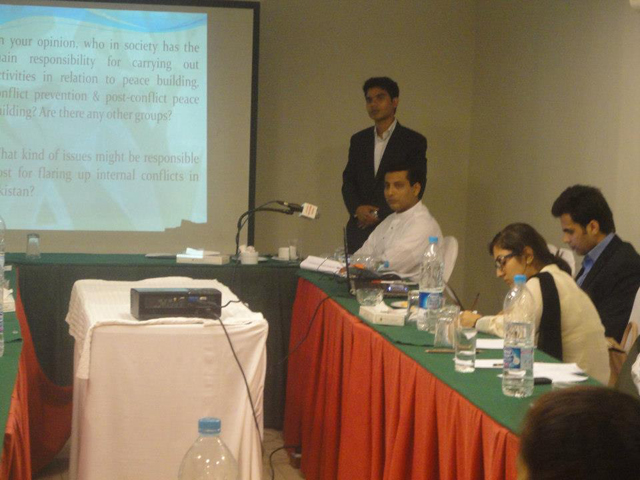
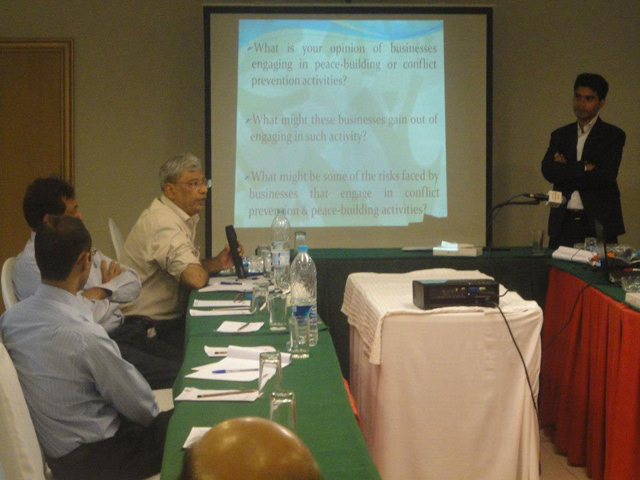
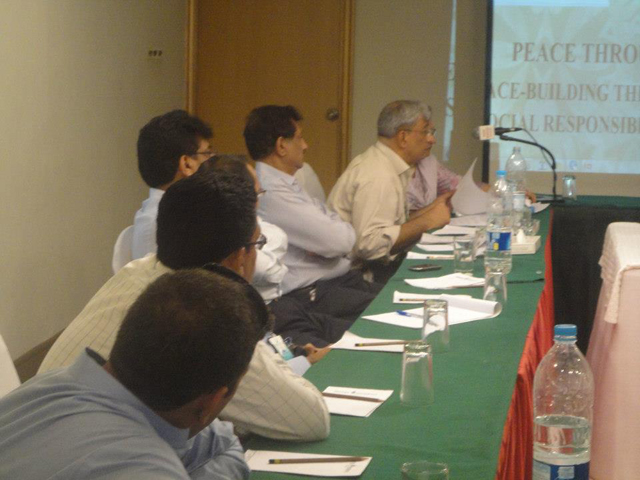
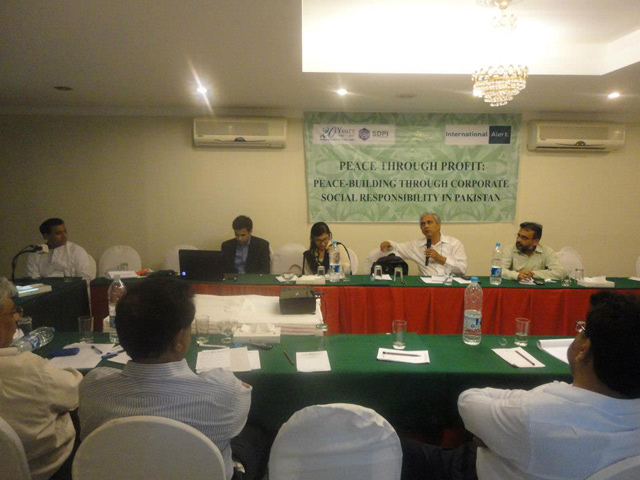
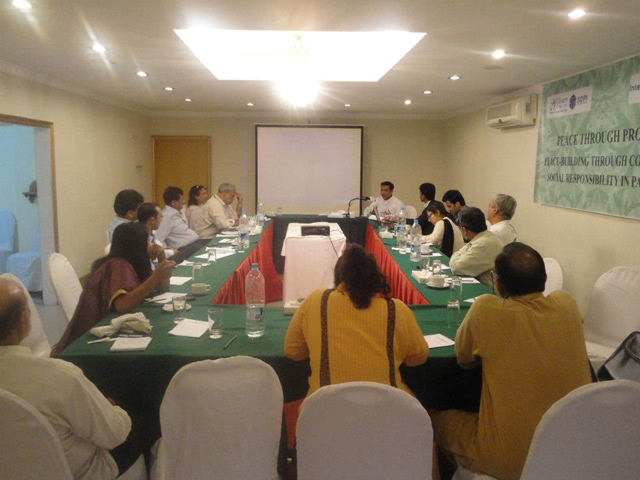
- Focus Group Discussions were held with communities, businessmen and government officials.
Other Team Members:
© 2026 SDPI. All Rights Reserved Design & Developed by NKMIS WEB Unit