Focal Persons: Ubaid ur Rehman zia, Dr Khalid Waleed
Partner: Embassy of People’s Republic of China
Description:
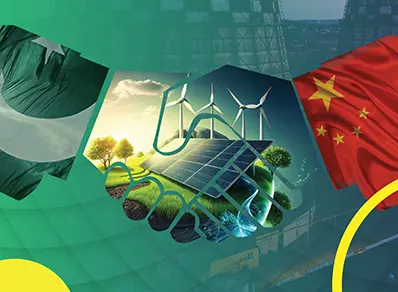
The China-Pakistan Economic Corridor (CPEC) is a flagship project of the Belt and Road Initiative (BRI), poised to be a transformative force for Pakistan's economy. As CPEC enters its next phase of high-quality development, there is a critical and timely opportunity to integrate principles of environmental sustainability, climate resilience, and green development into its core framework. This project, "Advocacy and Communications for Greening the CPEC," aims to spearhead this essential diplomatic realignment. It seeks to foster a high-level bilateral consensus and create actionable pathways to ensure that CPEC's future investments are low-carbon, ecologically sound, and aligned with global climate goals.
Key Challenge:
While CPEC offers immense potential for infrastructure and energy development, its current trajectory requires a strategic pivot to incorporate green standards. The existing frameworks lack a dedicated, high-level bilateral mechanism to champion and implement a comprehensive "Green CPEC" agenda. This gap necessitates focused advocacy, diplomatic engagement, and the co-creation of a reform-oriented workplan to mainstream sustainability across all CPEC projects, from energy and transport to industry and agriculture.
Project Key Objectives:
Establishment of a High-Level Diplomatic Taskforce:
Facilitate the formulation of a bilateral task force comprising senior public sector officials, diplomats, and policy experts from both Pakistan and China.
Design a clear and actionable "Mandate" and a detailed workplan for the taskforce for the year 2024-25, focusing on green policy integration.
Development of a CPEC Reforms Agenda:
Provide technical and research support to SDPI in developing a robust and evidence-based "CPEC Reforms Agenda." This agenda will outline specific policy recommendations, green financing mechanisms, and environmental safeguards for ongoing and future CPEC projects.
High-Level Advocacy and Policy Dialogue:
Organize the inception meeting and a high-level policy dialogue (in hybrid mode) to officially launch the Diplomatic Taskforce, present the Reforms Agenda, and secure buy-in from top policymakers.
Stakeholder Engagement and Knowledge Sharing:
Jointly organize a "Green Infodor Salon" with SDPI to disseminate research findings, foster dialogue among national stakeholders, and build a national consensus on the Green CPEC vision.
Co-fund and participate in a B2B Collaboration Symposium in China, engaging directly with Chinese private sector entities, think tanks, and diplomats to explore partnerships in green technology, renewable energy, and sustainable infrastructure.
Expected Outcomes and Impact:
Institutional Mechanism: A functional and mandated Diplomatic Taskforce becomes the primary bilateral body for steering the greening of CPEC.
Policy Blueprint: A widely recognized "CPEC Reforms Agenda" is produced, providing a clear roadmap for policymakers in both countries.
Enhanced Dialogue: Strengthened communication and consensus among Pakistani and Chinese government bodies, private sectors, and civil society on environmental standards for CPEC.
Concrete Partnerships: The B2B symposium leads to initial partnerships and MoUs between Pakistani and Chinese green technology and energy firms.
Paradigm Shift: A foundational shift in the narrative and planning of CPEC from a purely infrastructure-focused corridor to a model of sustainable and climate-resilient development under the BRI.


© 2026 SDPI. All Rights Reserved Designed and developed by NKMIS WEB Unit