
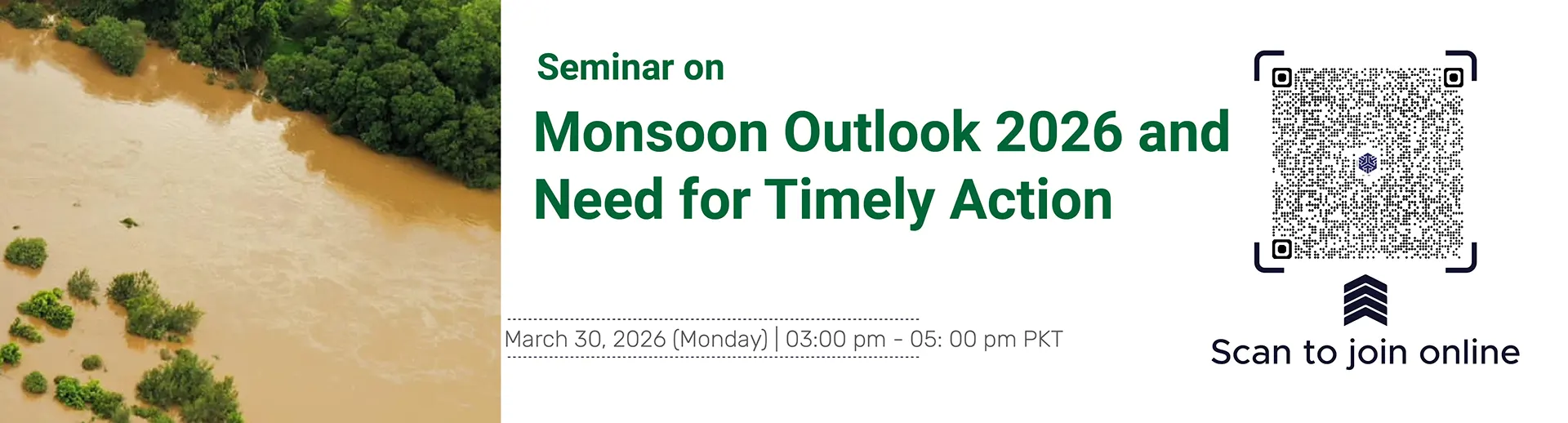
Context:
The Pakistan Meteorological Department indicate above-normal temperatures in northern Pakistan during February–April 2026. Recorded temperatures in Gilgit-Baltistan were 3–5°C above normal during early February. This warming trend, coupled with below-normal winter precipitation, is likely to accelerate snow and glacier melt and thereby increasing the risk of Glacial Lake Outburst Floods (GLOFs) in vulnerable valleys such as Gilgit, Hunza, Ghizar,Astore,
Bunji and Chilas.During recent years, the region has experienced shifting snowfall patterns, delayed winter precipitation, and rising average temperatures (an increase of approximately 0.6°C between 1987–2013). According to the Gilgit-Baltistan Environmental Protection Agency, late snowfall reduces compaction into glacier ice and accelerates
melt during summer. Delayed snowfall creates a thin crust that melts faster as mercury rises.
These warnings are particularly alarming in light of last year’s flood disasters in Gilgit-Baltistan, when rapidly melting glaciers, GLOFs and cloudburst events created
a havoc and resulted in damaged infrastructure, disrupted livelihoods, destroyed agricultural land, and displaced communities. The fragile mountain ecosystem and downstream settlements remain highly vulnerable to recurring climate-induced hazards.
Rationale:
Gilgit-Baltistan is home to some of the world’s largest glacier systems outside the polar regions. Climate change is altering hydrological cycles, intensifying extreme weather events, and increasing the frequency of flash floods and glacial lake outburst floods. The combination of rising temperatures, reduced snowfall, weak early warning dissemination, and limited climate-resilient infrastructure presents a multidimensional risk to human security, water systems, food security, and regional stability. Since SDPI is engaged in advocacy on climate change and natural disasters, it would be a timely action to convene a stakeholders seminar on this issue to ring alarm bells for decision makers.
Speakers with relevant background will be invited to analyse climate trends and scientific projections for the coming monsoon, reflect on lessons learned from the 2025 flood disaster and highlight the need for timely anticipatory actions through disaster management authorities.
Objectives:
The seminar will aim to
1. present updated climate data and projections for coming monsoon in Pakistan
2. analyze drivers and risks of GLOFs and flash floods in Gilgit-Baltistan.
3. reflects on impacts of last year’s floods on infrastructure, agriculture, and
communities.
4. identify practical adaptation, mitigation, and risk reduction measures
5. recommend actionable measures for decision makers and local authorities.
Proposed Participants
1. Representatives from Pakistan Meteorological Department,
2. Representatives from NDMA and PDMAs
3. Experts on climate change and cryosphere
4. Representatives from the ministry of Climate Change
5. Representatives from the Federal Flood Commission
6. Representative from the Forest department
7. Academia and research institutions
8. Civil society organizations, particularly from northern areas
9. Media
© 2026 SDPI. All Rights Reserved Design & Developed by NKMIS WEB Unit
