
Partner/Donor: Friedrich-Ebert-Stiftung
Duration: August 2021 – December 2021
Team Members: Dr. Sajid Amin Javed, Engr. Ahad Nazir, Ms. Kamila, Mr. Abdullah Khalid
Introduction:
The social implications of monetary policy, particularly its distributional consequences, have garnered a great deal of attention since the global financial crisis of 2008, with a key focus on income, consumption and wealth inequality. COVID-19 has further strengthened the need for a debate on the welfare implications of monetary policy. The agenda of central banks has now been expanded to include inequality reduction, while controlling inflation and maximizing economic output, such as the Gross Domestic Product (GDP).
It is argued that central banks need to incorporate social implications in their policy decisions. Interventions to meet monetary policy objectives, must be sensitive to associated social outcomes, including inequality and poverty. Evidence suggests that monetary policy interventions, under different circumstances, affect the poor and rich differently.
On the other hand, changes in the interest rate will impact the poor relatively less, both negatively and positively. An increase in the policy rate will benefit the rich, who hold financial assets or have greater savings available to invest in stocks. Overall, even aggregate changes, such as inflation, have a different impact on the rich versus the poor. Against this backdrop, this discussion paper is the first of its kind, in attempting to generate a much-needed debate on the social implications of monetary policy in Pakistan.
Till now, most of the existing research found, is on the topic of applied monetary economics and is limited to aggregate macroeconomic data, such as GDP growth, inflation, trade and exchange rate, while ignoring the possible consequences of monetary policy interventions for income distribution-consumption, income and wealth inequality and poverty. This has worked to delink monetary policy outcomes from the common man, who looks towards the government and its fiscal policy to control even inflation. Particularly, research in this area has failed to incorporate the post-COVID agenda of monetary policy and central banks.
This gap needs to be bridged, if the effectiveness of monetary policy is to be increased, by creating a mass audience for the SBP’s policies. Fostering a debate on how monetary policy decisions can affect the poor and rich differently, will not only reduce this gap, but will also help design an optimal monetary policy with improved welfare considerations.
Also, it is high time to showcase the fact, that granting political independence to the SBP can actually improve social welfare. The SBP Act Amendment 2021, has been met with serious resistance. One of the key concerns surrounding it, has been the lack of debate around the SBP’s autonomy and the perception that an exclusive focus on inflation targeting will hurt the welfare of the economy and its people.
There is, therefore, a need for discussion on how the SBP, without any influence from the government in financing its deficits, can decide on better monetary policy interventions to influence inflation. For example,
it can opt to cut the policy rate in order to affect aggregate demand instead of increasing money supply, as the latter perpetuates inequality by disproportionately affecting low-income households.
At the same time, such debates and findings can help the SBP update the monetary policy interventions needed to achieve its objective, such as reduction in inflation, without compromising other social outcomes, such as equality. Importantly, steps need to be taken to upgrade and update the existing framework and monetary policy tools, in order to address associated social implications.
Finally, the social implications and associated outcomes of monetary policy decisions vary from country to country, depending on social, economic and institutional characteristics of country. On one hand, evidence suggests that monetary policy decisions, such as increasing the interest rate, benefit richer households disproportionately, thereby contributing to more unequal income and wealth distributions. On the other hand, there are those who think that it has reduced inequality because borrowers became better off than savers. The net impact may vary due to the nature of economy, its social structures and labour market composition.
Furthermore, these distributional impacts, which are perceived to be short term in nature for developed countries, may create long-term structural inequalities in access to education, health and skills development, and can have long-term effects in countries like Pakistan, which have lower financial inclusion, poor social-spending and an overwhelming informal economy. Together, these characteristics can convert an otherwise short-term distributional impact, into long-term structural inequalities.
Against this backdrop, understanding the social implications of monetary policy and incorporating them into policy interventions, is a pre-requisite to designing optimal monetary policy which can minimize adverse social implications and promote welfare for the common man. In this context, a country-specific assessment can help better understand the social implications of the SBP’s policy design and conduct.
Scope of work:
The aim is to sensitize monetary policy in Pakistan to its social dimensions, by generating a debate on the social implications of different monetary policy interventions. Specifically, it aims to:
i. Generate and broaden the agenda of the monetary policy debate in Pakistan, by highlighting the social implications of monetary policy actions, with a particular focus on inequality.
ii. Sensitize the SBP to the social dimensions of its actions and monetary policy interventions.
iii. Highlight how an independent SBP, which targets price stability, is better positioned to promote social welfare, as it selects interventions which can minimize associated social costs.
iv. Assess how the SBP can better design monetary policy for the masses going forward, by considering the welfare implications of its interventions.
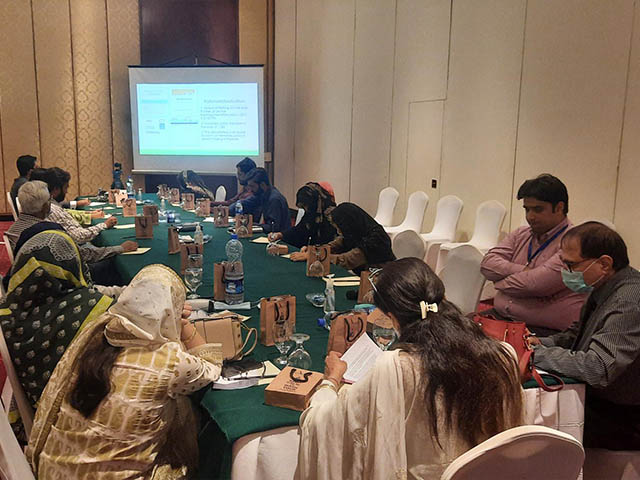
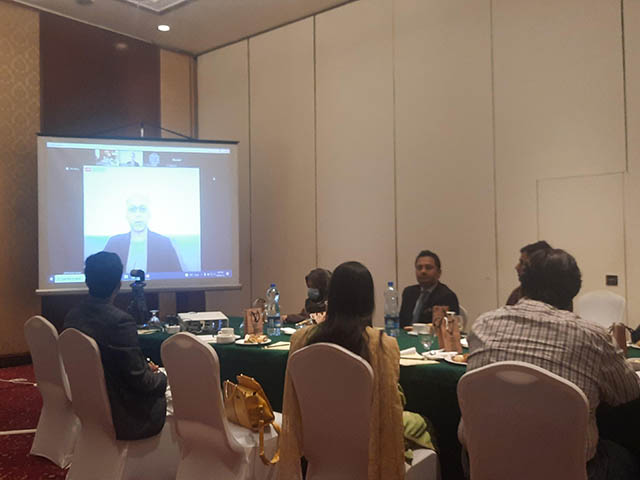
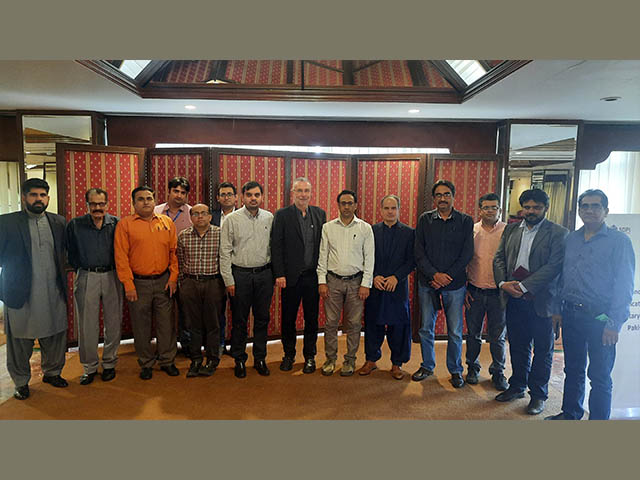
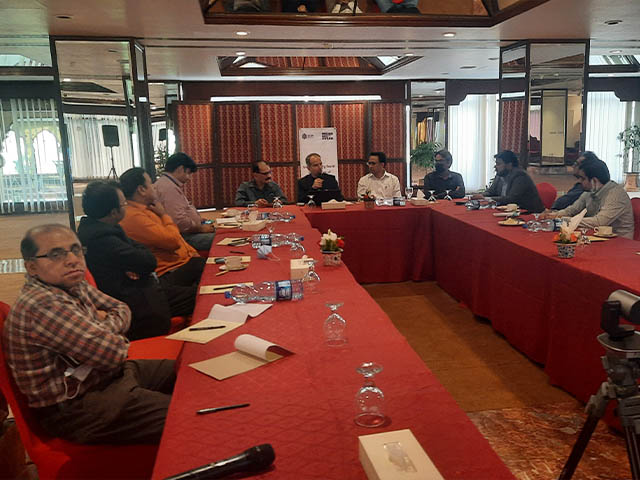
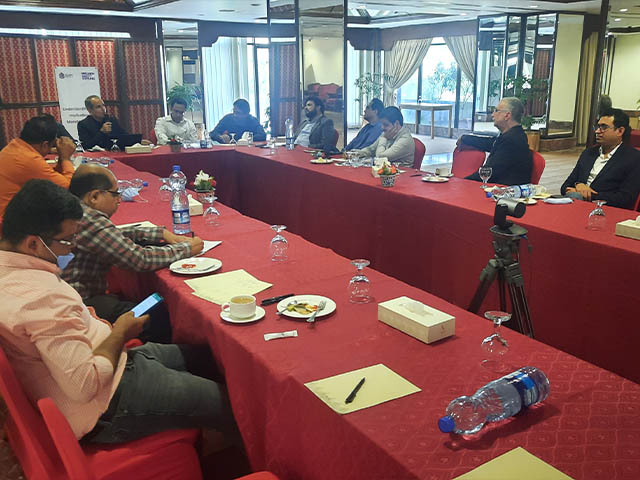
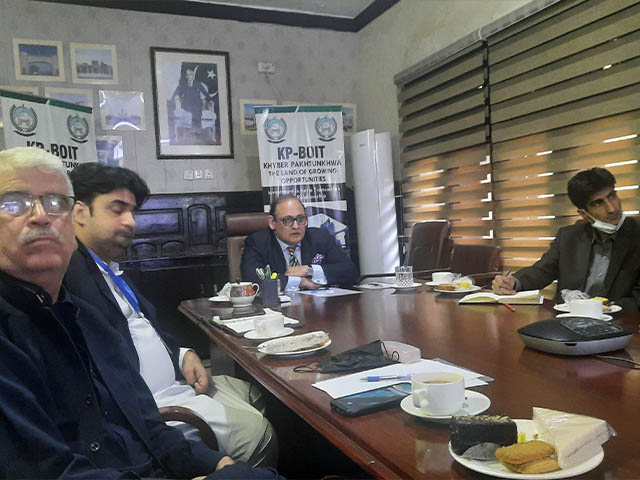
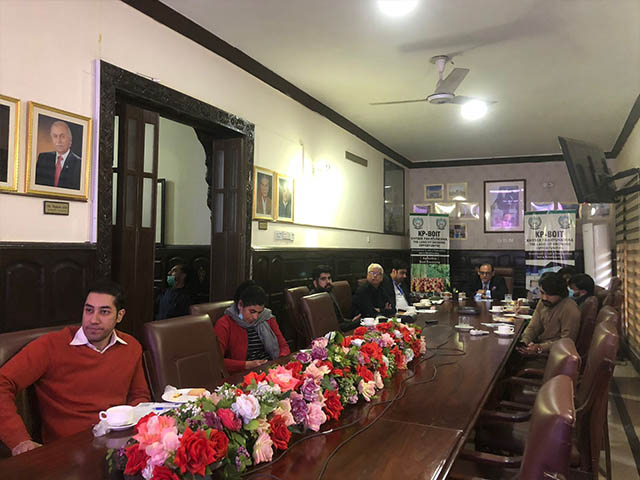
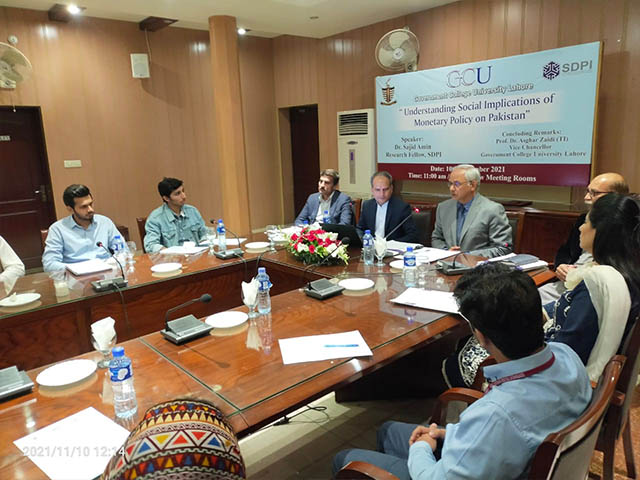
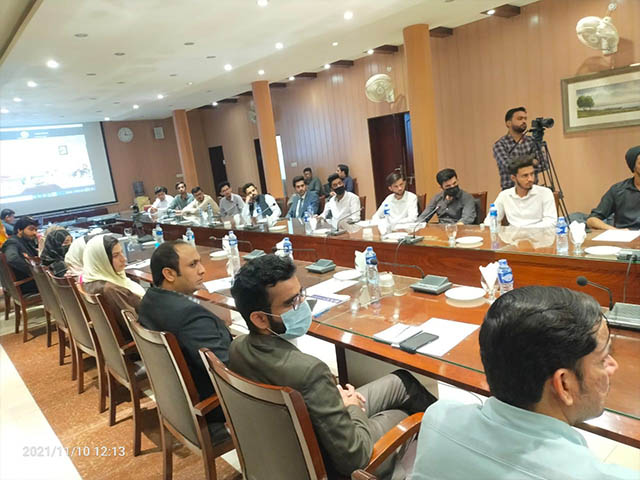
Based on the evidence created the following meetings will be conducted in the period of project:
· 2 Consultation Meetings
· 10 Key Informant Interviews
· 5 Engagements with Members of the Monetary Policy Committee, SBP
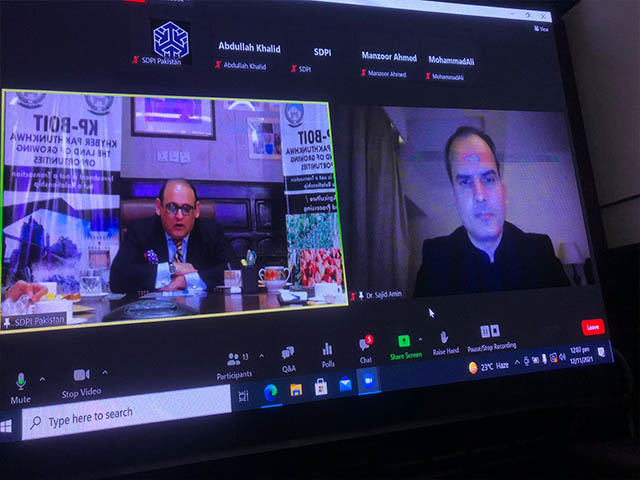
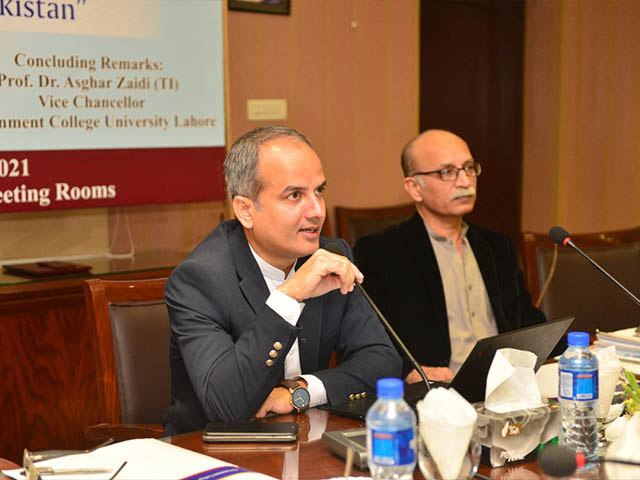
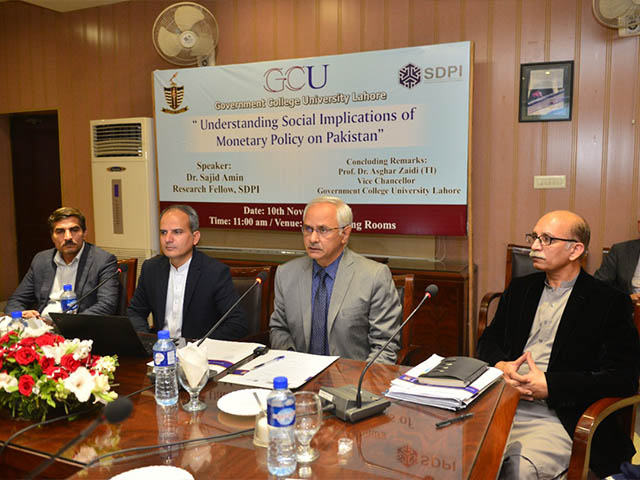
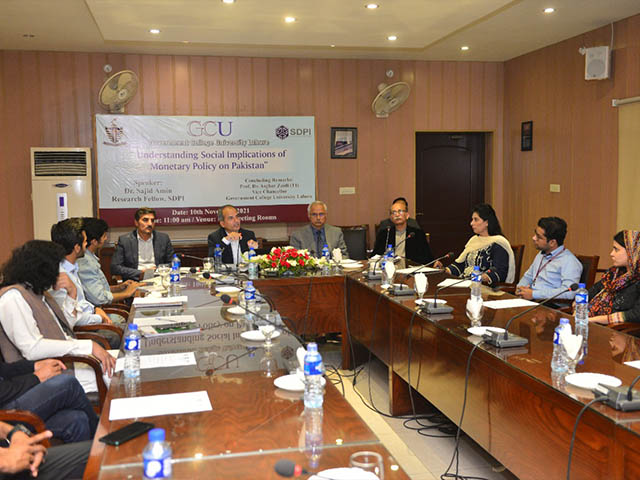
· 6 Dissemination Meetings
· 2 Op-Eds
· Social Media Campaign

© 2026 SDPI. All Rights Reserved Designed and developed by NKMIS WEB Unit

