Estimating Size & Operations Of Public Sector And Its Impact On Wheat Market In Pakistan: A Post-18th Constitutional Amendment Inquiry
Partner: IFPRI Washington DC
Duration: July 2012 to June 2013
Locale: Pak Pattan, Lodhran, DI Khan, Jhang, Multan, Toba Tek Sing, Faisalabad and Islamabad
Introduction: Wheat remains a strategic crop in Pakistan given its importance as a staple food across all provinces. Its value addition in agriculture and GDP in 2012 stood at 12.5 and 2.6 percent respectively. For the same year, the cultivated area for wheat was 8,666 thousand hectares, which decreased over the last year by 2.6 percent. In 2012 the yield per hectare dropped by 4.2 percent. The estimated output during July-March 2011-12 was 23.5 million tons. Citing reasons of food security, in 2012 the government increased the procurement price of wheat to Rs 1050. The government has maintained several forms of subsidies, which in turn have made wheat a preferred crop for farmers. The study aims to estimate the overall size of public sector intervention in wheat sector.
Objectivies:
- To provide perceptions of actors involved in the wheat sector supply chain with regard to public sector intervention in wheat sector.
- To estimate, using a dynamic computable general equilibrium model, the economy-wide impact of subsidies in wheat sector.
- To provide policy recommendations for careful withdrawal of public sector from the wheat sector based on our findings and literature review.
Activities:
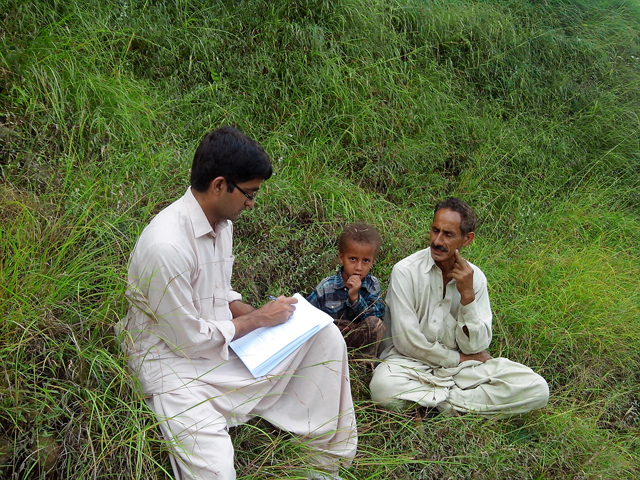
- Primary data collection
- Social Accounting Matrix for Dynamic CGE Analysis
- CGE Micro simulations
- Media Packaging
Findings:
- Changes in production and consumption are also being driven by underlying changes in prices and wages. The price of domestically produced and demanded goods declines in sectors, including wheat and agriculture processing. These prices also decline in livestock sector, however, only in the longer run. The distortion created by subsidy led to increase in prices of domestically produced and demanded goods in sectors, including cotton, crops other than cotton and wheat, manufacturing, energy, textile, construction, transport and services sectors. Similarly, trends have been observed in the case of prices of composite goods.
© 2026 SDPI. All Rights Reserved Design & Developed by NKMIS WEB Unit